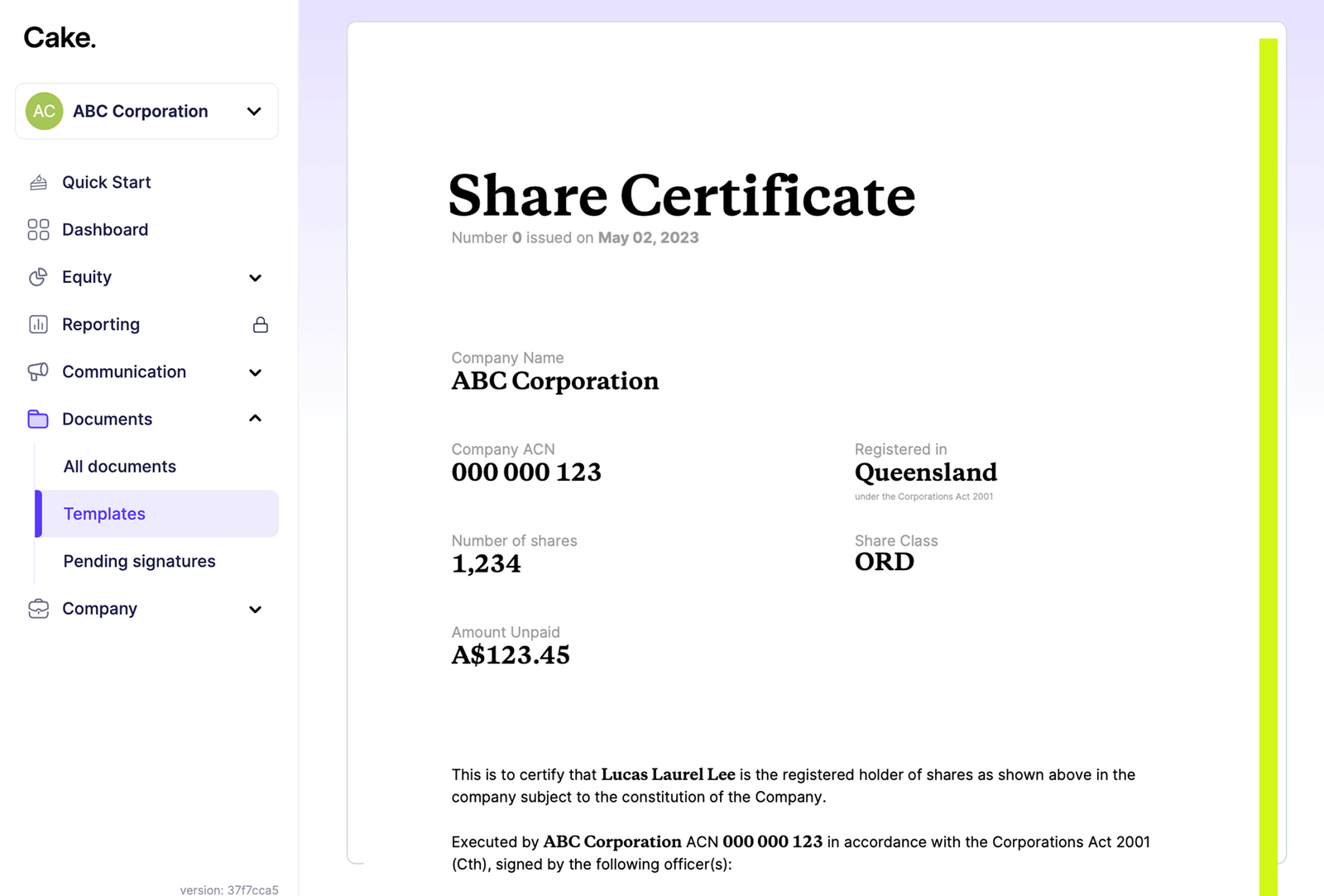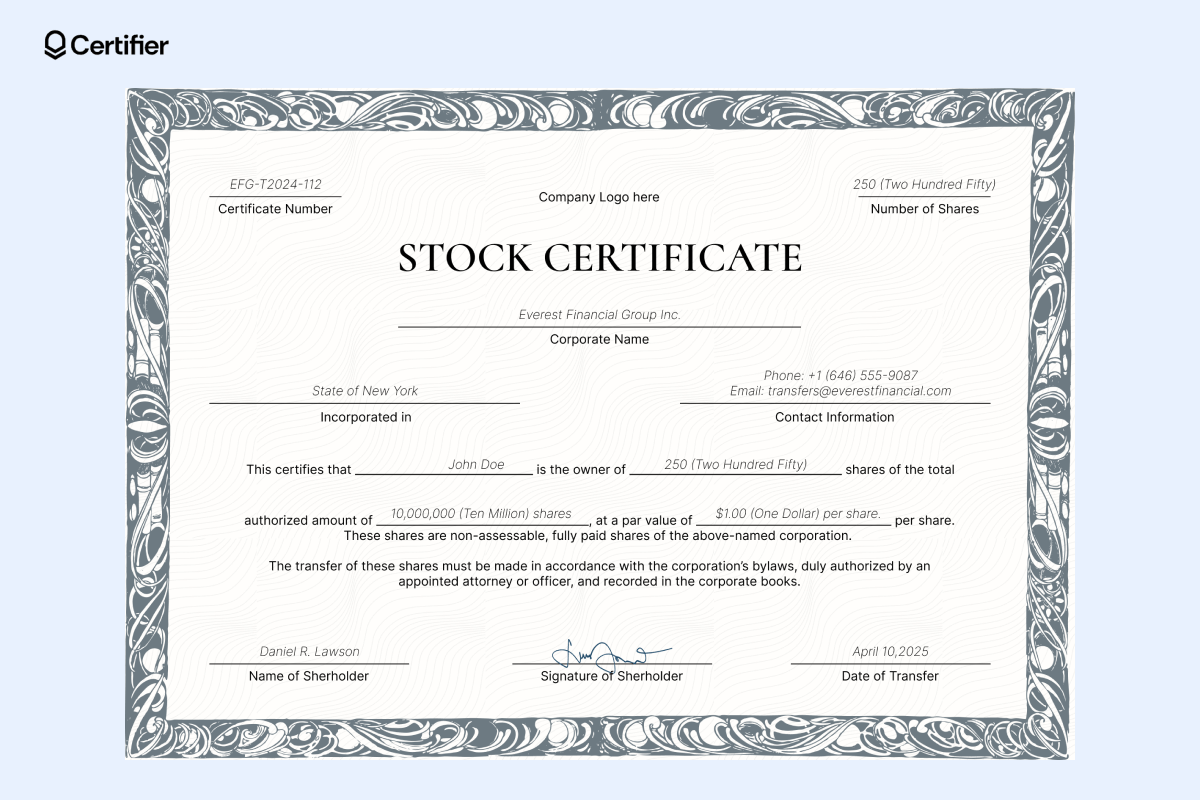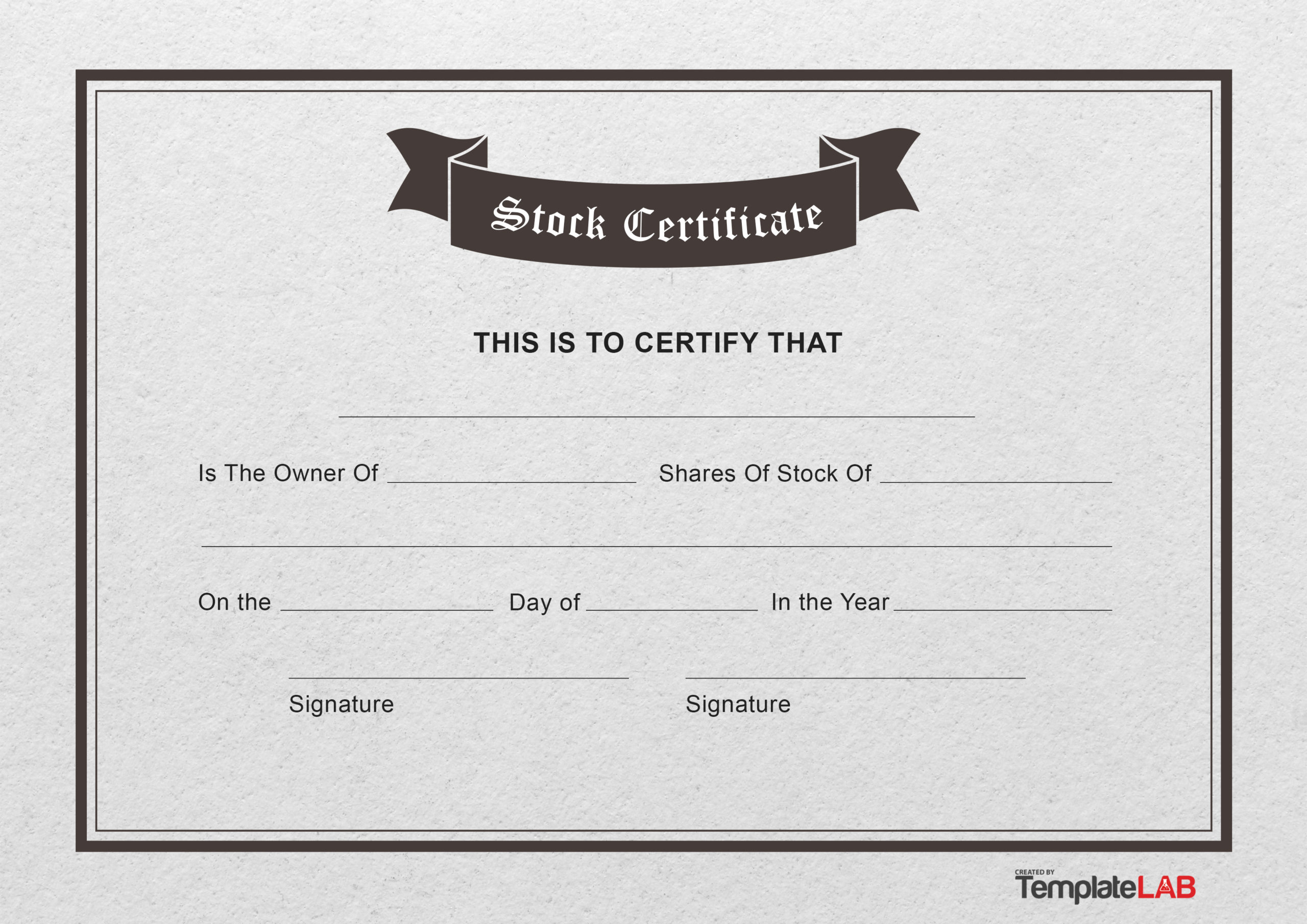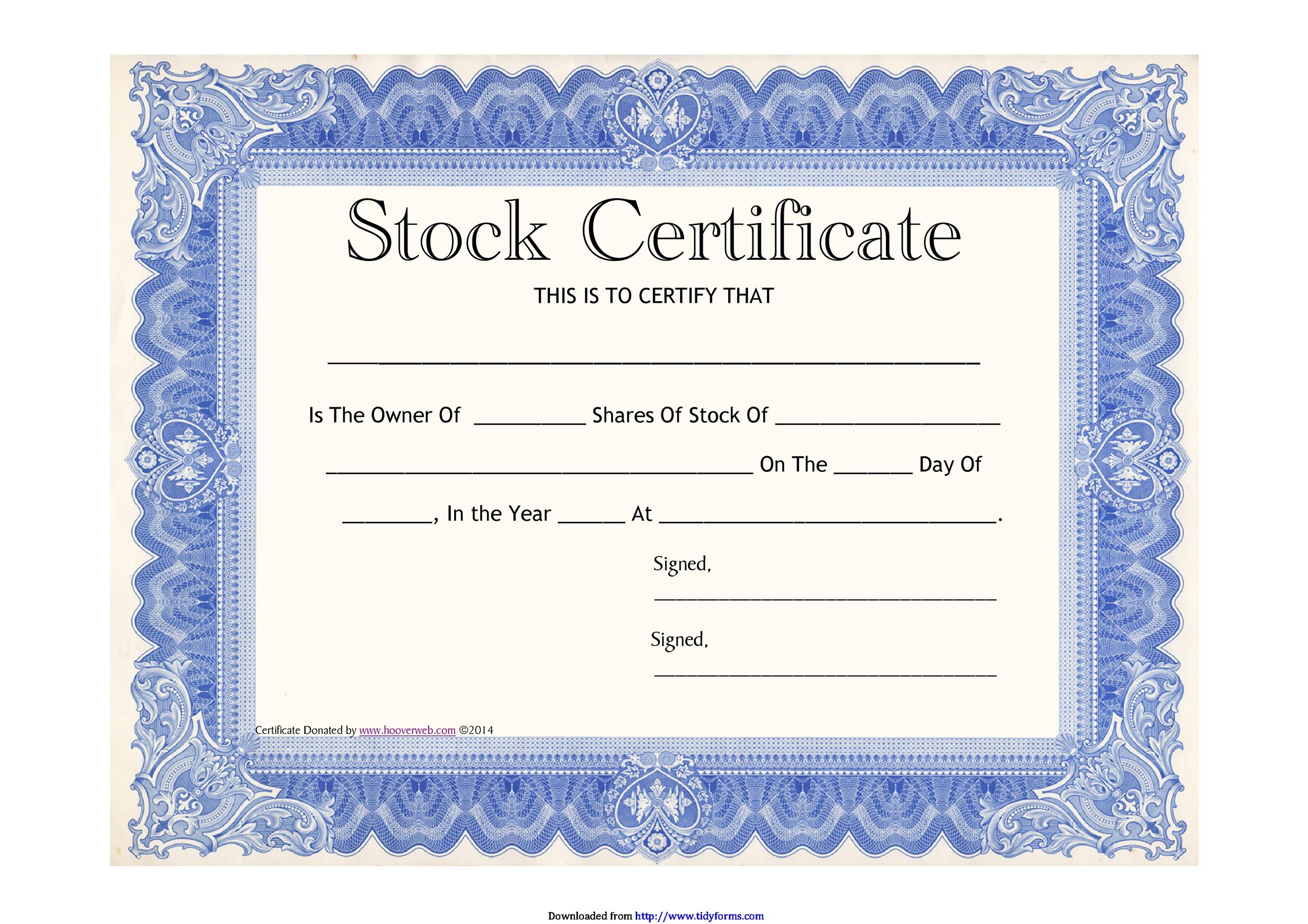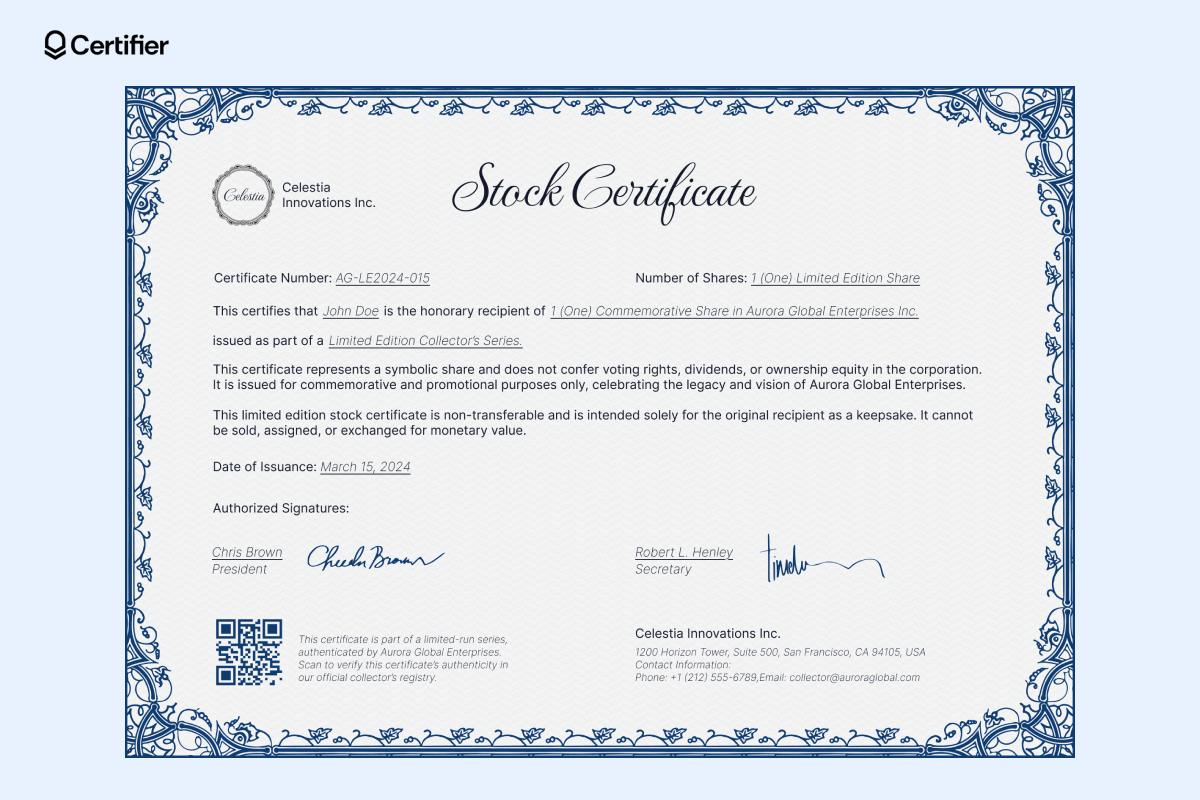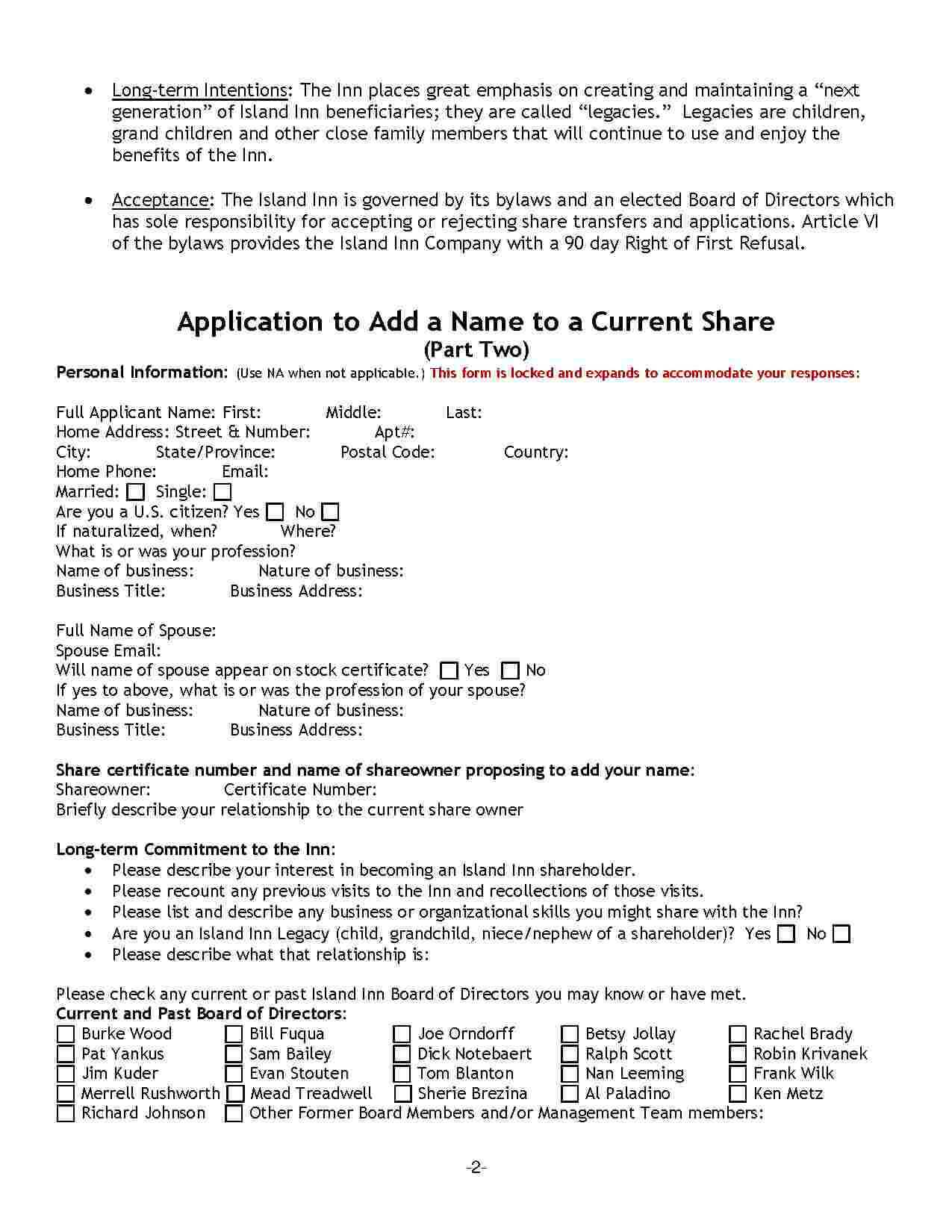
Share Certificate Template Australia serves as a cornerstone in corporate governance, providing a clear, authoritative record of ownership within Australian companies. Whether a startup issuing its first shares or an established firm preparing a secondary offering, a professionally designed share certificate is essential for legal compliance, investor confidence, and seamless transferability of equity.
Understanding the Legal Landscape of Share Certificates in Australia
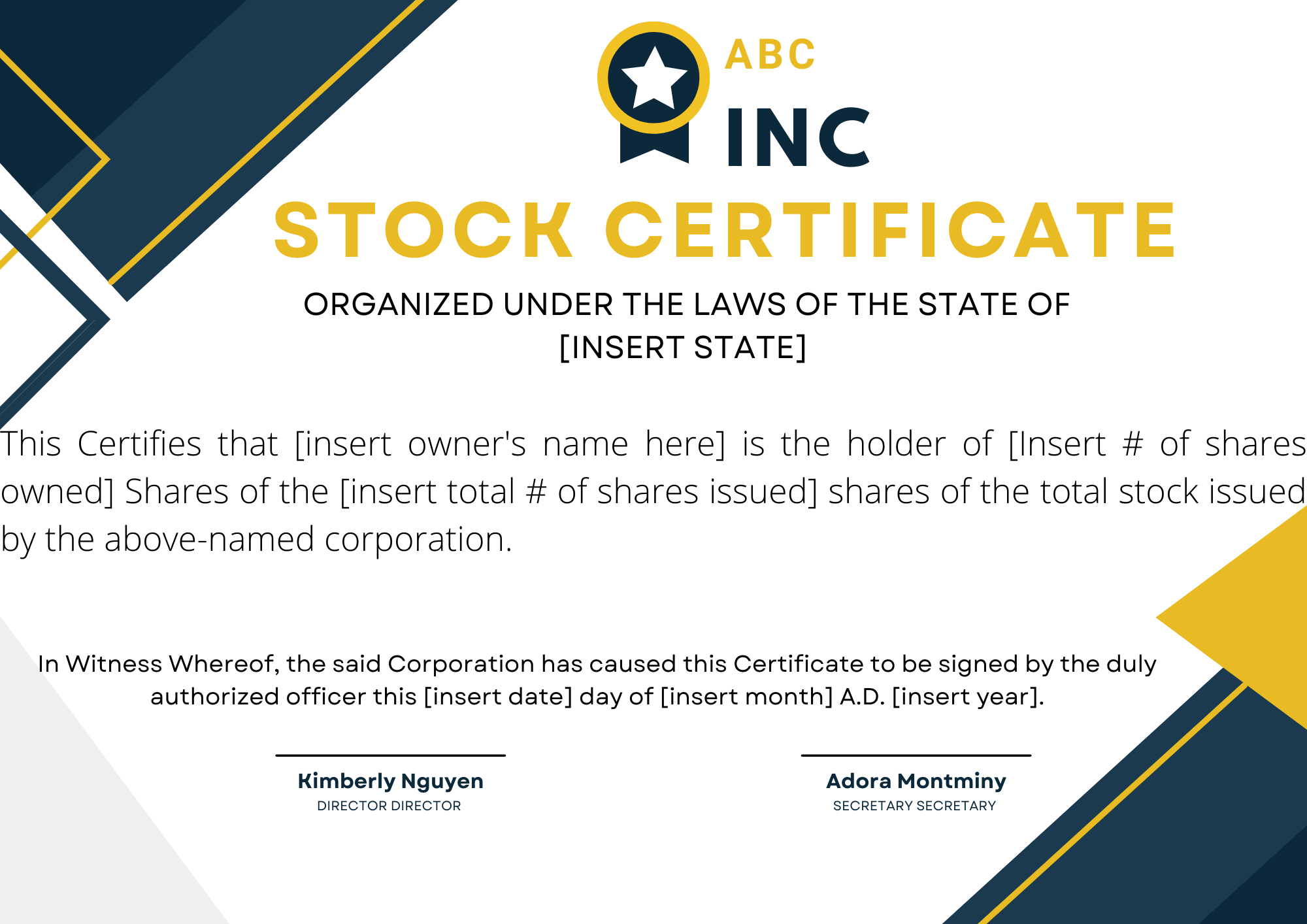
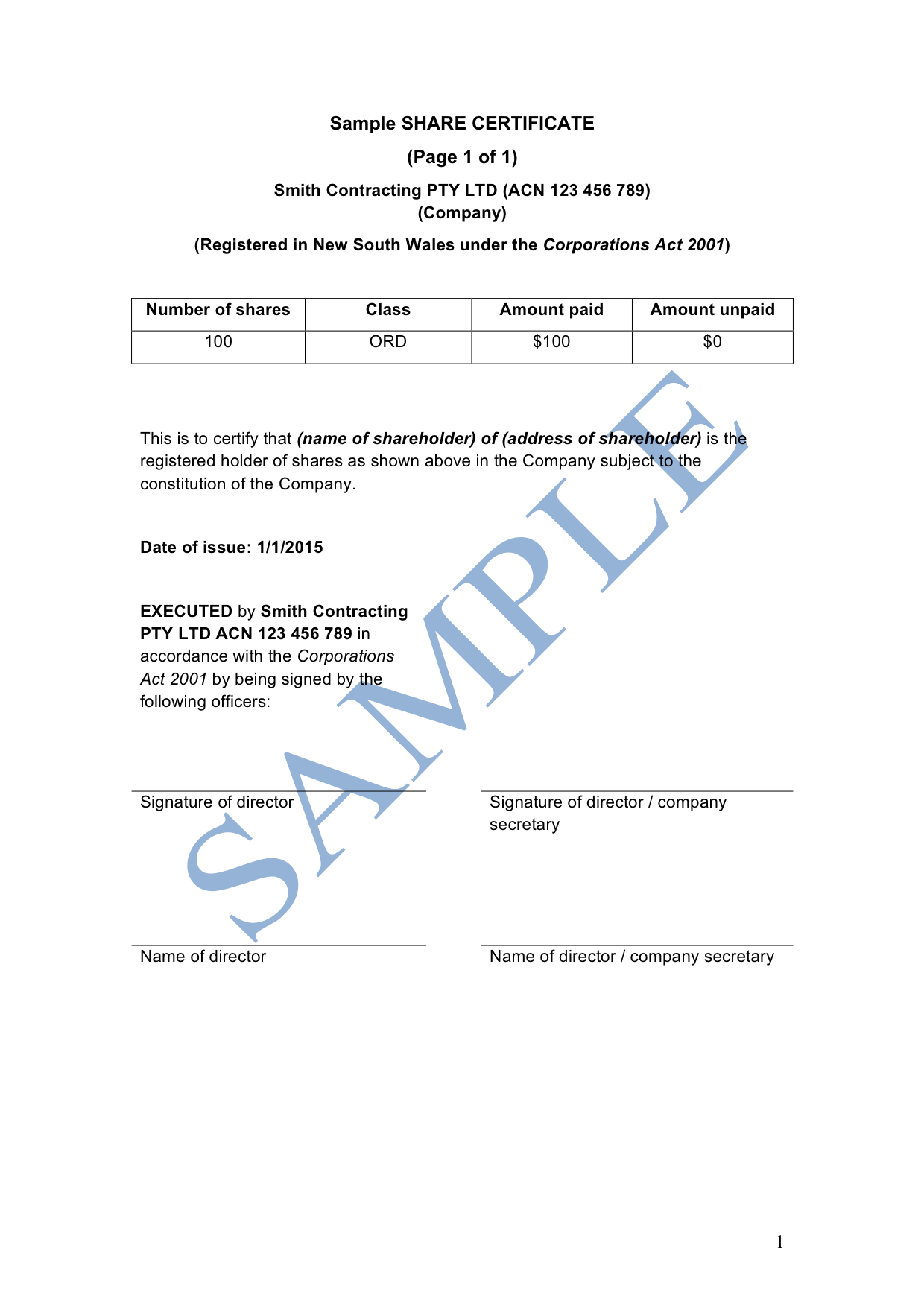
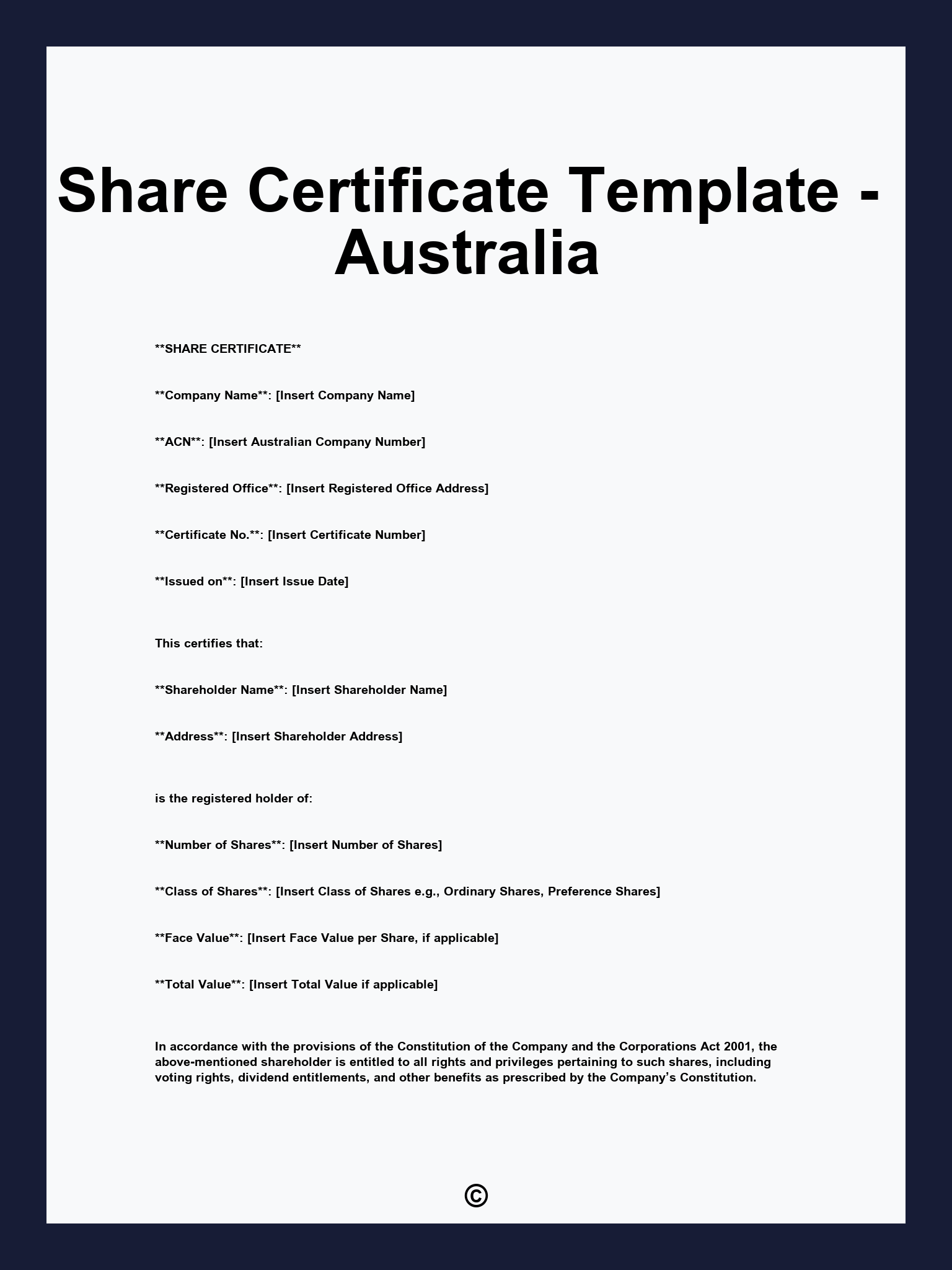
In Australia, the Corporations Act 2001 mandates that companies must keep a register of members and issue share certificates upon request. While digital records are increasingly common, physical certificates still carry symbolic weight and are often required for certain legal and tax procedures. A well-structured template ensures that every certificate meets statutory requirements, including company name, registration number, shareholder details, and share class information.
Key Elements That Must Be Present
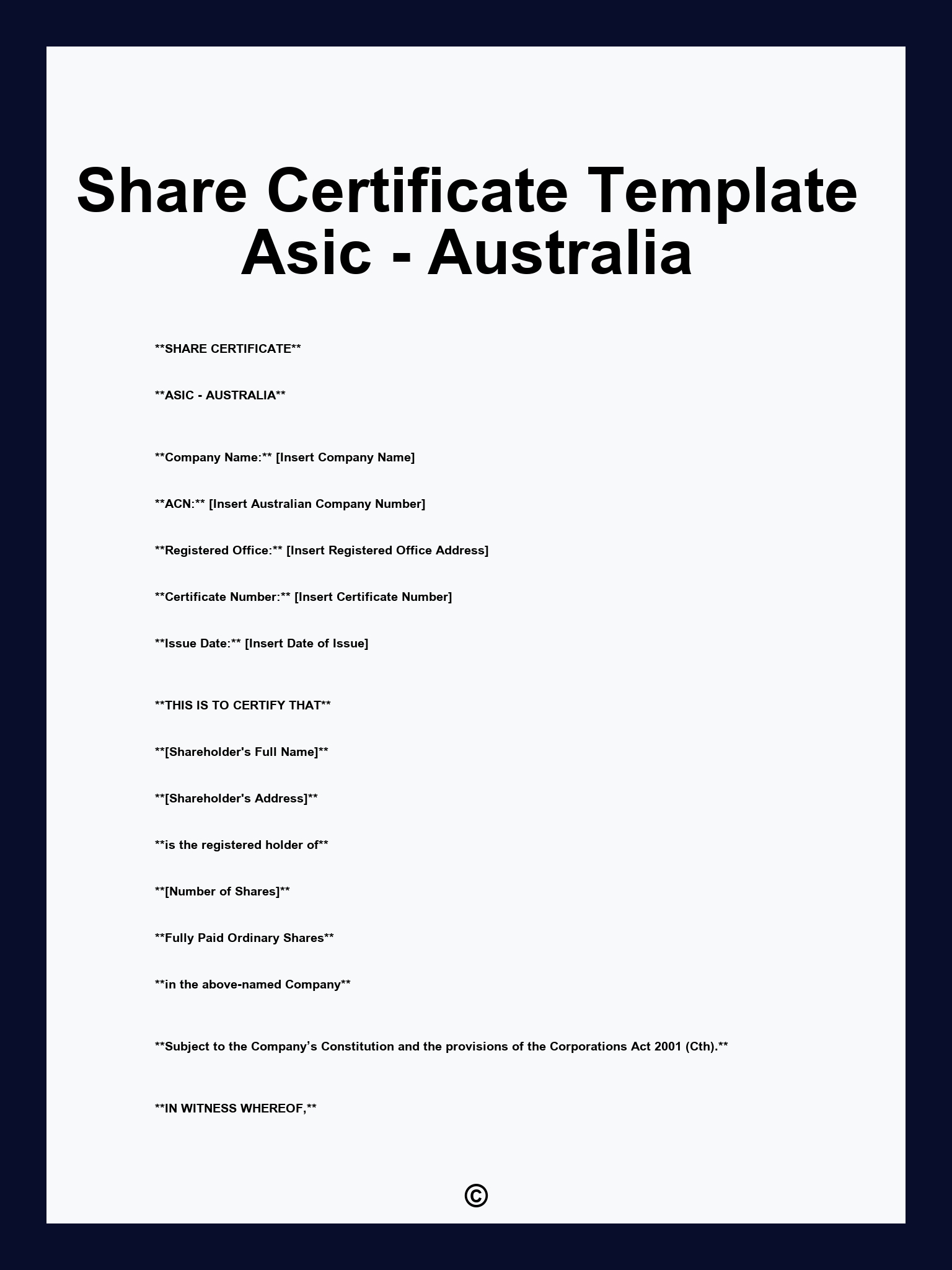
- Company Information: Official name, Australian Business Number (ABN), and registration number.
- Certificate Number: Unique identifier for each issuance to prevent duplication.
- Share Details: Number of shares, class (ordinary, preference), and any special rights attached.
- Shareholder Information: Full name and address, ensuring proper record‑keeping.
- Authorized Signature: Company director or company secretary’s signature, along with the company seal if applicable.
- Date of Issue: Crucial for establishing ownership timeline.
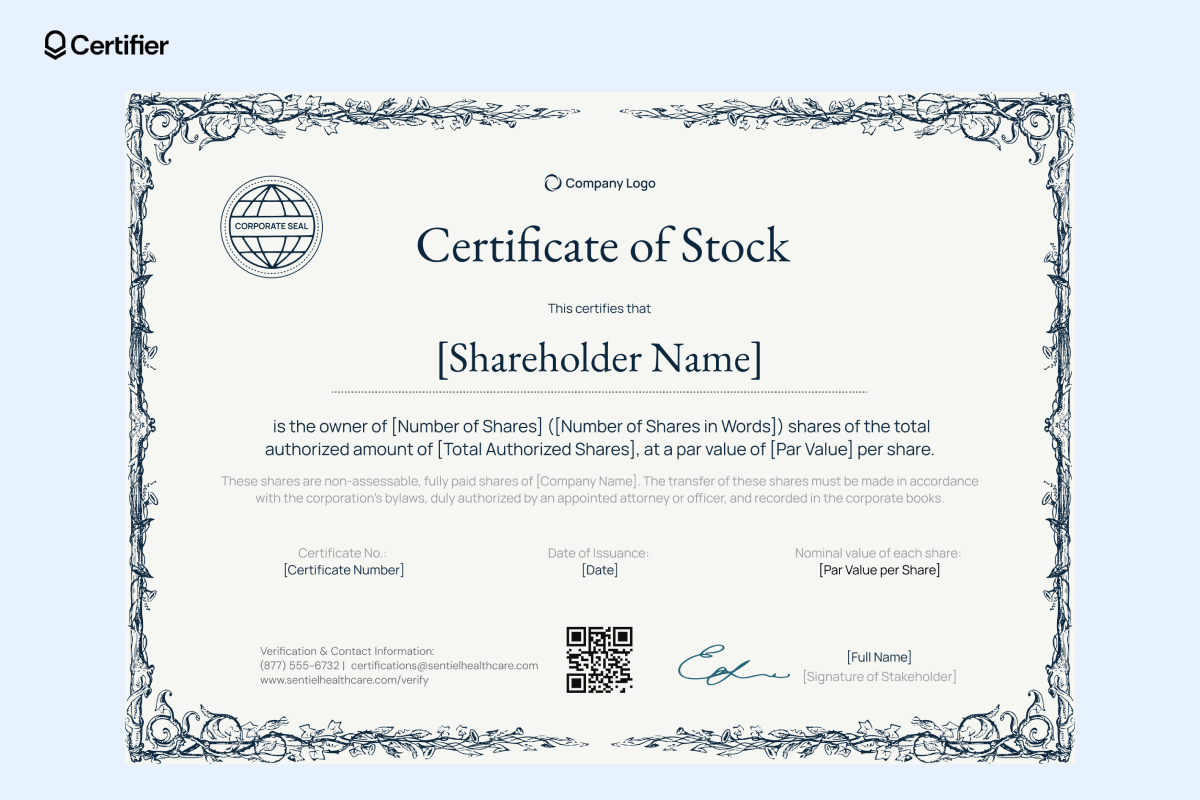
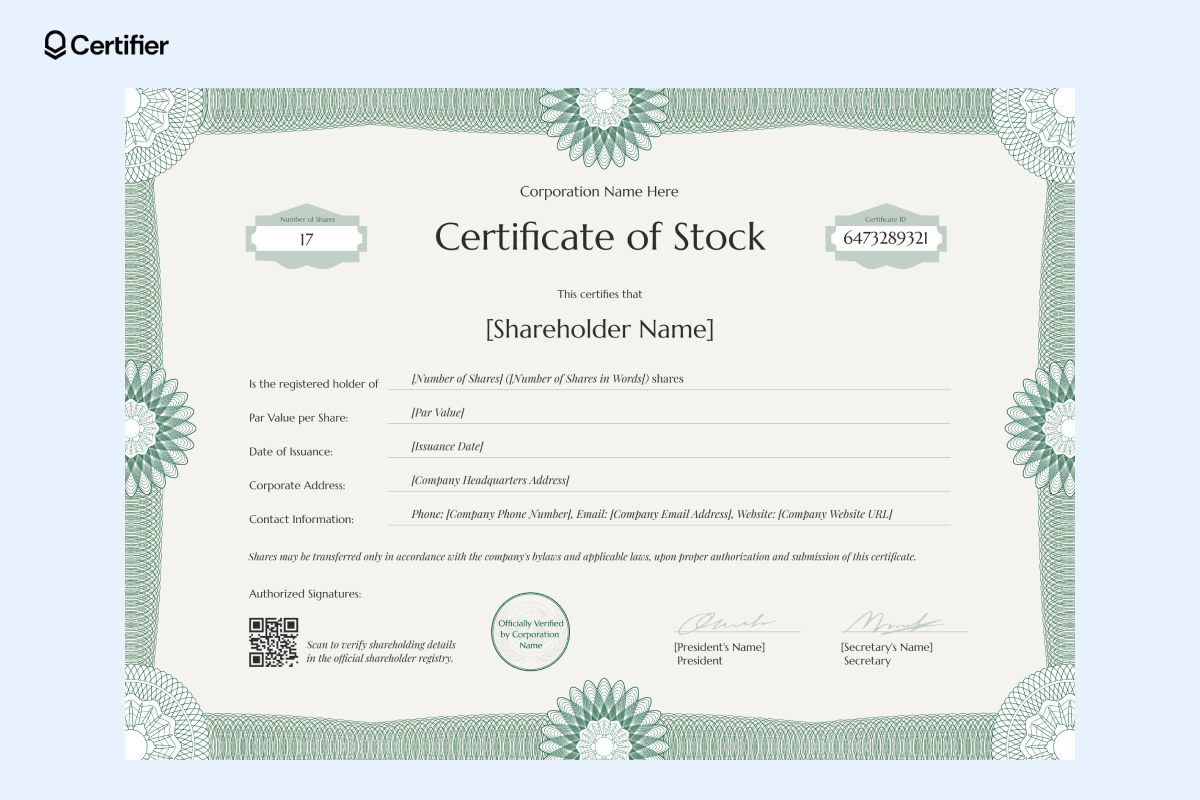
- Corporate Seal or Digital Seal: Adds authenticity, especially in jurisdictions that require a physical seal.
Choosing the Right Template Format

Modern share certificates can be distributed in several digital formats, each offering distinct advantages. Below we outline the most commonly used templates in Australia and provide practical guidance on selecting the format that best suits your business needs.
PDF Templates: Professional and Print‑Ready
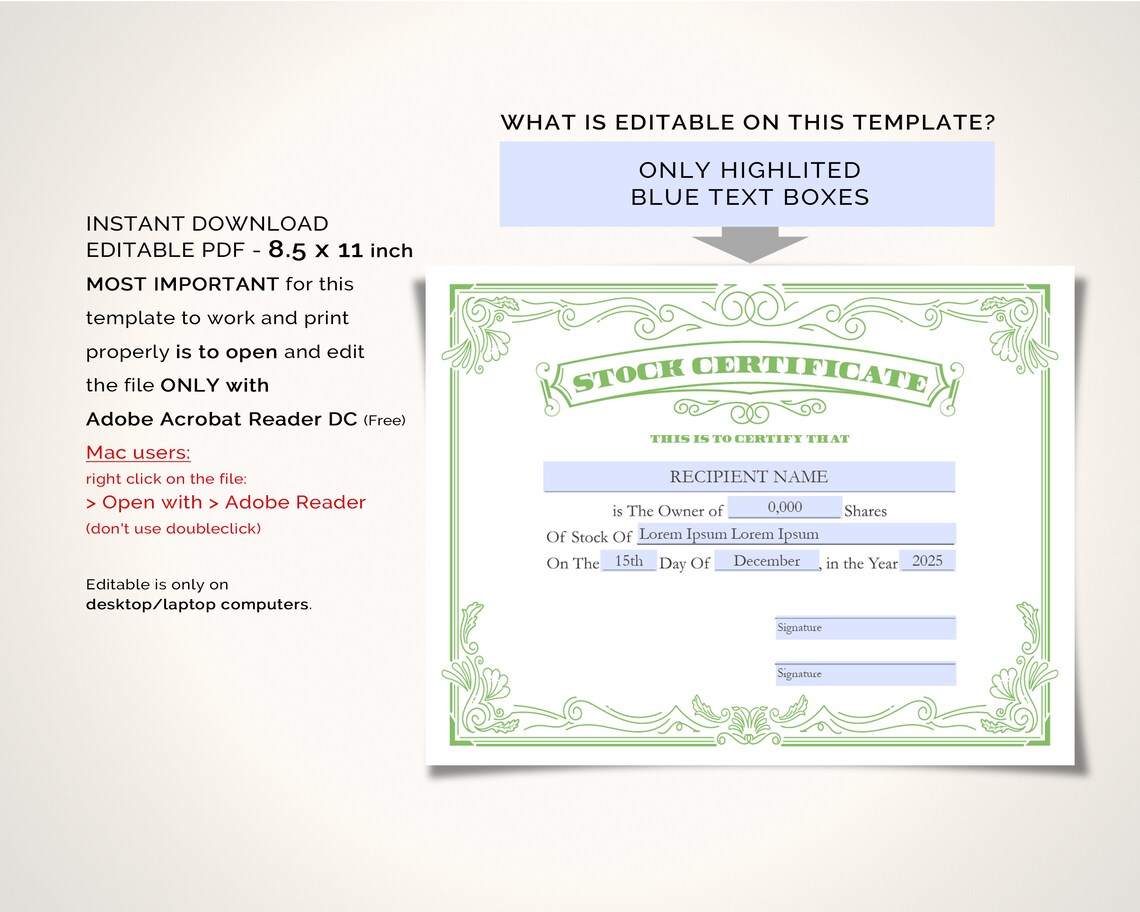
PDFs are the gold standard for share certificates. They maintain consistent layout across devices and preserve security features such as watermarking and digital signatures. When using a PDF template, consider incorporating:
- High-resolution background images that reflect your company’s brand.
- Redaction capabilities for sensitive information when sharing publicly.
- Watermarks like “CONFIDENTIAL” or “DRAFT” to protect against unauthorized reproduction.
Word Templates: Customizable for Quick Edits
Word-based templates provide flexibility, allowing legal teams to tweak fields without a full graphic overhaul. They are especially useful when:
- Multiple shareholders require individualized certificates.
- Corporate governance teams need to add or remove clauses on the fly.
- Legal compliance requires frequent updates to share class definitions.
Hybrid Templates: Combining PDF and Word Features
Some companies adopt a hybrid approach, creating a Word document that can be converted to PDF after final approvals. This method streamlines the editing process while ensuring the final product remains print-ready and compliant.
Designing a Share Certificate Template for Maximum Impact
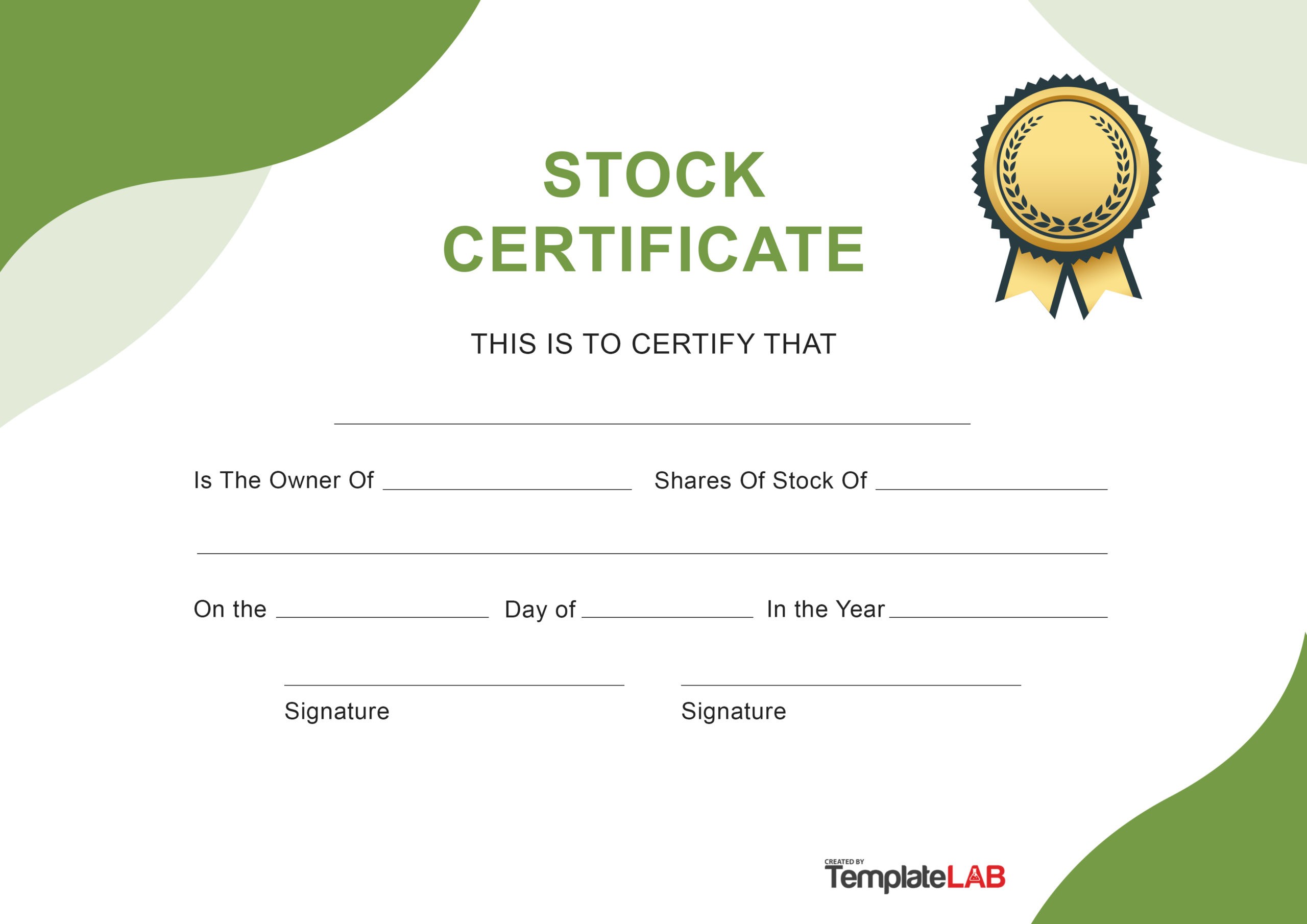
Beyond legal compliance, the aesthetic quality of a share certificate can influence investor perception. A thoughtfully designed template can reinforce corporate identity and instill confidence in stakeholders. Below are actionable design principles tailored for Australian contexts.
Brand Consistency
Integrate the company’s logo, color palette, and typography consistently across all certificates. Use the same font family (e.g., Garamond or Helvetica) for headings and body text, and apply a subtle background watermark that complements corporate branding.
Visual Hierarchy
Employ size, weight, and color to guide readers through the certificate’s critical information. For instance:
- Large, bold heading for the company name.
- Moderately sized subtitle for the certificate number.
- Legible body text for shareholder details.
Security Enhancements
Embed security features that deter counterfeiting:
- Microprinting of the company’s registration number.
- Holographic seals for high‑value share issues.
- QR codes linked to a verification portal where shareholders can confirm authenticity.
Step‑by‑Step Guide to Issuing Share Certificates with Your Template
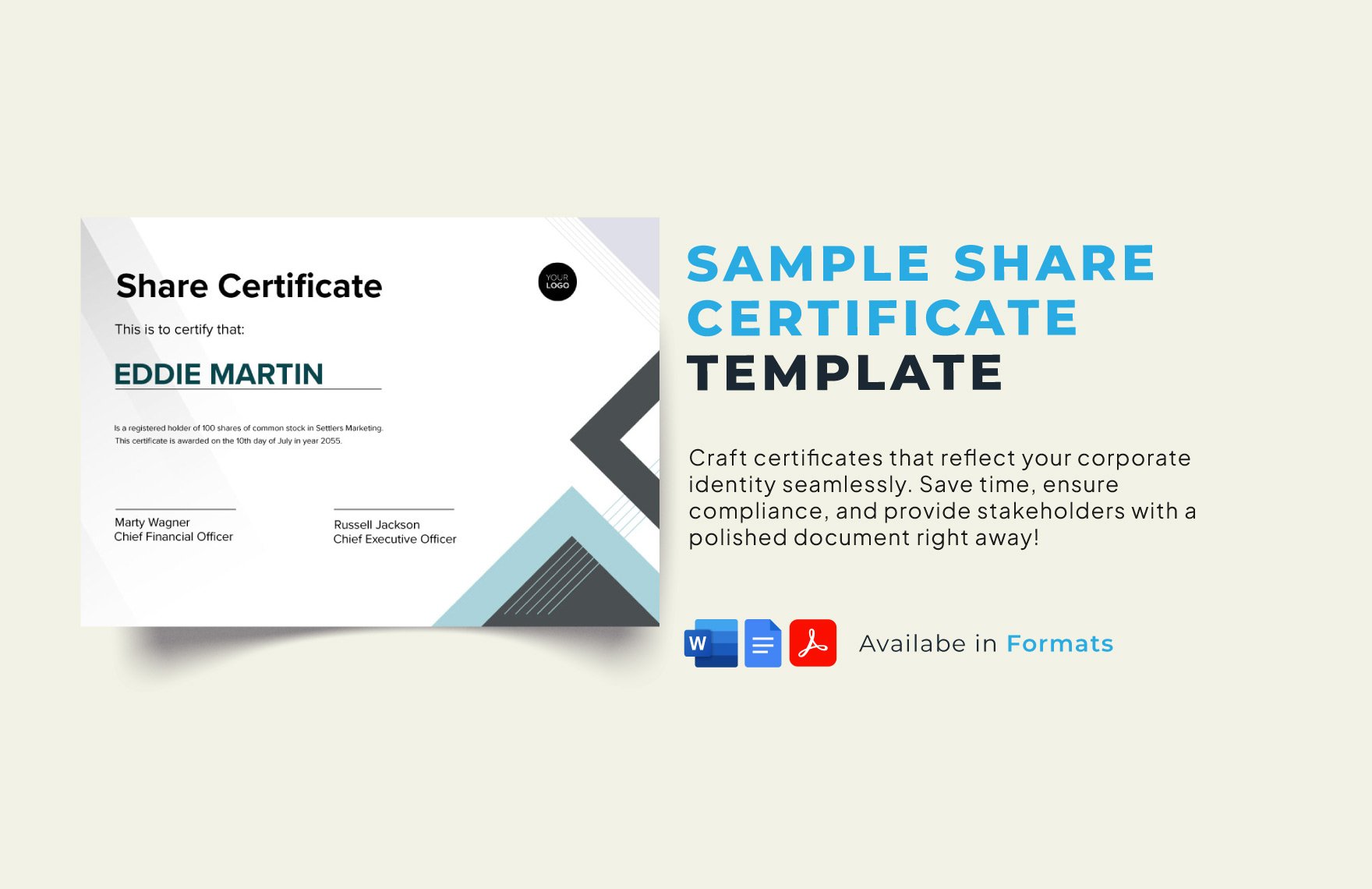
Creating a repeatable process reduces errors and ensures timely distribution. The following workflow covers everything from data collection to final delivery.
1. Gather Shareholder Data
Collect precise information for each shareholder, including:
- Full legal name and address.
- Number of shares, class, and any special rights.
- Preferred method of receipt (email, postal, in‑person).
2. Populate the Template
Using either a PDF editor or Word, replace placeholder text with shareholder details. For mass issuances, consider using mail merge features to automate this step.
3. Verify Compliance
Cross‑check that each certificate includes all statutory elements. Run a compliance checklist to ensure:
- The correct share class terminology.
- Proper signing by an authorized officer.
- Accurate certificate numbering sequence.
4. Sign and Seal
For physical certificates, have a company director or secretary sign in the designated area. If the company operates digitally, embed a secure digital signature or apply a verified seal.
5. Distribute Securely
For PDF certificates, use encrypted email or secure file-sharing portals. When mailing physical certificates, use tracked postal services and request delivery confirmation.
6. Update the Share Register
Record each issuance in the company’s share register immediately to maintain accurate records and support future audits.
Real‑World Examples of Share Certificate Use Cases
Understanding how businesses leverage share certificates can inspire practical applications for your organization. Below are common scenarios that illustrate the versatility of a well‑crafted template.
Initial Public Offering (IPO) Preparations
During an IPO, companies often issue thousands of certificates in a short window. A template that integrates bulk printing and automated numbering saves time and reduces the risk of duplicate certificates.
Employee Share Schemes
Employee stock option plans require frequent certificate issuance or adjustments. Templates that accommodate different share classes (e.g., ordinary, restricted) simplify the process and help maintain clarity for tax purposes.
Foreign Investment and Transfer of Shares
When shares are sold or transferred to foreign entities, a template that allows for additional clauses—such as “subject to foreign exchange controls”—ensures compliance with both Australian and international law.
Legal and Tax Documentation
During audits or tax assessments, investors may request certificates to verify ownership and capital structure. Having a readily available, compliant template streamlines this support, enhancing credibility with regulators.
Common Pitfalls and How to Avoid Them

Even experienced firms can fall into mistakes that jeopardize compliance or dilute investor trust. Being aware of these pitfalls helps maintain the integrity of share certificates.
Inconsistent Certificate Numbers
Skipping or repeating numbers can lead to confusion and legal disputes. Implement an automated numbering system and maintain a master log.
Missing Signature or Seal
Certificates lacking proper signatures are considered void under Australian law. Always double‑check the presence of an authorized signature before distribution.
Outdated Share Class Information
Corporate changes—such as a new preference share class—require template updates. Regularly audit your templates against the company’s statutory filings.
Security Lapses
Using plain text certificates or lacking watermarking can facilitate forgery. Adopt layered security measures such as QR codes and microprinting to protect against counterfeiting.
Maintaining and Updating Your Share Certificate Templates

Corporate governance is dynamic. Regular maintenance of your share certificate template ensures long‑term reliability and compliance.
Annual Review Schedule
Allocate time each year to review the template for:
- Updated company logos or branding changes.
- Revised legal requirements or amendments to the Corporations Act.
- New security features adopted by industry best practices.
Version Control Practices
Use a version control system—whether a simple naming convention or a dedicated document management platform—to track changes. Each new version should be archived and linked to its corresponding issued certificates.
Backup and Archival Strategy
Maintain secure backups of all certificate files, both original templates and issued copies. Consider encrypted storage and a retention policy aligning with Australian corporate laws.
Future Trends: Digital Share Certificates and Blockchain
The digital transformation of corporate equity is accelerating. While traditional paper certificates remain in use, emerging technologies promise greater efficiency and security.
Digital Share Certificates
Electronic certificates signed using digital signatures offer instant issuance and immutable audit trails. These digital files can be stored in secure cloud platforms and accessed by shareholders via secure portals.
Blockchain‑Based Share Issuance
Blockchain solutions provide a tamper‑proof ledger of share ownership. By minting tokens that represent shares, companies can reduce administrative overhead and enhance transparency. However, compliance with Australian Securities and Investments Commission (ASIC) regulations remains a key consideration.
Conclusion
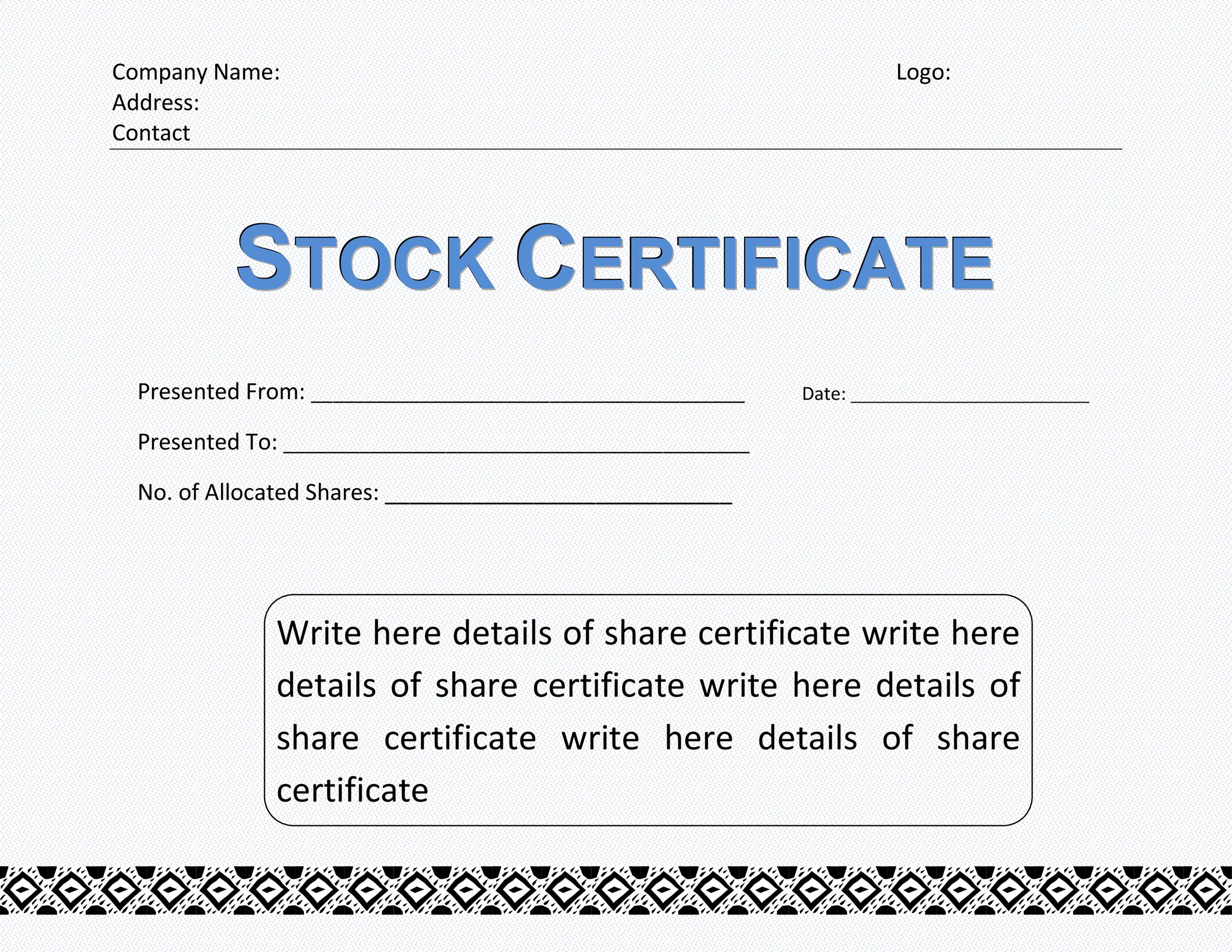
A meticulously designed Share Certificate Template Australia is more than a paper form; it is a vital tool for legal compliance, investor relations, and corporate transparency. By incorporating robust design elements, adhering to statutory requirements, and streamlining the issuance workflow, businesses can ensure that each certificate not only fulfills its legal purpose but also projects professionalism and trust. Whether you are issuing shares to a small cohort of employees or to a global investor base, a reliable, well‑structured template serves as the foundation for secure, scalable equity management. Embrace the right format, apply best‑practice design, and maintain rigorous oversight to keep your share certificates—and your corporate governance—on the path to success.