Job Safety Environmental Analysis Template is the cornerstone of any proactive safety management system, enabling teams to identify hazards, assess risks, and implement controls before work begins. By integrating a structured JSEA template into daily operations, organizations can reduce incident rates, protect the environment, and demonstrate compliance with regulatory standards, all while fostering a culture of continuous improvement.
Why a JSEA Template Is Essential for Modern Workplaces
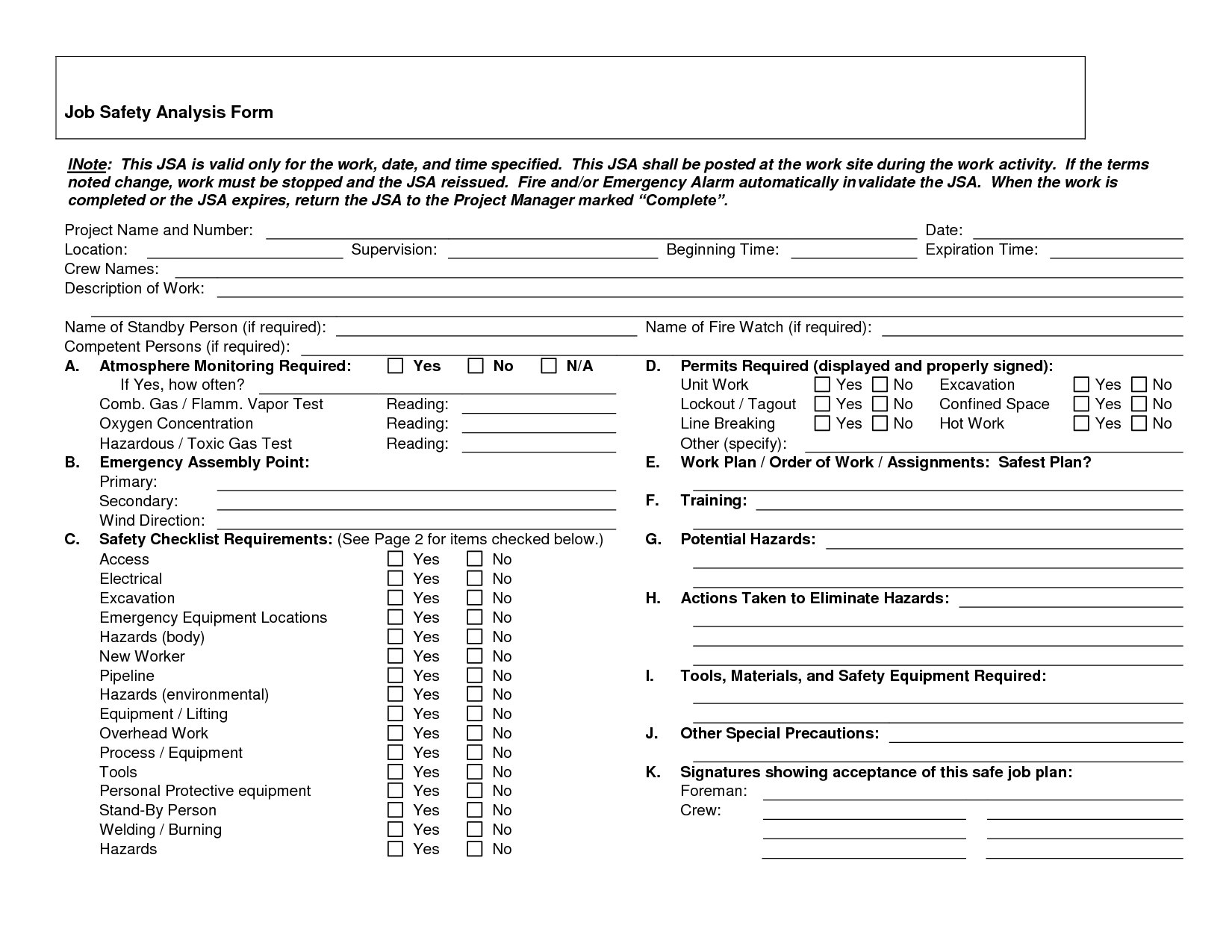
In high‑risk industries such as construction, oil and gas, manufacturing, and mining, the margin for error is razor‑thin. A well‑crafted JSEA template provides a repeatable process that transforms scattered safety observations into a systematic, data‑driven approach. It ensures that every task—whether routine maintenance or a complex installation—is examined through the same lens, capturing critical information that might otherwise be overlooked.
Key benefits include:
- Standardized documentation that simplifies audits and inspections.
- Clear allocation of responsibilities, reducing ambiguity among crew members.
- Early detection of environmental impacts, supporting sustainable operations.
- Enhanced communication between project managers, supervisors, and workers.
- Quantifiable data for trend analysis and continuous improvement.
Core Components of an Effective JSEA Template

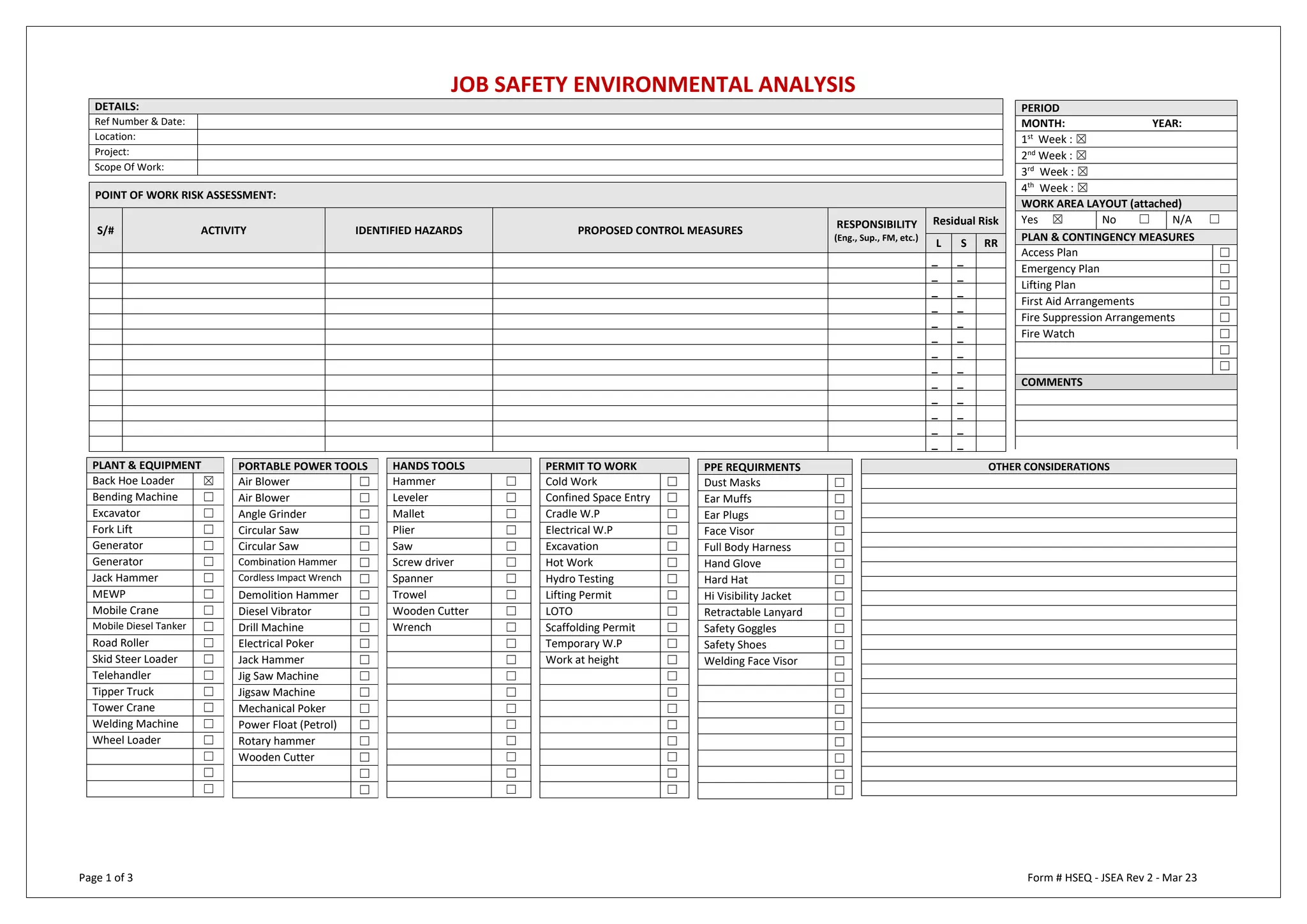
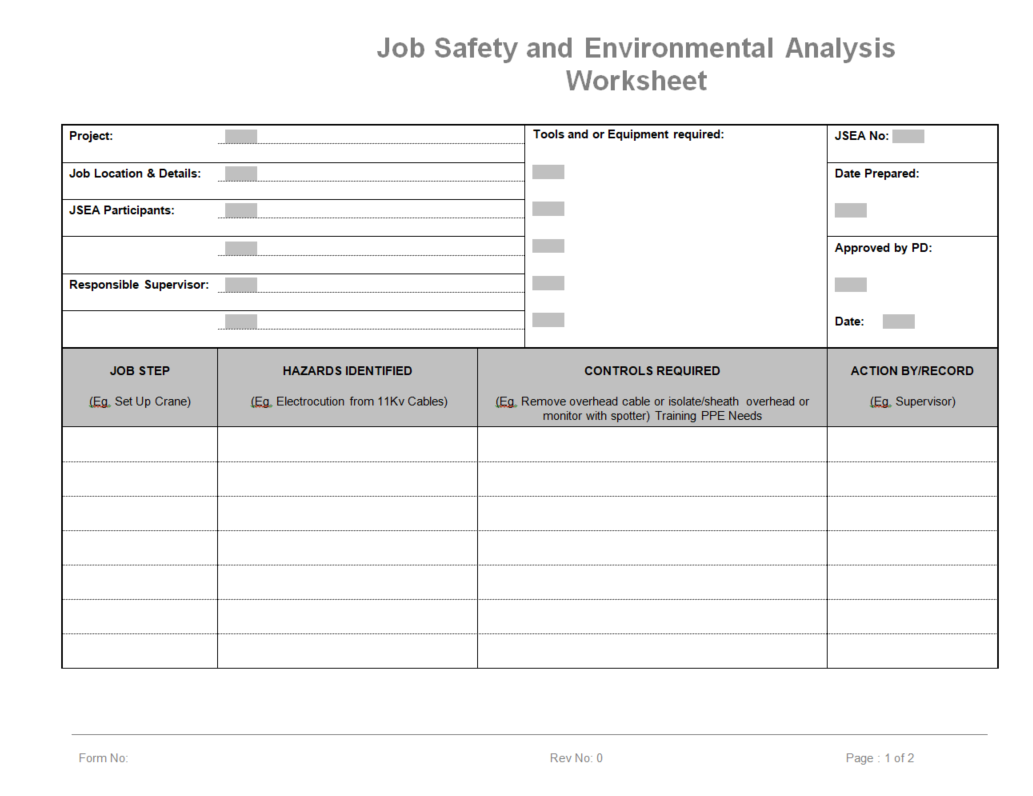
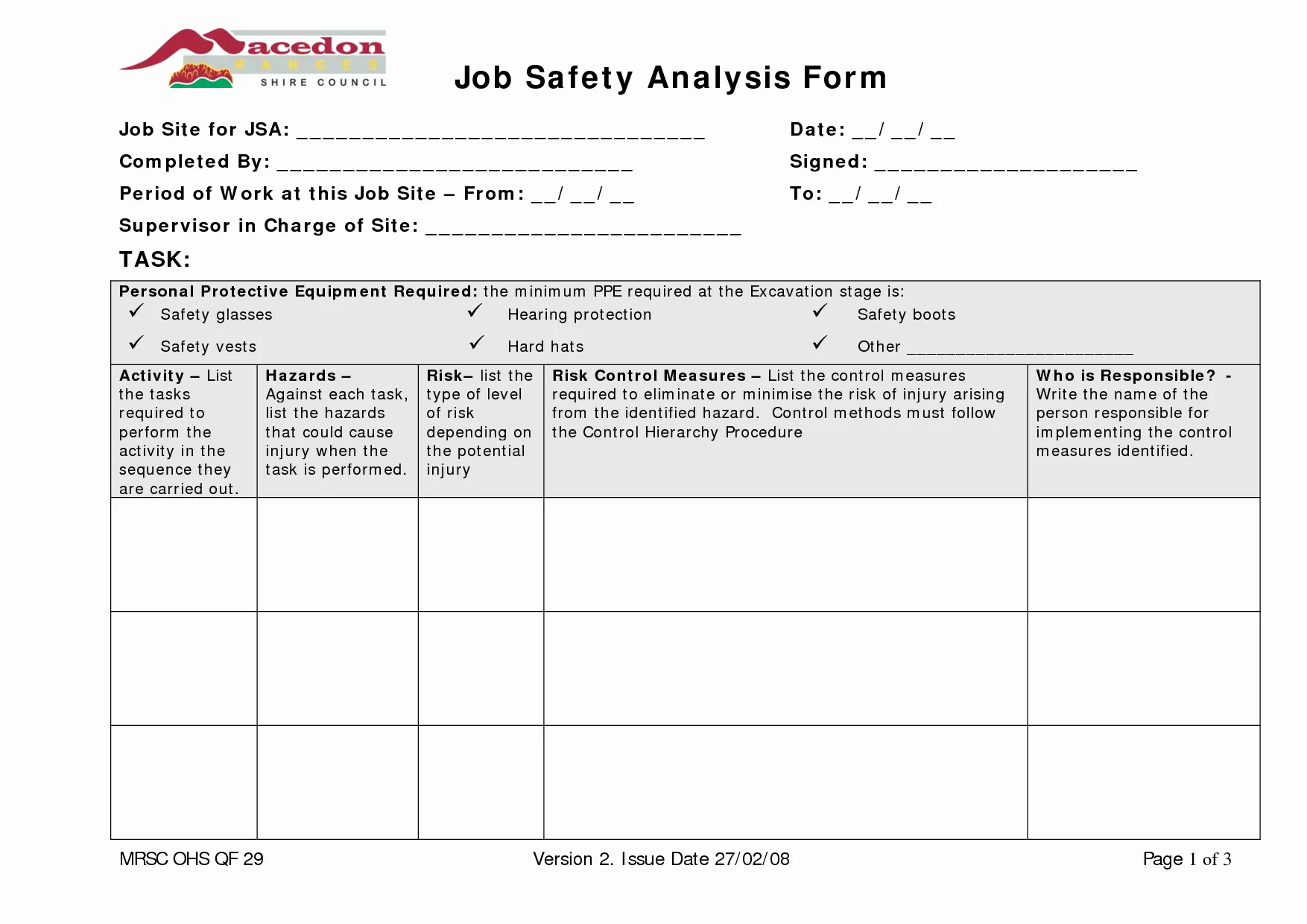
A robust template balances comprehensiveness with usability. Overly complex forms can deter completion, while overly simple ones may miss critical hazards. The following sections represent the essential building blocks of a high‑performing JSEA template.
Task Description
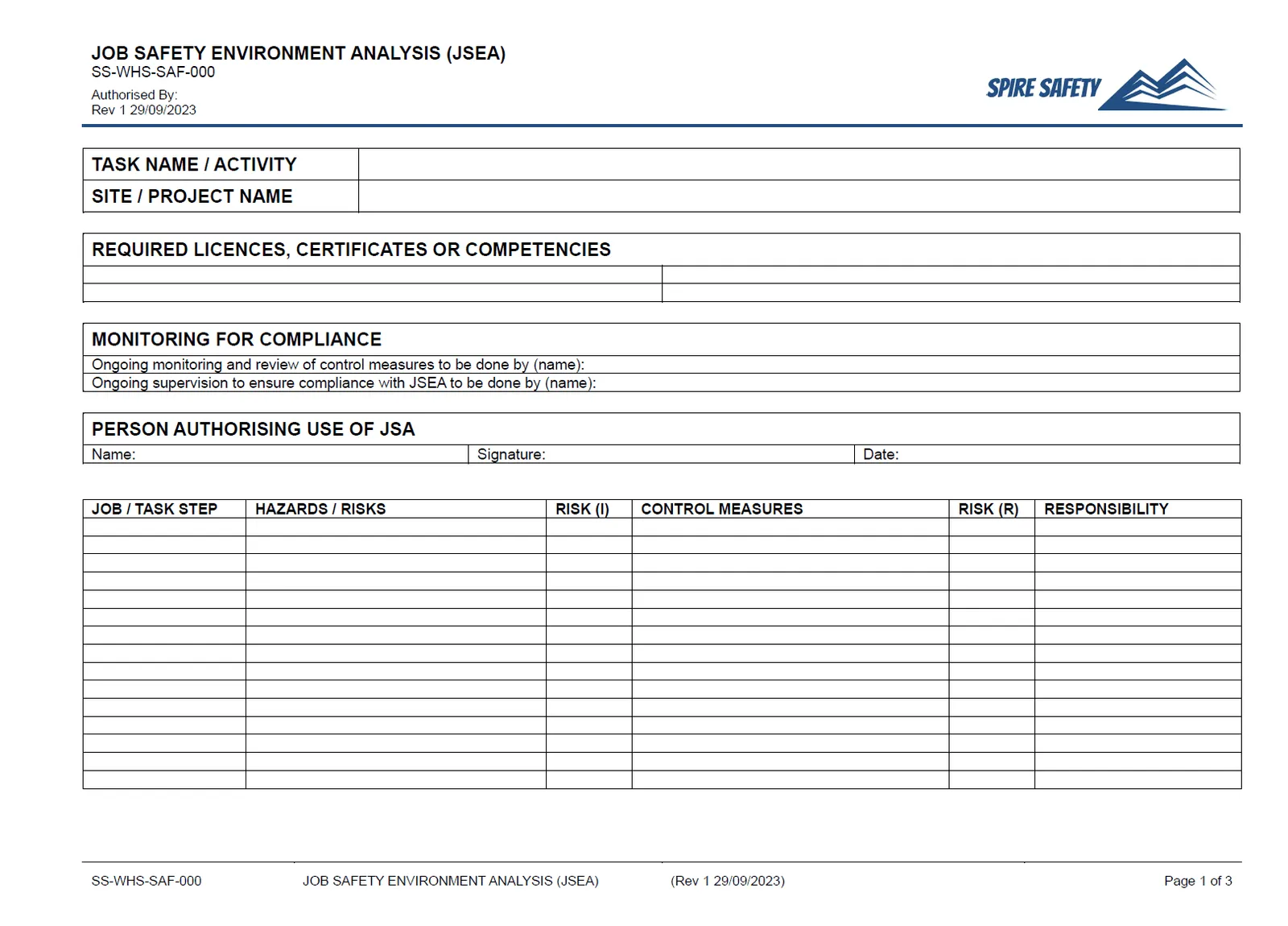
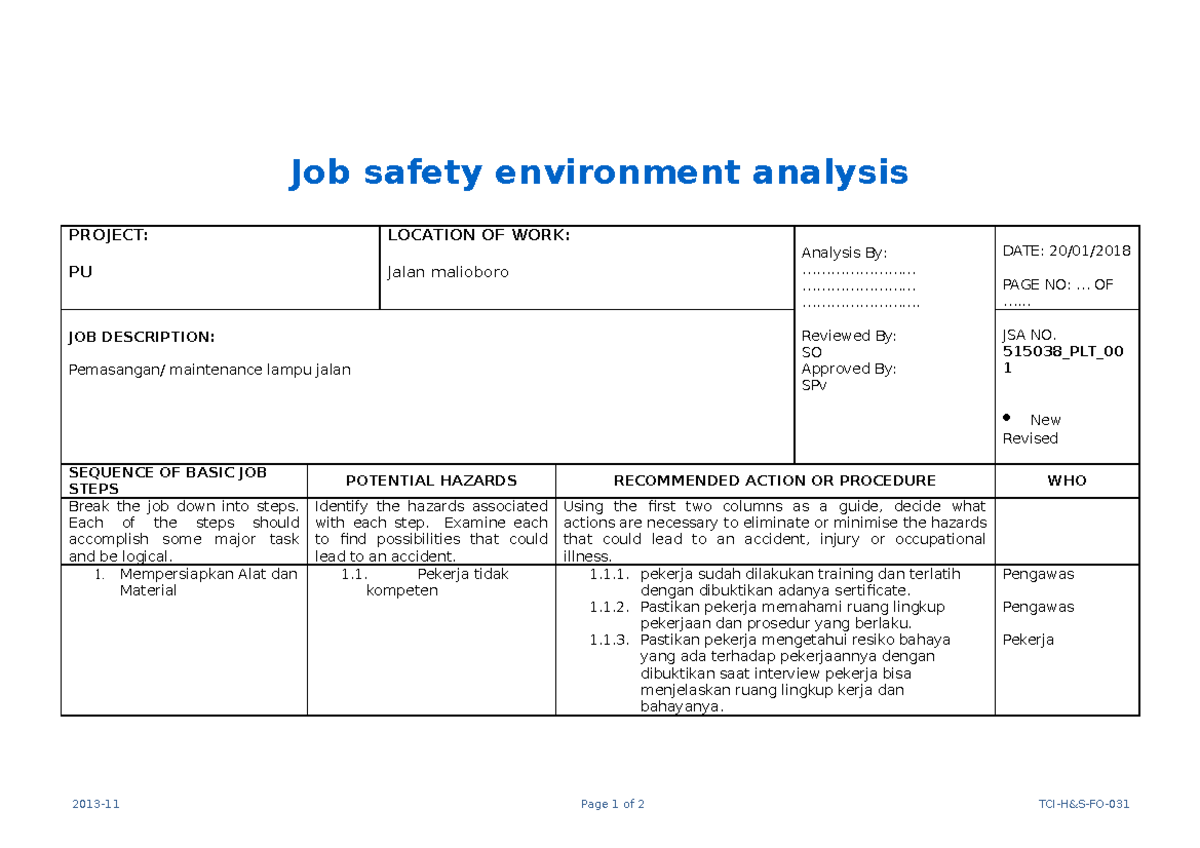
Begin with a concise yet thorough description of the work to be performed. Include location, equipment, duration, and any special conditions. For example, “Installation of a 30‑meter steel conduit on the north side of the plant, using a mobile crane, during daylight hours.” This sets the context for subsequent analysis.
Hazard Identification
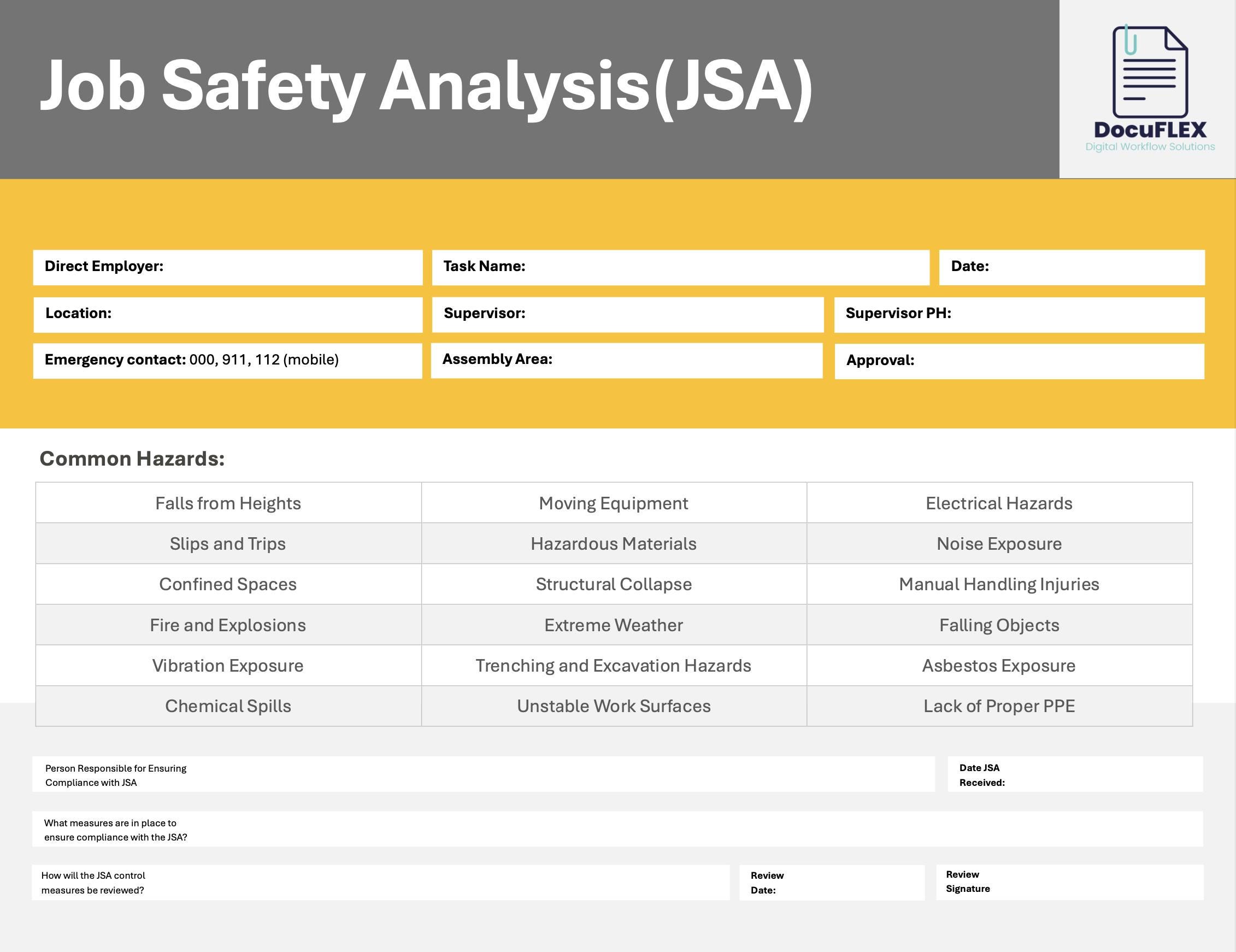
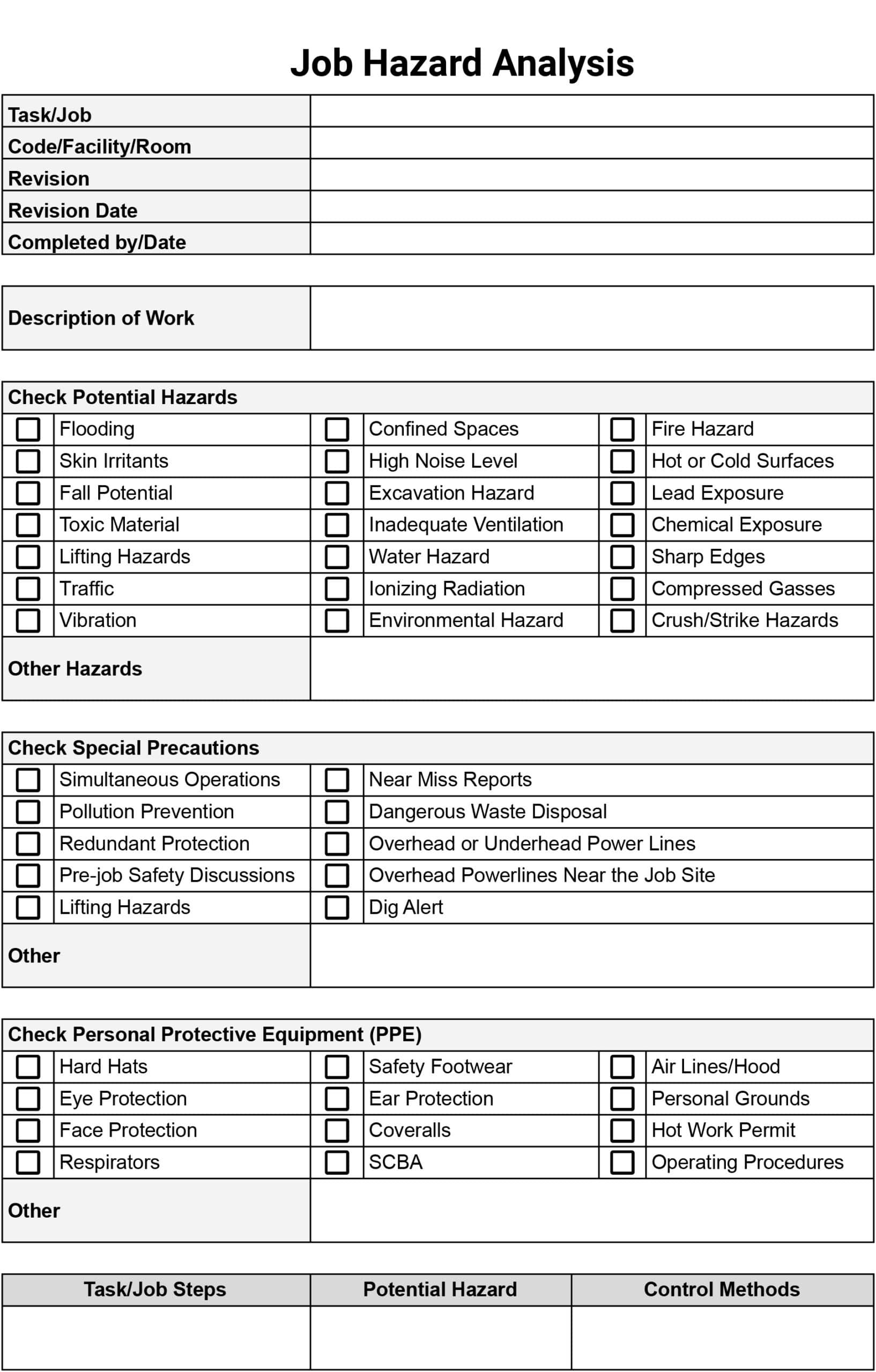
List every potential hazard associated with the task. Categorize them into physical, chemical, biological, ergonomic, and environmental groups. Use a checklist format to prompt thoroughness. Sample entries might include:
- Fall from height
- Electrical shock from live cables
- Exposure to silica dust
- Noise exceeding 85 dB(A)
- Potential fuel spillage into nearby waterway
Risk Assessment
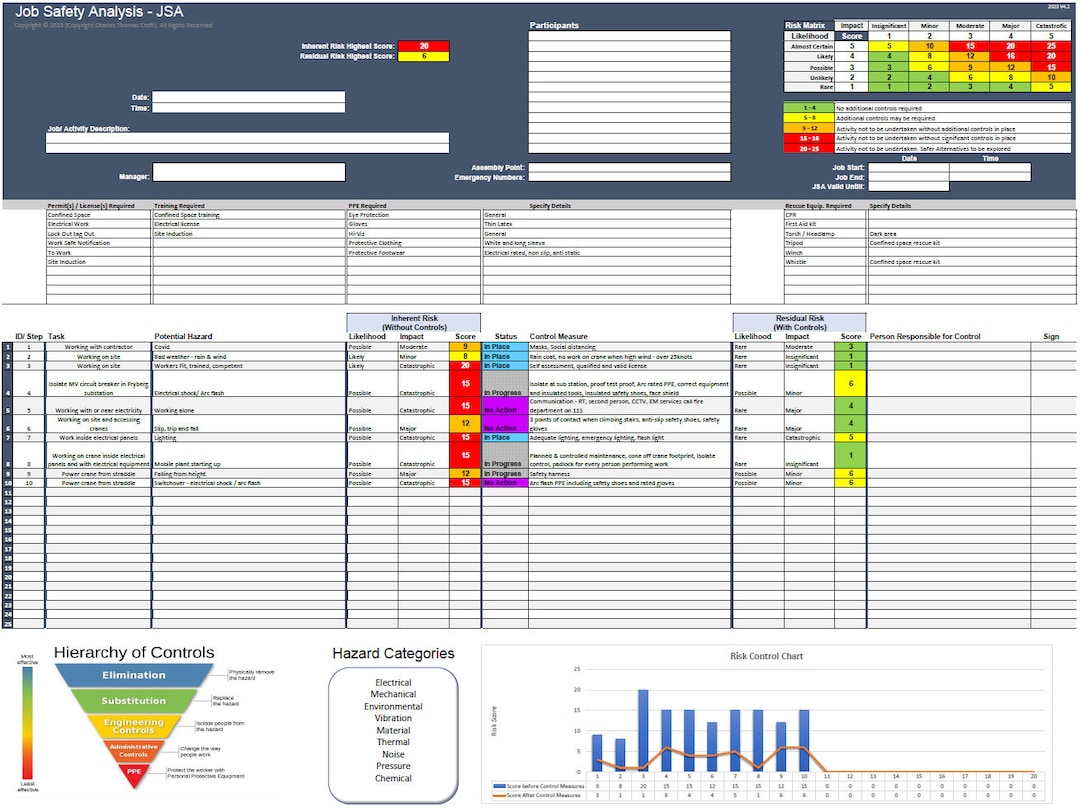
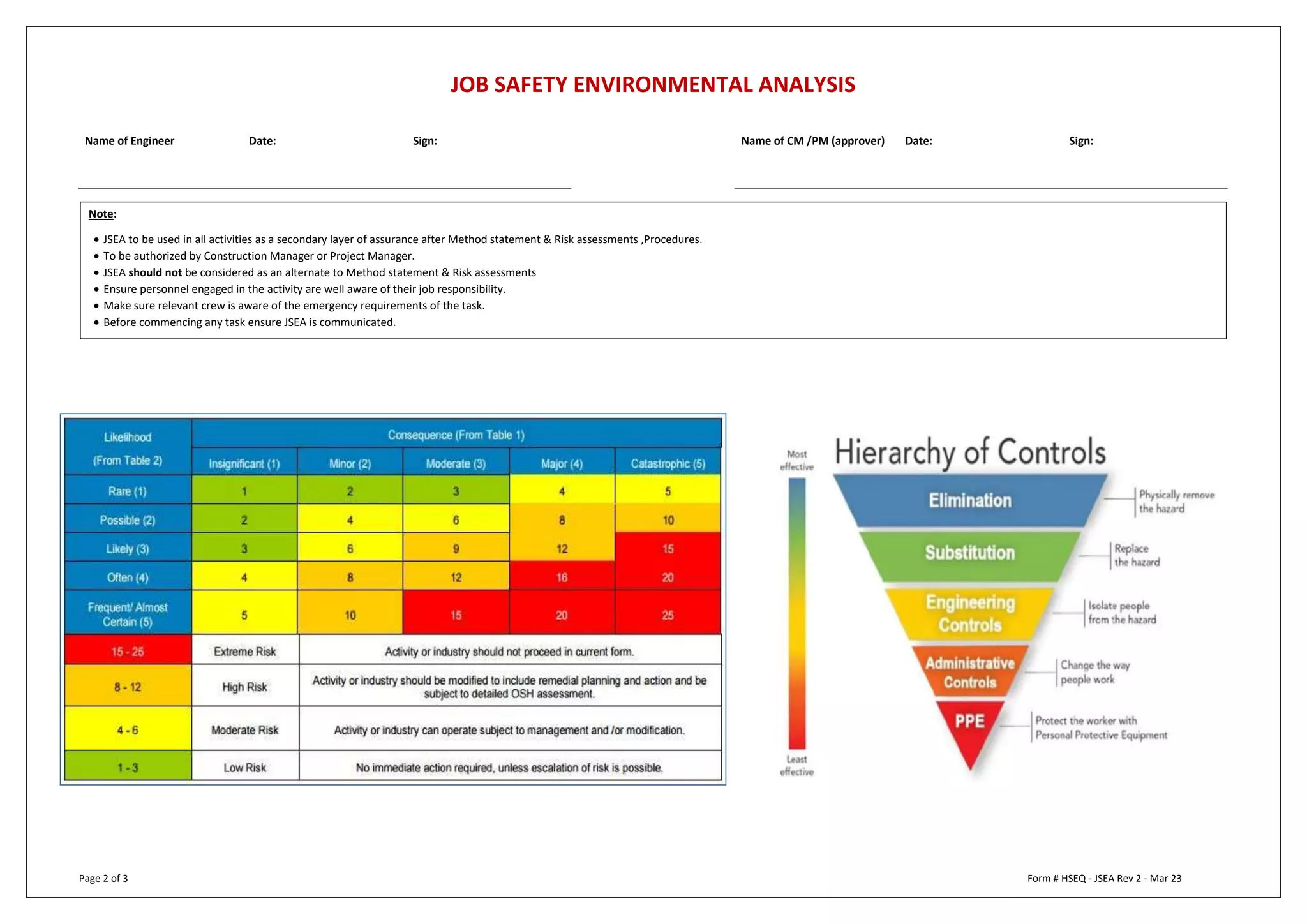
Assign a likelihood and severity rating to each identified hazard, often using a 5‑by‑5 matrix. Multiply the two scores to calculate a risk rating, which determines the priority for control measures. For instance, a “Likely” (4) and “Major” (4) combination yields a risk rating of 16, indicating a high‑risk item that demands immediate attention.
Control Measures
Apply the hierarchy of controls to each high‑risk hazard:
- Elimination: Remove the hazard entirely, such as redesigning a workflow to avoid work at height.
- Substitution: Replace a hazardous material with a less dangerous alternative, like using low‑VOC paint.
- Engineering Controls: Install guardrails, ventilation systems, or noise dampening barriers.
- Administrative Controls: Implement safe work procedures, job rotation, or training programs.
- PPE: Provide appropriate personal protective equipment, ensuring it is maintained and correctly used.
Document each control with a responsible party, implementation date, and verification method.
Environmental Impact Assessment
Beyond worker safety, the template must address potential ecological consequences. Identify emissions, waste generation, water usage, and disturbance to local habitats. For example, “Potential for oil leakage during equipment transfer; implement secondary containment and spill response plan.” Including these elements demonstrates compliance with environmental regulations and corporate sustainability goals.
Emergency Procedures
Outline clear steps for responding to incidents related to the task. Include evacuation routes, first‑aid provisions, spill response kits, and contact information for emergency services. A concise emergency flowchart can be attached to the template for quick reference.
Sign‑off and Review
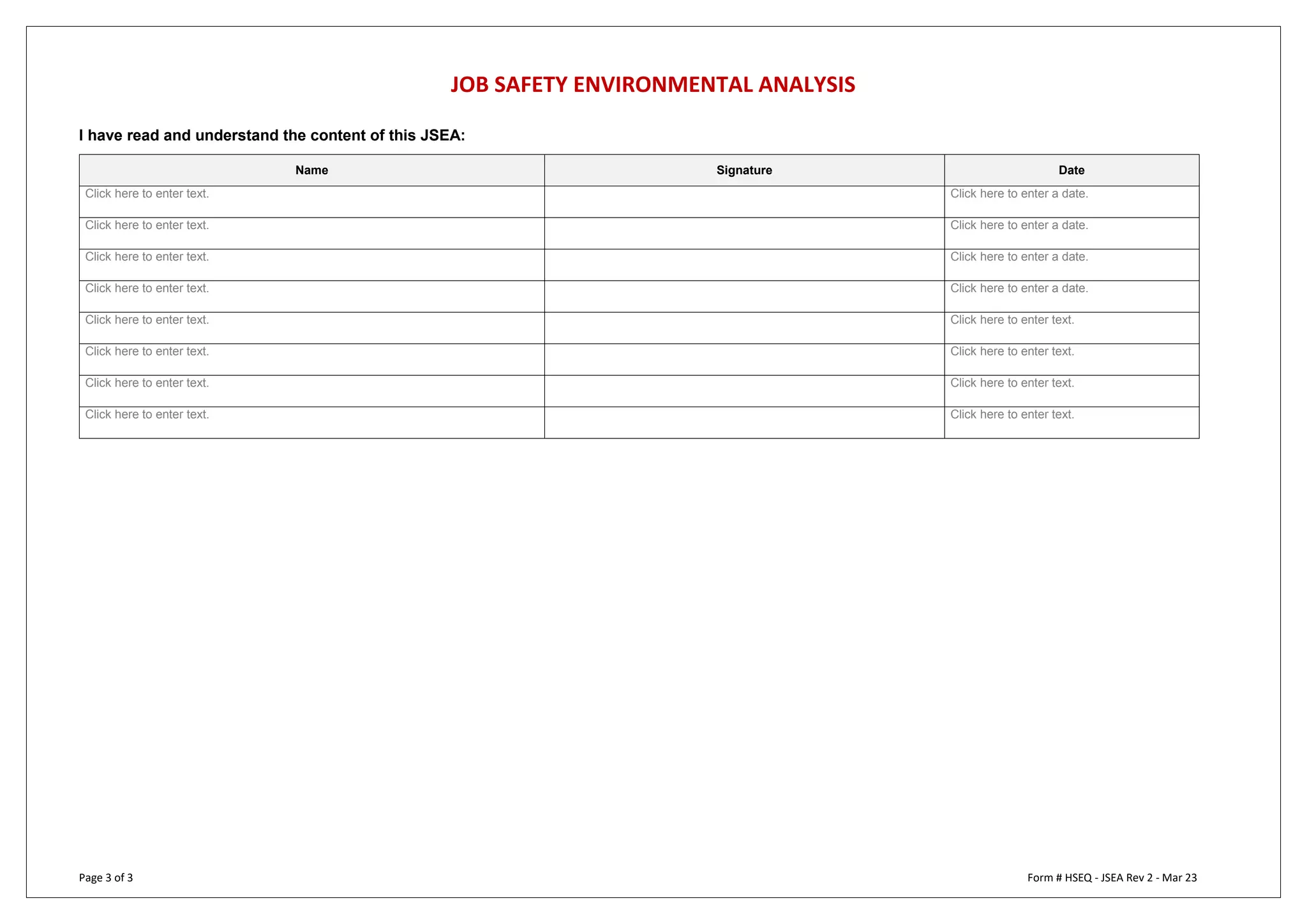
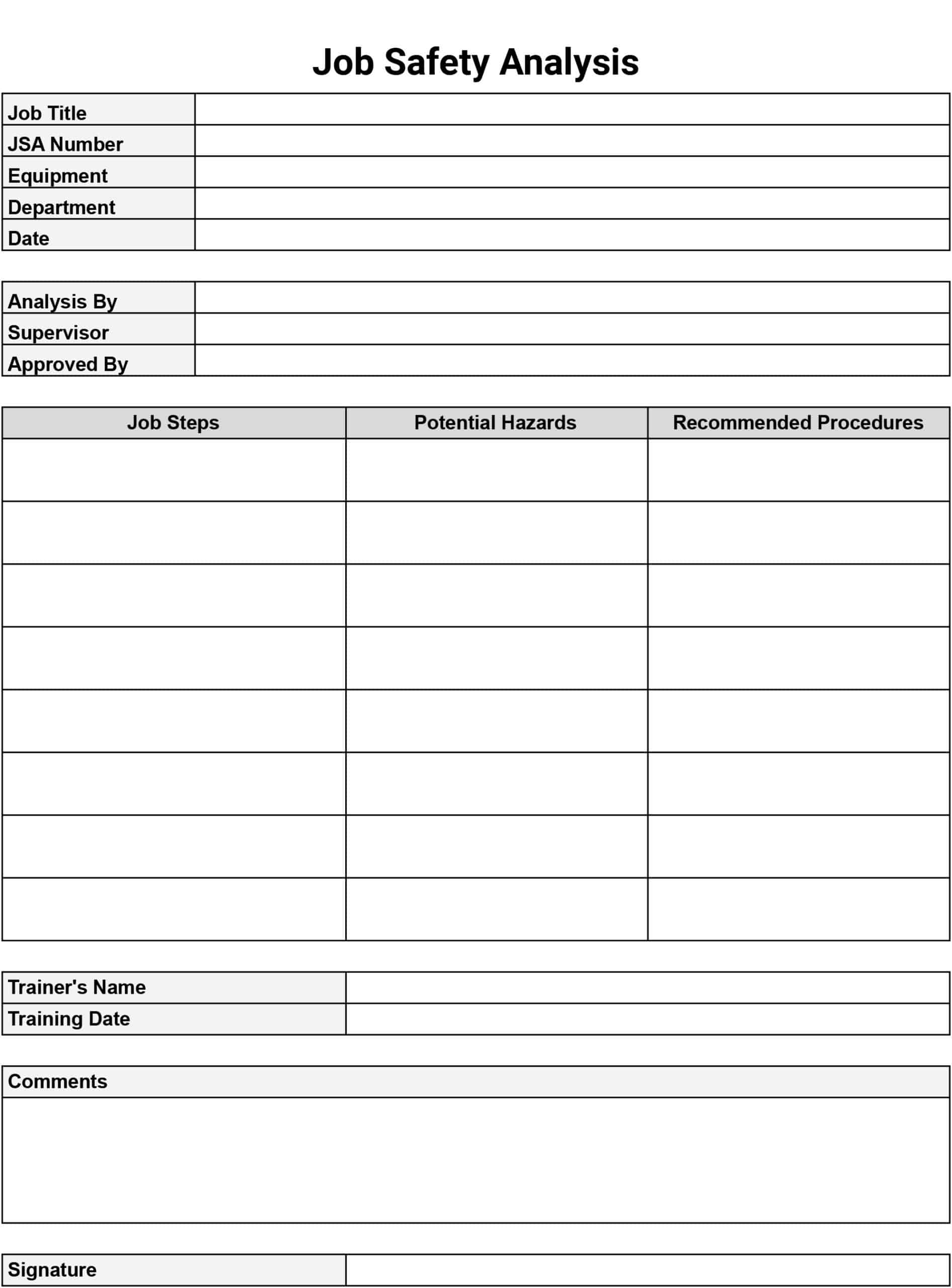
Require signatures from the planner, supervisor, and a safety representative to certify that the analysis is complete and accurate. Include a review date to prompt re‑evaluation for recurring tasks or when conditions change.
Step‑by‑Step Guide to Completing the JSEA Template

Following a disciplined process ensures that the JSEA is not merely a paperwork exercise but a living document that drives safety performance.
Step 1: Gather the Right Team
Assemble a cross‑functional group that includes the task owner, a safety officer, an environmental specialist, and an experienced worker who will perform the job. Diverse perspectives surface hidden hazards and promote ownership of the control measures.
Step 2: Define the Scope
Clarify the boundaries of the analysis. Determine whether the JSEA covers a single activity, a series of related tasks, or an entire project phase. Clear scope prevents scope creep and ensures focused risk assessment.
Step 3: Conduct a Walk‑through
Perform a physical inspection of the work area before filling out the template. Use a clipboard or tablet to note real‑time observations. This on‑site verification catches discrepancies between planned and actual conditions.
Step 4: Populate the Template
Systematically fill each section, referencing the walk‑through notes. Avoid generic entries; specificity improves the relevance of controls. For example, instead of “Wear PPE,” specify “Wear Class 3 hard hat, ANSI‑Z87.1 safety glasses, and NIOSH‑approved respirator with P100 filter.”
Step 5: Evaluate Controls
Review proposed controls with the team to confirm feasibility and adequacy. Adjust any measures that are impractical or insufficient. Document the rationale for each decision to support future audits.
Step 6: Obtain Approvals
Secure signatures from all required parties. Digital signatures are acceptable if the organization’s policy permits electronic record‑keeping.
Step 7: Communicate and Train
Hold a pre‑task briefing where the completed JSEA is reviewed with all workers. Emphasize high‑risk hazards, required controls, and emergency procedures. Provide hands‑on training for any specialized equipment or PPE.
Step 8: Execute the Work
Proceed with the task only after all controls are in place and verified. Assign a safety monitor to conduct periodic checks and address any deviations from the plan.
Step 9: Post‑Task Review
After completion, conduct a debrief to capture lessons learned. Update the JSEA template if new hazards were discovered or if controls proved ineffective. This feedback loop fuels continuous improvement.
Real‑World Applications and Success Stories
Concrete examples illustrate how the JSEA template translates into measurable safety gains.
Construction Site – High‑Rise Scaffold Installation
A metropolitan construction firm adopted a standardized JSEA template for all scaffold erection activities. By rigorously assessing wind speed, load capacity, and worker training, the company reduced scaffold‑related incidents by 68% over 12 months. The template also incorporated environmental checks for dust suppression, leading to compliance with local air‑quality regulations.
Oil & Gas Pipeline Maintenance
A pipeline operator used the JSEA template to plan hot‑tapping operations. The analysis identified a high‑risk scenario involving hydrogen sulfide exposure. By implementing engineering controls—installing a closed‑loop ventilation system—and providing specialized respirators, the crew completed the job with zero incidents and no detectable emissions, satisfying both safety and environmental criteria.
Manufacturing – Chemical Mixing Process
In a plant that blends hazardous chemicals, the JSEA template highlighted the risk of accidental over‑pressure. The team introduced a pressure‑relief valve and updated standard operating procedures. Over the following year, the plant reported a 100% reduction in pressure‑related incidents and eliminated a previously recurring chemical spill, protecting both workers and the surrounding community.
Integrating the JSEA Template With Digital Tools

While paper‑based forms still have a place, digital platforms enhance accessibility, version control, and data analytics. Key considerations for digital integration include:
- Mobile Compatibility: Enable field workers to complete JSEAs on tablets or smartphones, ensuring real‑time data capture.
- Workflow Automation: Route the completed template automatically to approvers, reducing bottlenecks.
- Analytics Dashboard: Aggregate risk ratings across projects to identify trends, prioritize training, and allocate resources strategically.
- Document Management: Store historical JSEAs for audit trails and regulatory compliance.
- Offline Capability: Allow offline entry in remote locations, syncing data once connectivity is restored.
Adopting a digital JSEA system can shorten the approval cycle by up to 40% and provide leadership with actionable insights at a glance.
Customizing the Template for Different Industries
Although the core structure remains consistent, tailoring the template to sector‑specific hazards maximizes relevance.
Construction
Include fields for “Fall Protection System Type,” “Excavation Shoring Requirements,” and “Proximity to Utilities.” Add a checklist for “Permit‑to‑Work” compliance, covering hot work, confined space, and electrical isolation.
Oil & Gas
Incorporate sections for “Flammable Atmosphere Classification,” “Process Safety Management (PSM) Controls,” and “Spill Containment Measures.” Emphasize hazard communication for hazardous gases and incorporate emergency shutdown procedures.
Manufacturing
Focus on machine guarding, lockout/tagout (LOTO) procedures, and chemical handling protocols. Include a matrix for “Noise Exposure Duration” and “Ergonomic Assessment” to address repetitive‑strain risks.
Healthcare
Adapt the template to address infection control, sharps safety, and patient handling hazards. Add a field for “Radiation Exposure Monitoring” when applicable.
Maintaining the JSEA Process Over Time
Static documents lose effectiveness as environments evolve. Implement a governance framework to keep the JSEA process dynamic.
Scheduled Audits
Conduct quarterly audits of completed JSEAs to verify that controls remain effective and that documentation meets regulatory standards.
Continuous Training
Offer refresher courses on hazard identification techniques, risk matrix interpretation, and emergency response drills. Encourage workers to suggest improvements based on frontline experience.
Feedback Loops
Establish a simple mechanism—such as a digital comment field—for workers to report gaps in the template or emerging hazards. Review these inputs during monthly safety meetings.
Performance Metrics
Track key performance indicators (KPIs) such as “Number of JSEAs Completed per Project,” “Average Risk Rating,” and “Incident Rate Post‑JSEA Implementation.” Use these metrics to benchmark against industry standards and drive continuous improvement.
Common Pitfalls and How to Avoid Them

Even with a solid template, missteps can undermine its effectiveness. Recognize and address these common challenges.
Over‑Simplification
Skipping detailed hazard analysis to save time leads to incomplete controls. Counteract this by mandating a minimum number of hazard entries based on task complexity.
Inadequate Training
Workers unfamiliar with risk matrices may assign inaccurate ratings. Provide hands‑on workshops that use real‑world scenarios to practice rating and control selection.
Failure to Update
Using outdated templates can result in missing new regulatory requirements. Schedule an annual review of the template format and content, involving legal and compliance teams.
Lack of Accountability
If sign‑offs are treated as a formality, responsibility dissipates. Tie completion of the JSEA to performance evaluations and project milestones.
Conclusion

The Job Safety Environmental Analysis Template is more than a checklist; it is a strategic tool that aligns safety, environmental stewardship, and operational efficiency. By embracing a standardized, thorough, and dynamic JSEA process, organizations can proactively mitigate risks, comply with regulations, and cultivate a culture where every worker feels empowered to contribute to a safe and sustainable workplace. Continuous refinement, digital integration, and industry‑specific customization ensure that the template remains relevant and effective, turning safety planning into measurable performance gains and protecting both people and the planet for years to come.