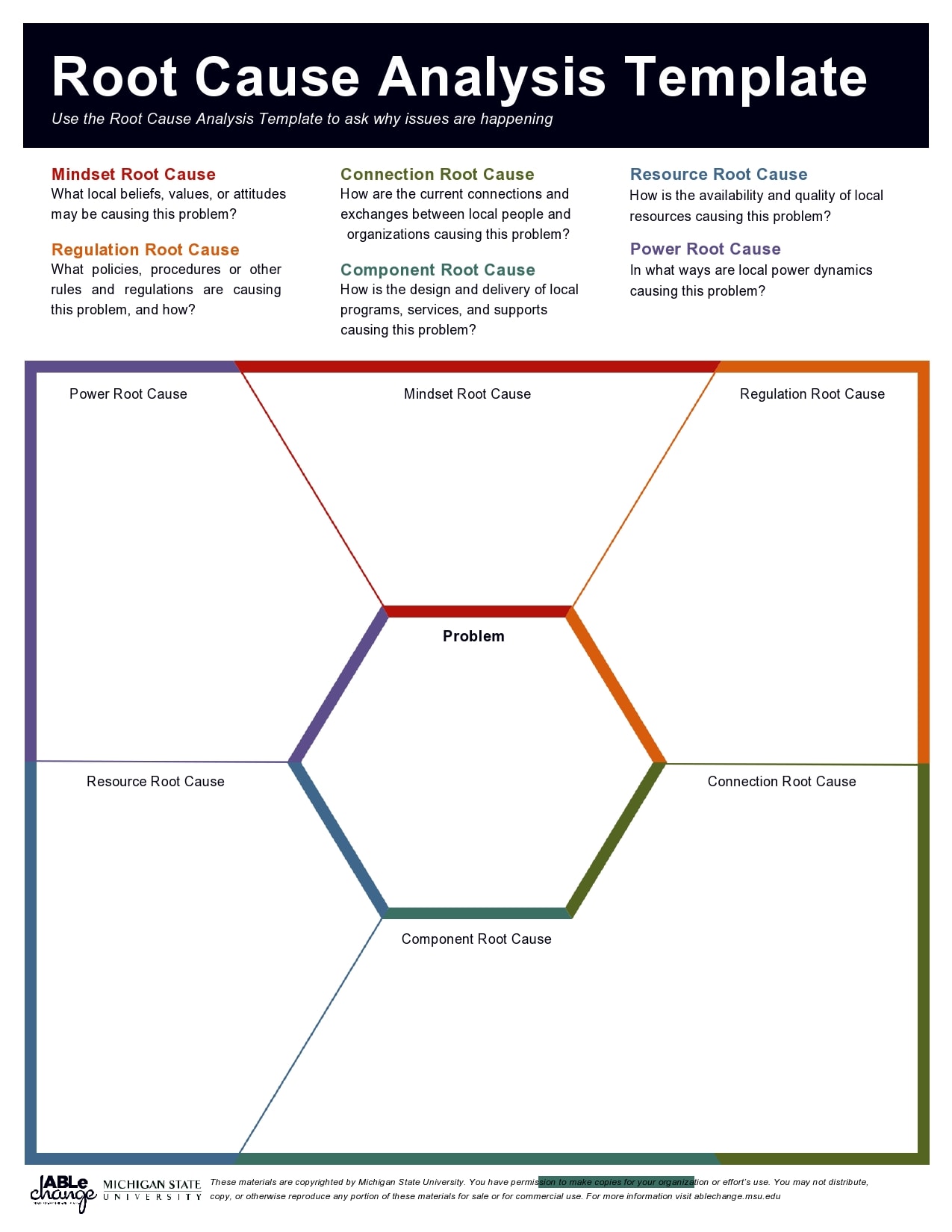
Root Cause Analysis And Corrective Action Plan Template serves as the cornerstone for transforming operational hiccups into learning opportunities, especially within the fast-paced, quality-driven Asian market where precision and accountability are paramount. By weaving together analytical rigor and culturally attuned practices, this framework not only identifies why problems occur but also maps a clear path to sustainable improvement.
Why Root Cause Analysis Matters in Asian Workplaces
In countries across East and South Asia, businesses often blend hierarchical decision‑making with a deep respect for collective harmony. Root Cause Analysis (RCA) aligns with this ethos by encouraging teams to investigate issues collaboratively, fostering a shared sense of ownership rather than placing blame on individuals. Furthermore, the relentless pursuit of excellence—mirrored in concepts like Kaizen and Six Sigma—demands a systematic approach to error reduction. RCA offers that structure, enabling firms to prevent recurrence and maintain customer trust in markets that value reputation and reliability.
Business Benefits
- Cost Efficiency: Fixing symptoms is expensive; addressing underlying causes cuts repeat incidents.
- Productivity Gains: Streamlined processes reduce downtime and free resources for innovation.
- Regulatory Compliance: Many industries in Asia require documented corrective actions for audit purposes.
- Employee Morale: Transparent problem‑solving builds confidence and encourages continuous learning.
Cultural Resonance
- Respect for hierarchy means that RCA meetings often involve senior leaders and frontline staff, promoting cross‑functional dialogue.
- The emphasis on collective responsibility ensures that corrective actions are shared, not isolated.
- Incorporating “kaizen” principles allows for incremental improvements that feel culturally appropriate and sustainable.
Key Components of a Robust Corrective Action Plan
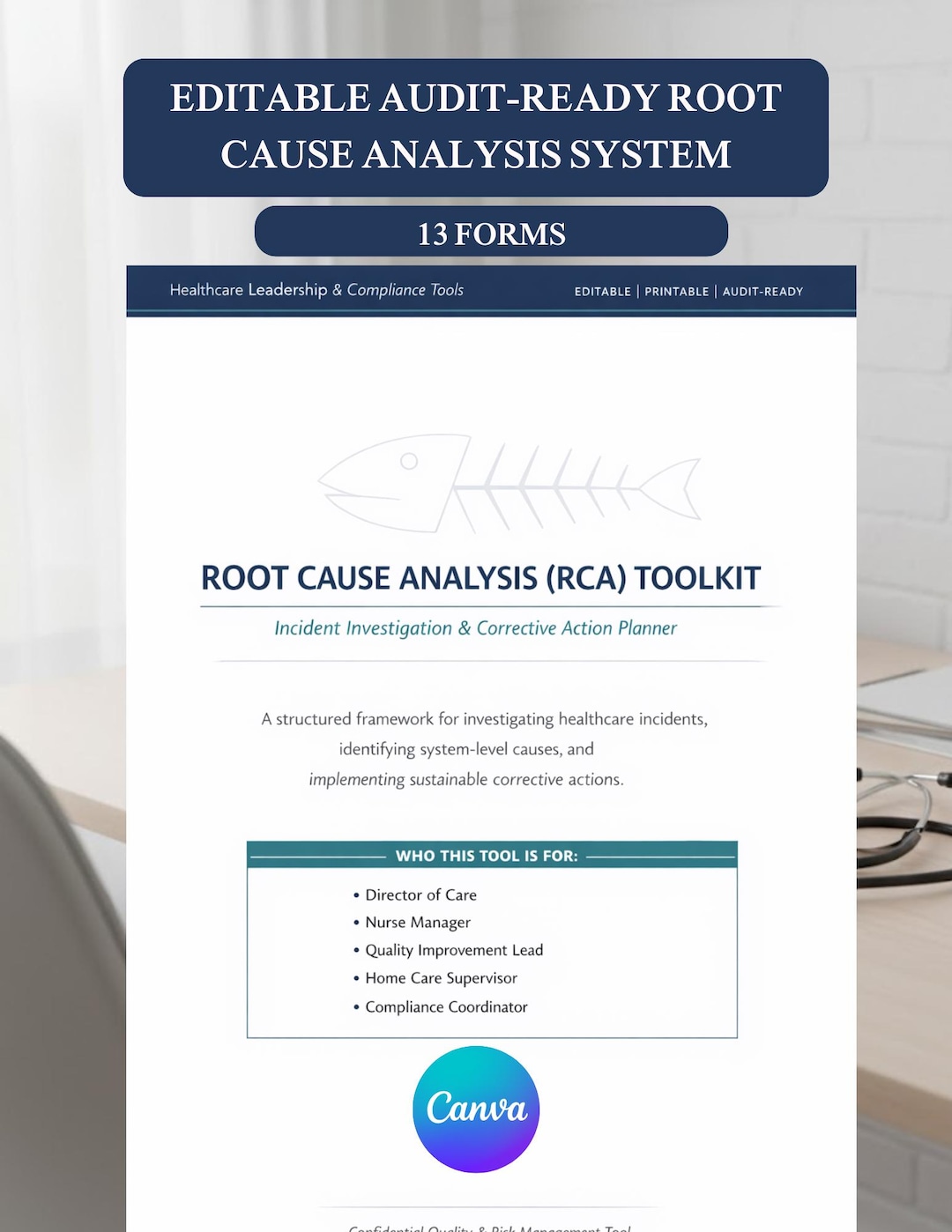
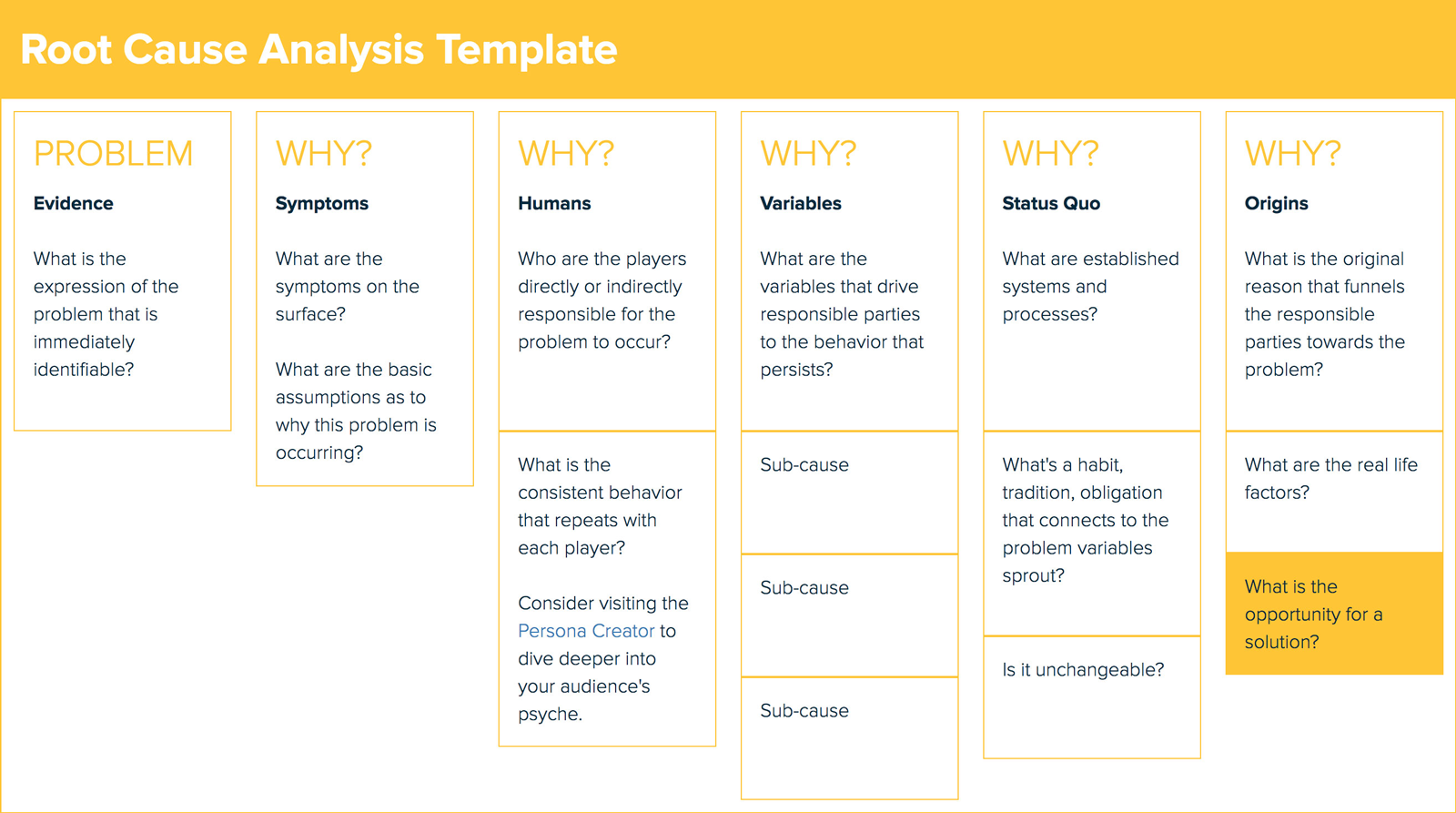
A well‑structured RCA template should guide the investigation from symptom to solution. Below is the core anatomy that every template ought to contain.
1. Problem Statement
Clearly define the issue using the 5‑W framework (Who, What, When, Where, Why). A concise statement sets the scope and aligns stakeholders.
2. Data Collection
Gather quantitative and qualitative evidence: incident reports, process logs, customer feedback, and employee observations. Data integrity is critical in an environment where precision is valued.
3. Root Cause Identification
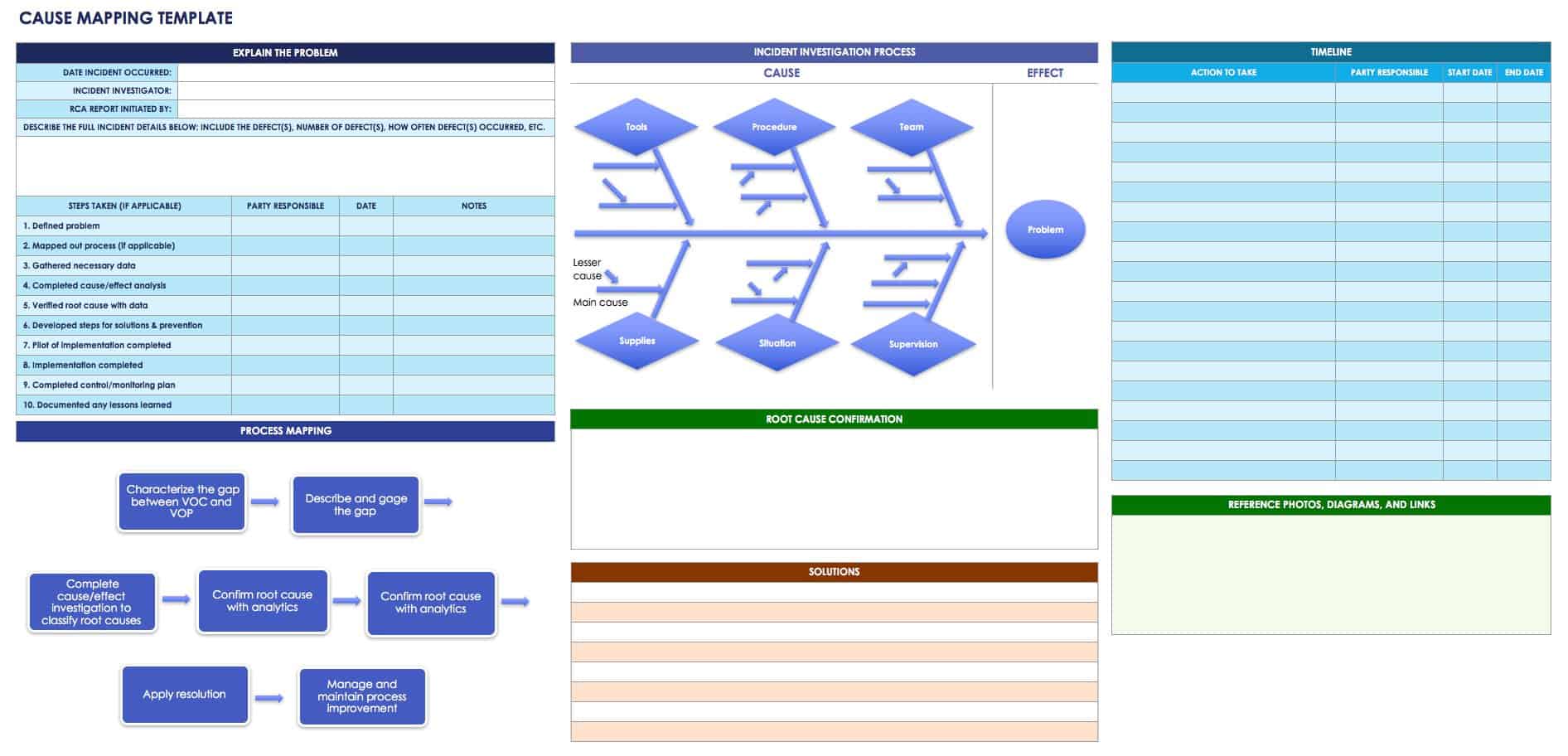
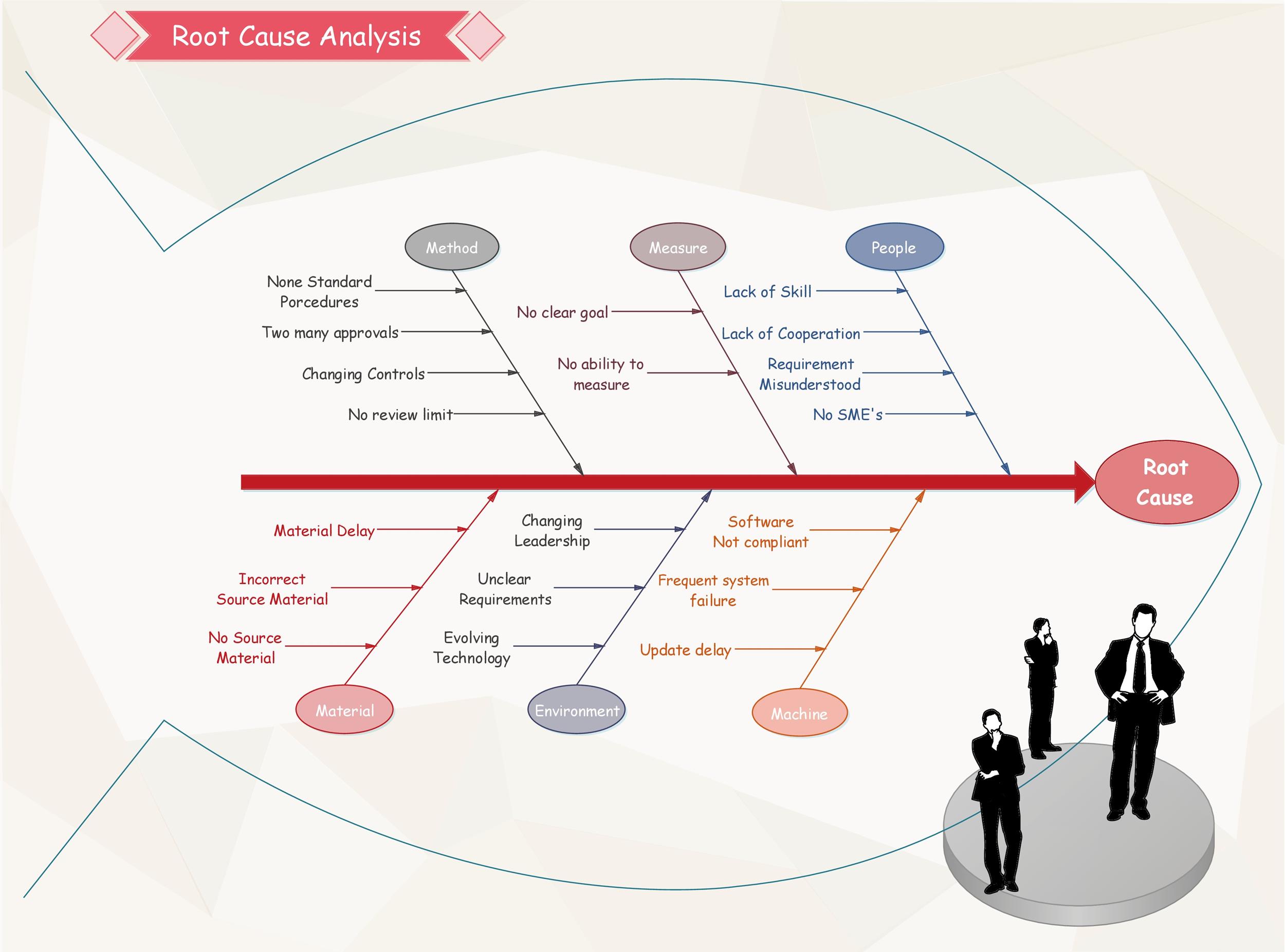
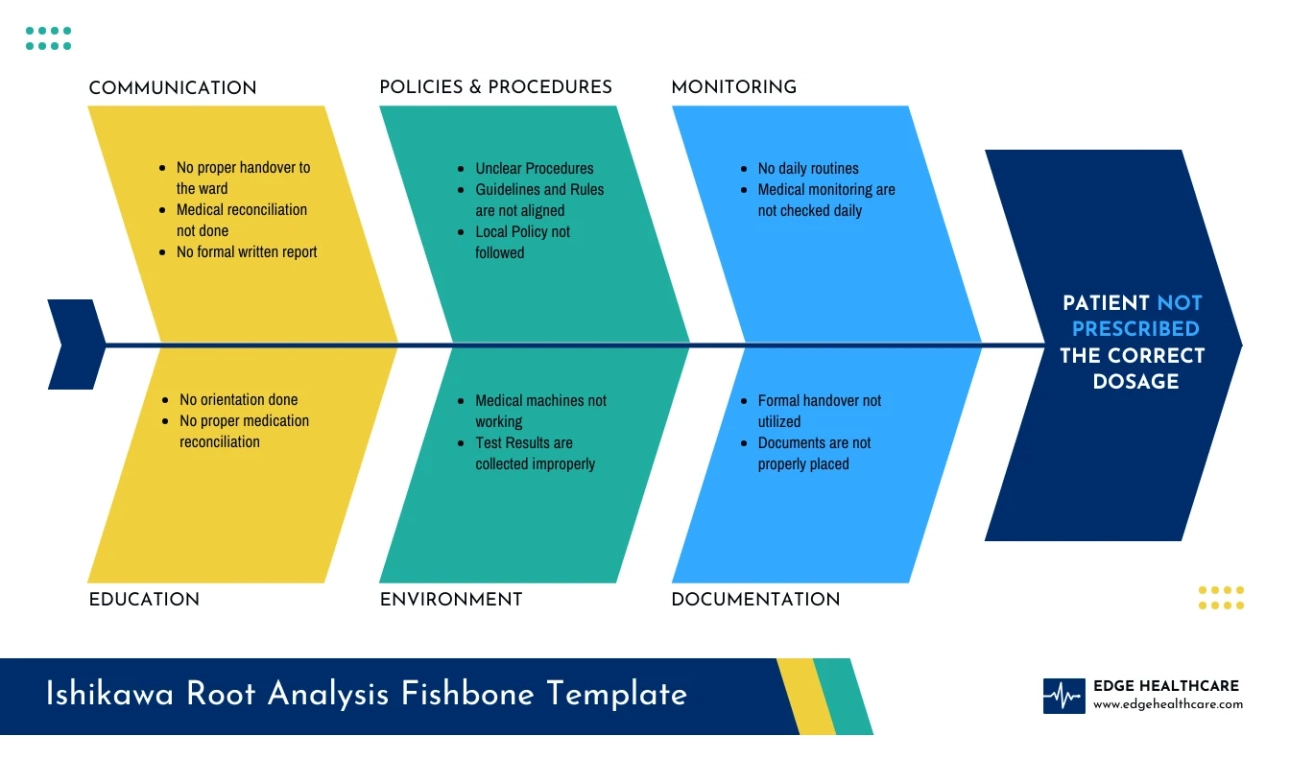
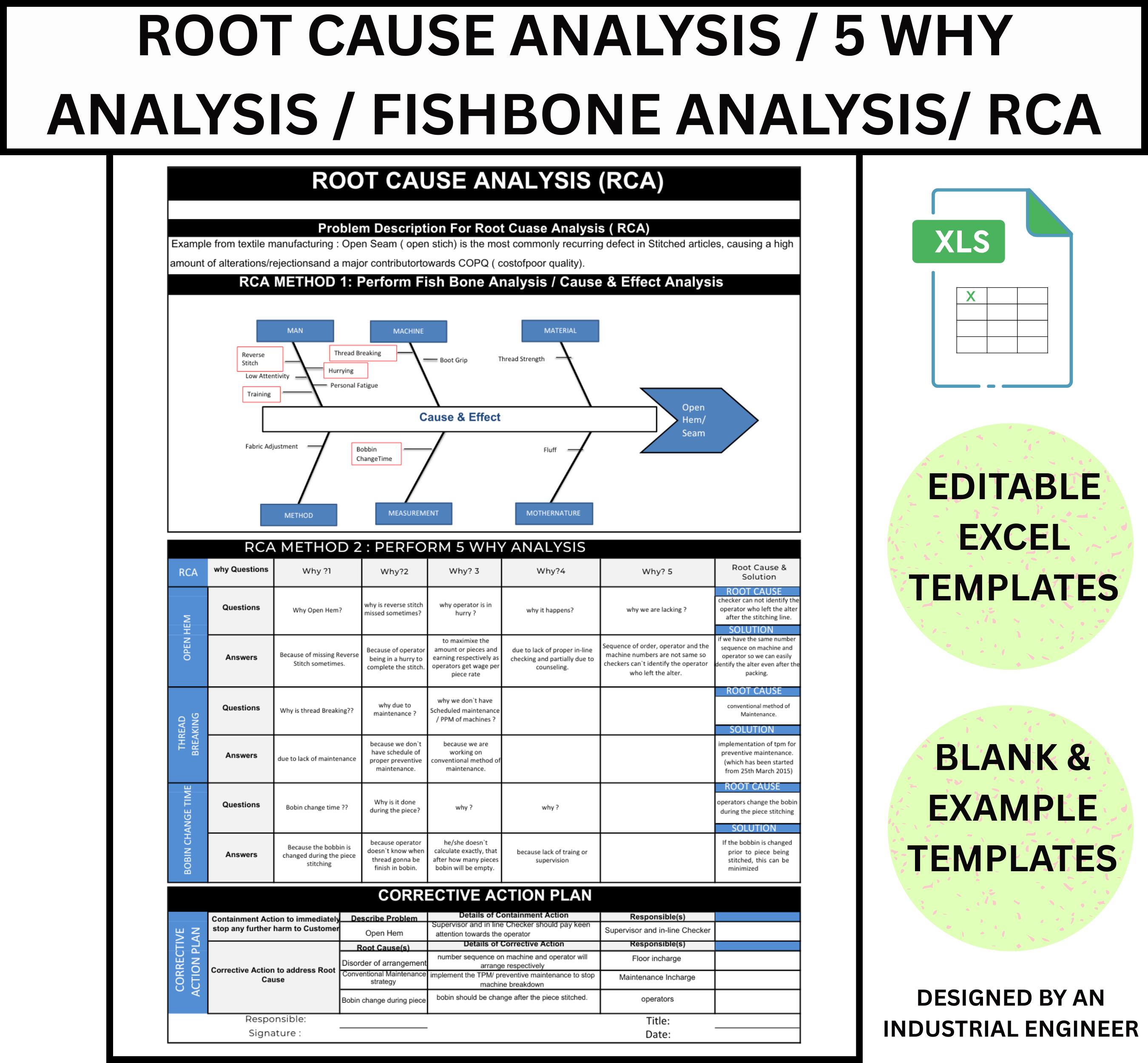
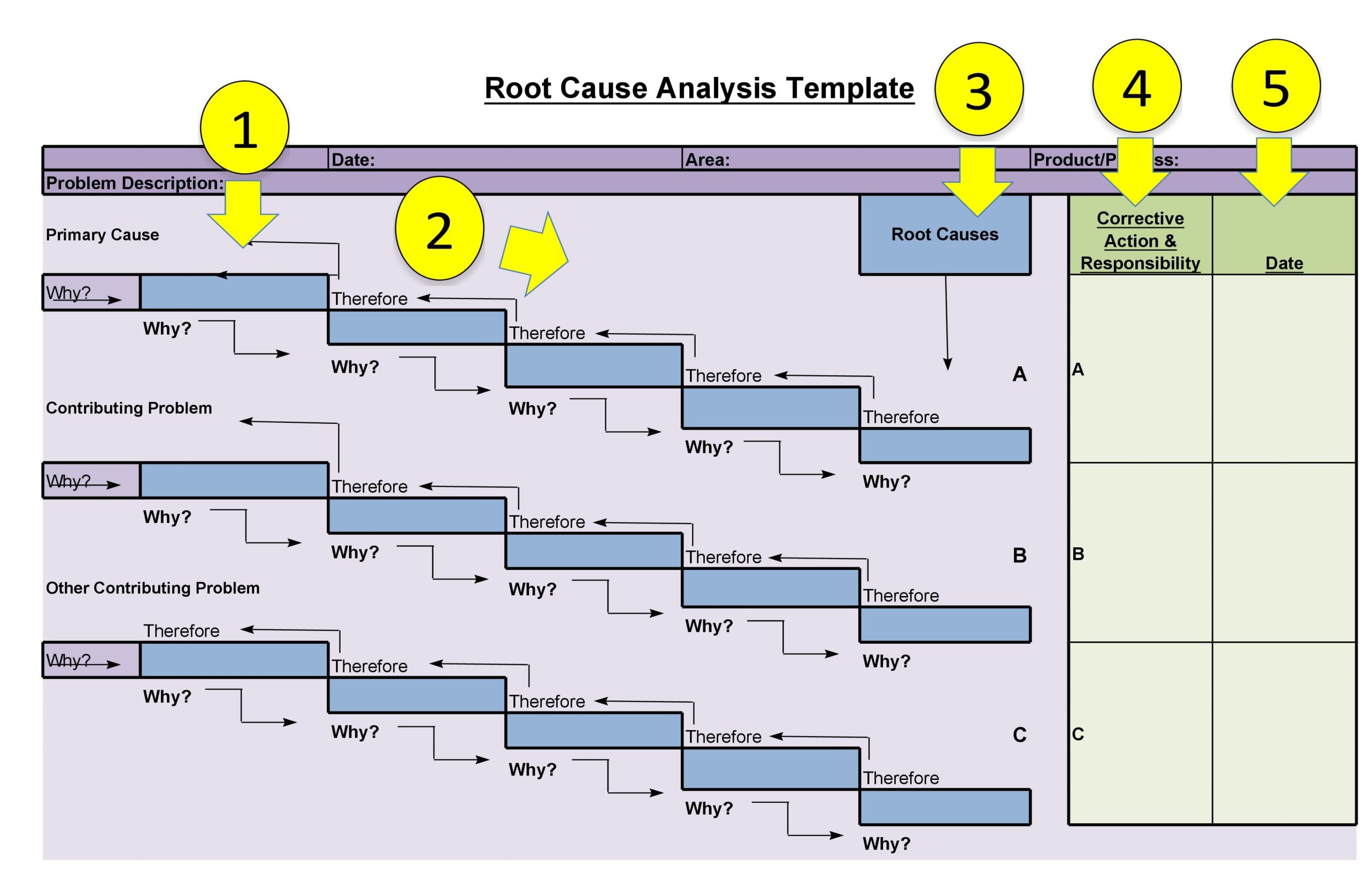
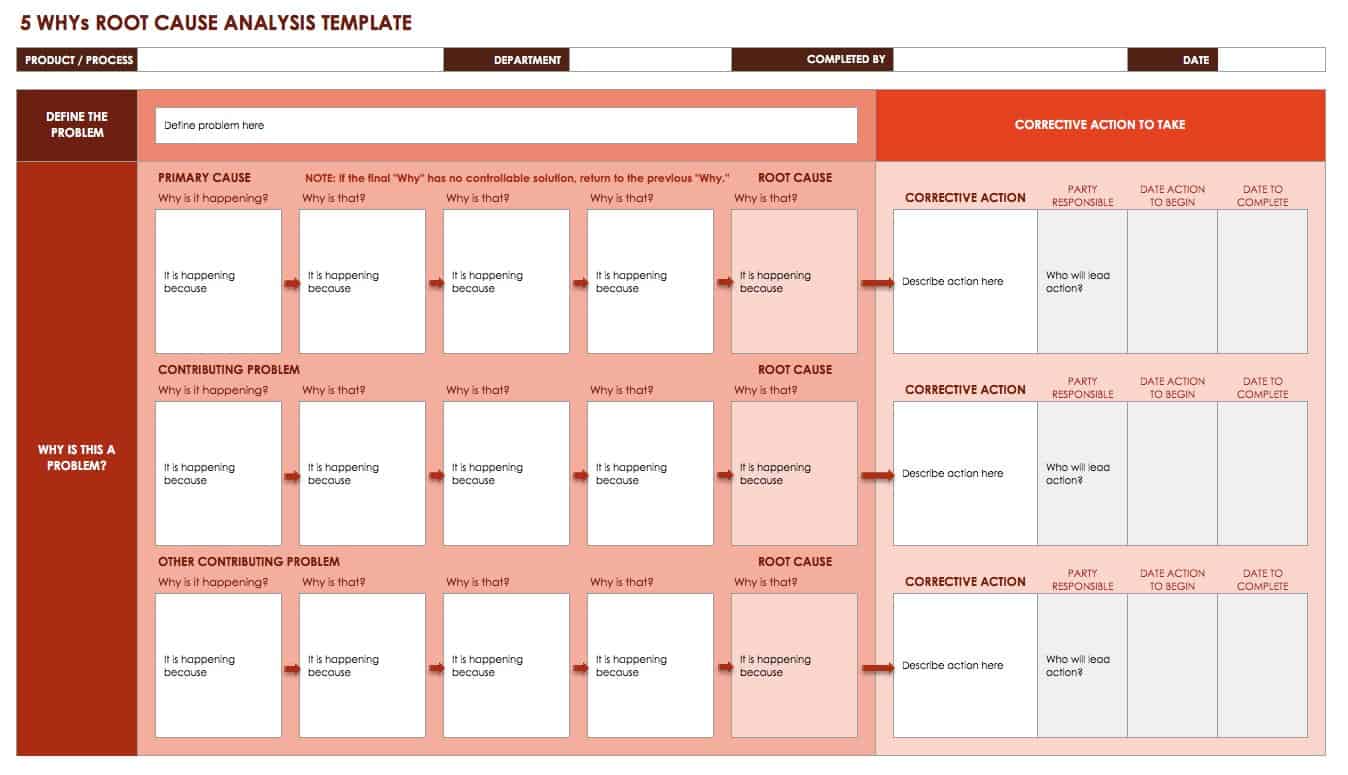
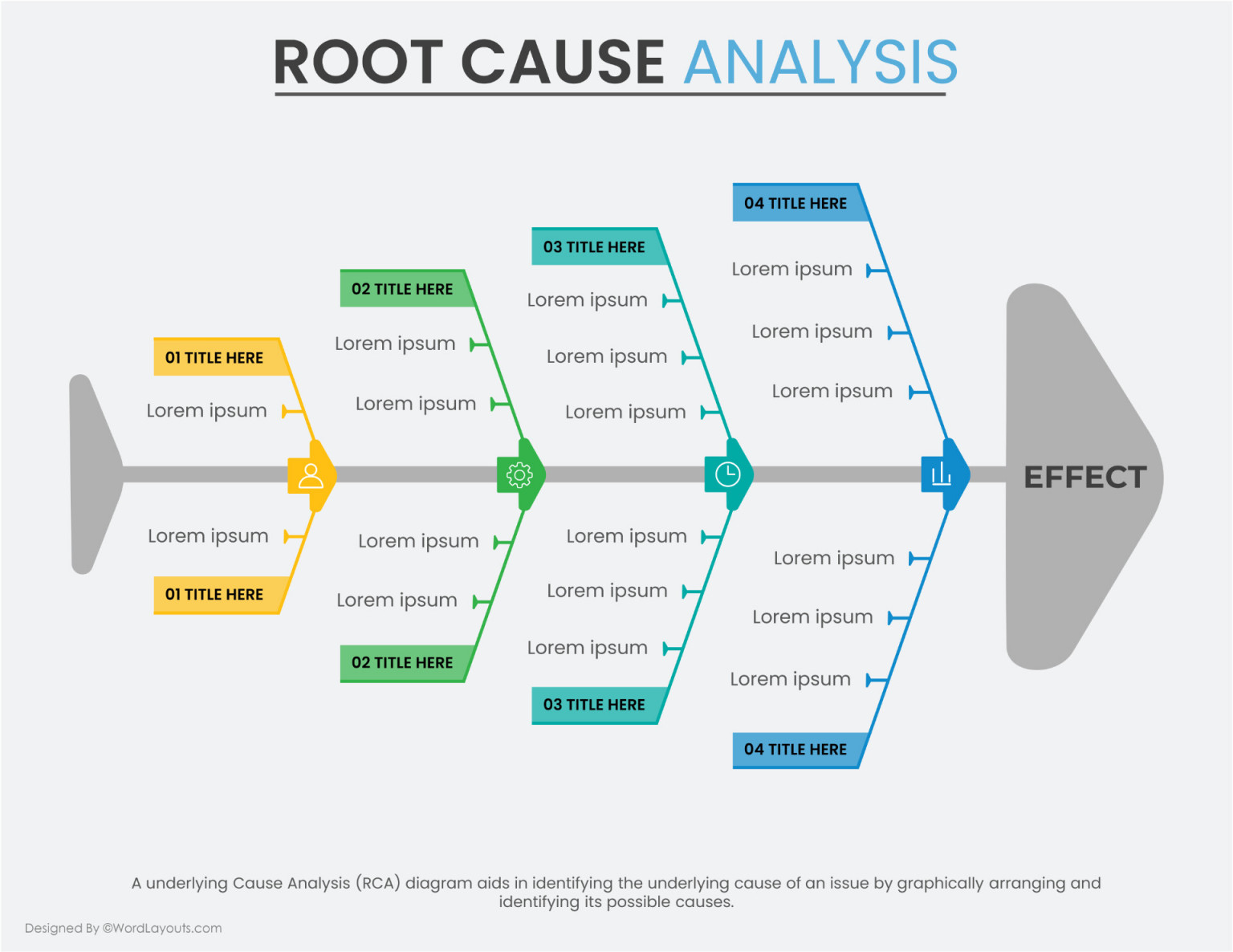
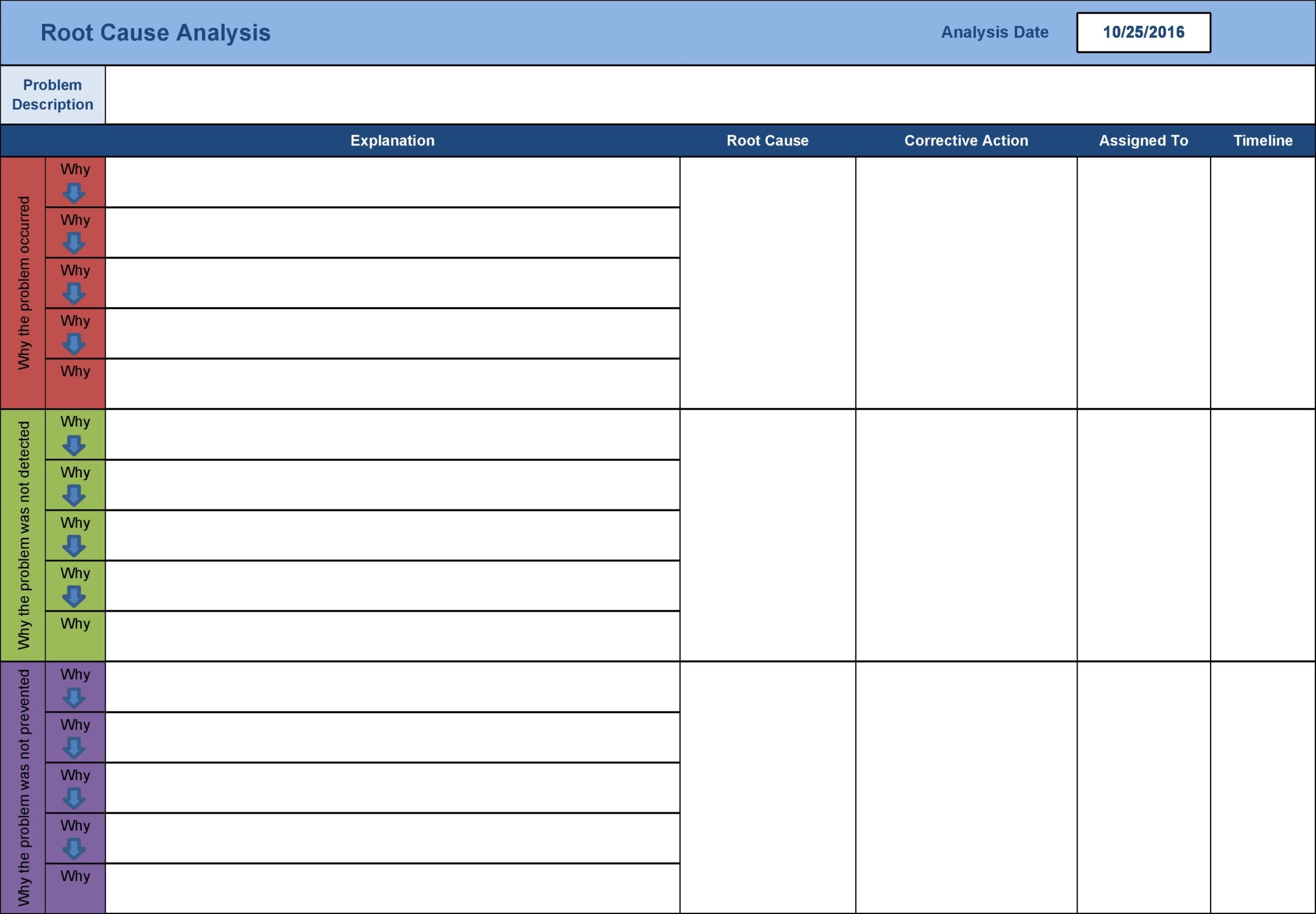
Employ tools such as Fishbone (Ishikawa), 5‑Why Analysis, or Failure Mode and Effects Analysis (FMEA) to trace causality. In Asian contexts, these tools are often adapted to fit local language and hierarchical reporting structures.
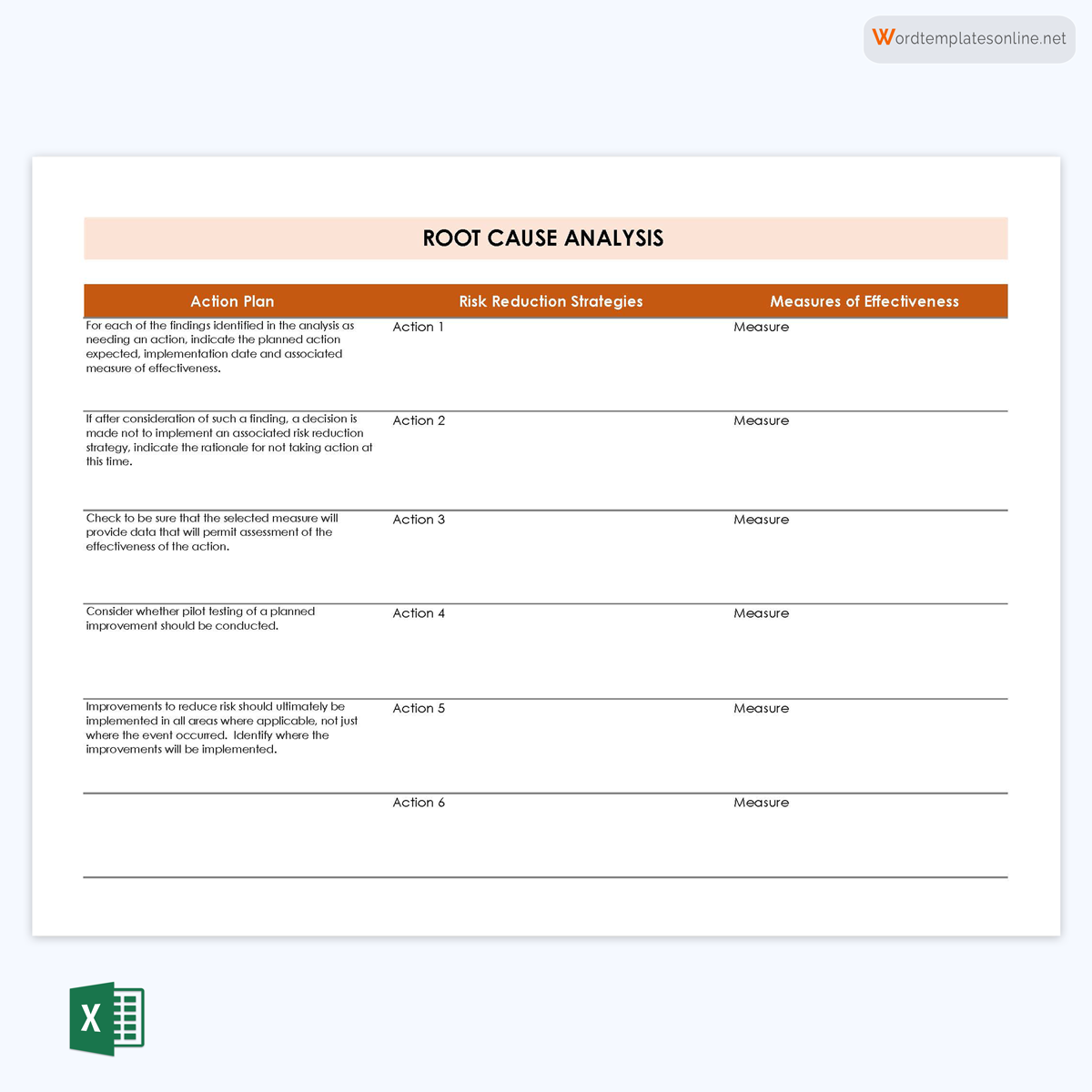
4. Action Items and Responsibility Matrix
Each corrective step should be actionable, time‑bound, and assigned to a specific role. Use a Responsibility Assignment Matrix (RAM) to avoid ambiguity.
5. Verification and Monitoring
Outline metrics that will confirm the issue’s resolution—e.g., defect rate, cycle time, or customer complaints. Regular review schedules should be embedded to sustain improvements.
6. Documentation and Knowledge Transfer
Ensure the RCA and its corrective actions are recorded in a central repository. This knowledge base aids future audits and training programs.
Step‑by‑Step Guide to Building Your RCA Template

Creating an RCA template that resonates with your organization involves customization and stakeholder buy‑in. Follow this practical roadmap to design a template that’s both rigorous and user‑friendly.
Step 1: Assemble a Multidisciplinary Team
- Include representatives from production, quality, maintenance, and customer service.
- Encourage cross‑training so that team members understand each other’s processes.
- Leverage senior managers to endorse the template and provide executive visibility.
Step 2: Define the Template Structure
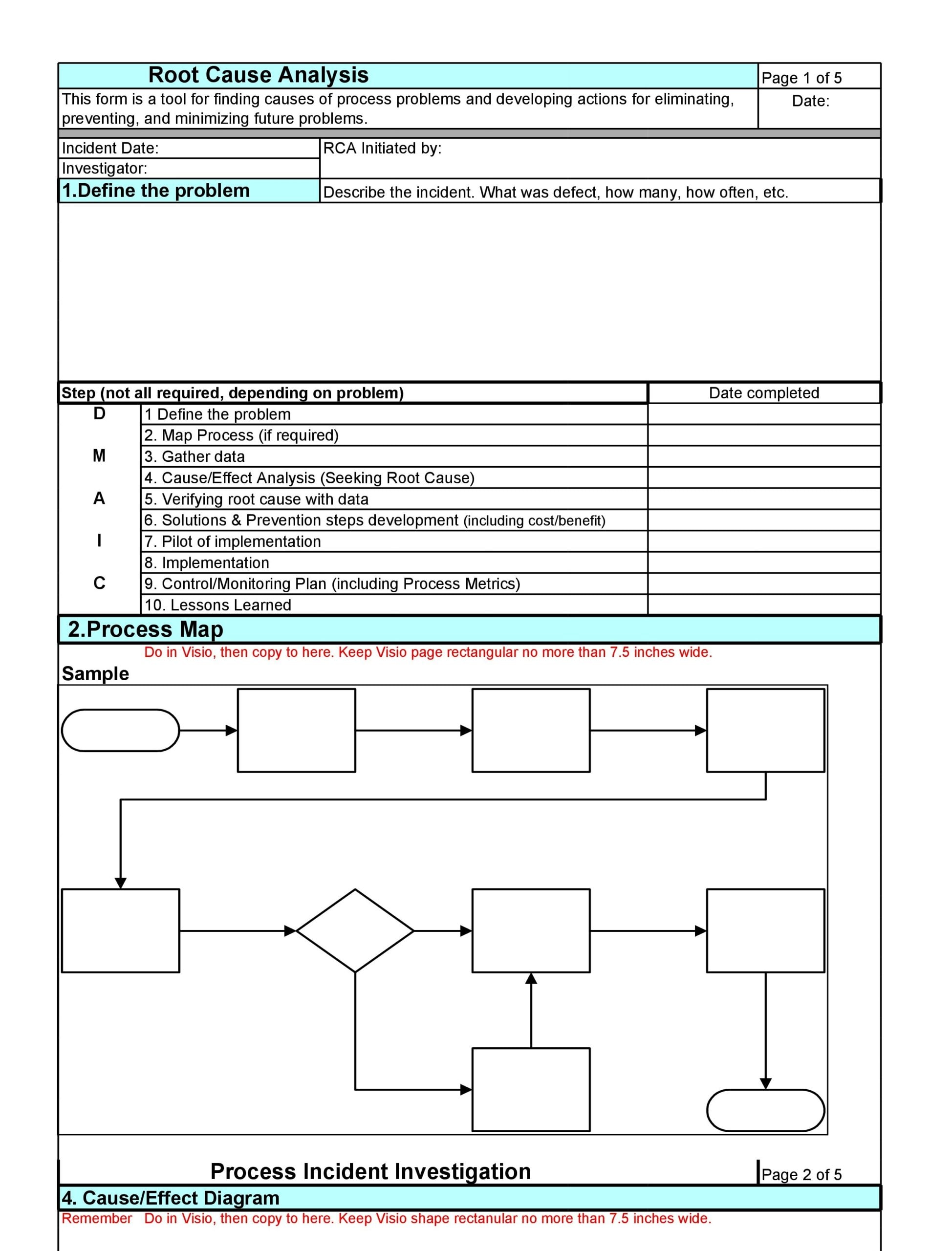
Start with a clear layout: header with incident ID, date, and report author; sections for problem statement, data, analysis, actions, and follow‑up. Use consistent formatting to reduce cognitive load.
Step 3: Embed Analytical Tools
Integrate templates for 5‑Why, fishbone diagrams, and Pareto charts. Provide quick‑reference guides or icons for each tool so that users can select the most appropriate one without confusion.
Step 4: Build the Corrective Action Table
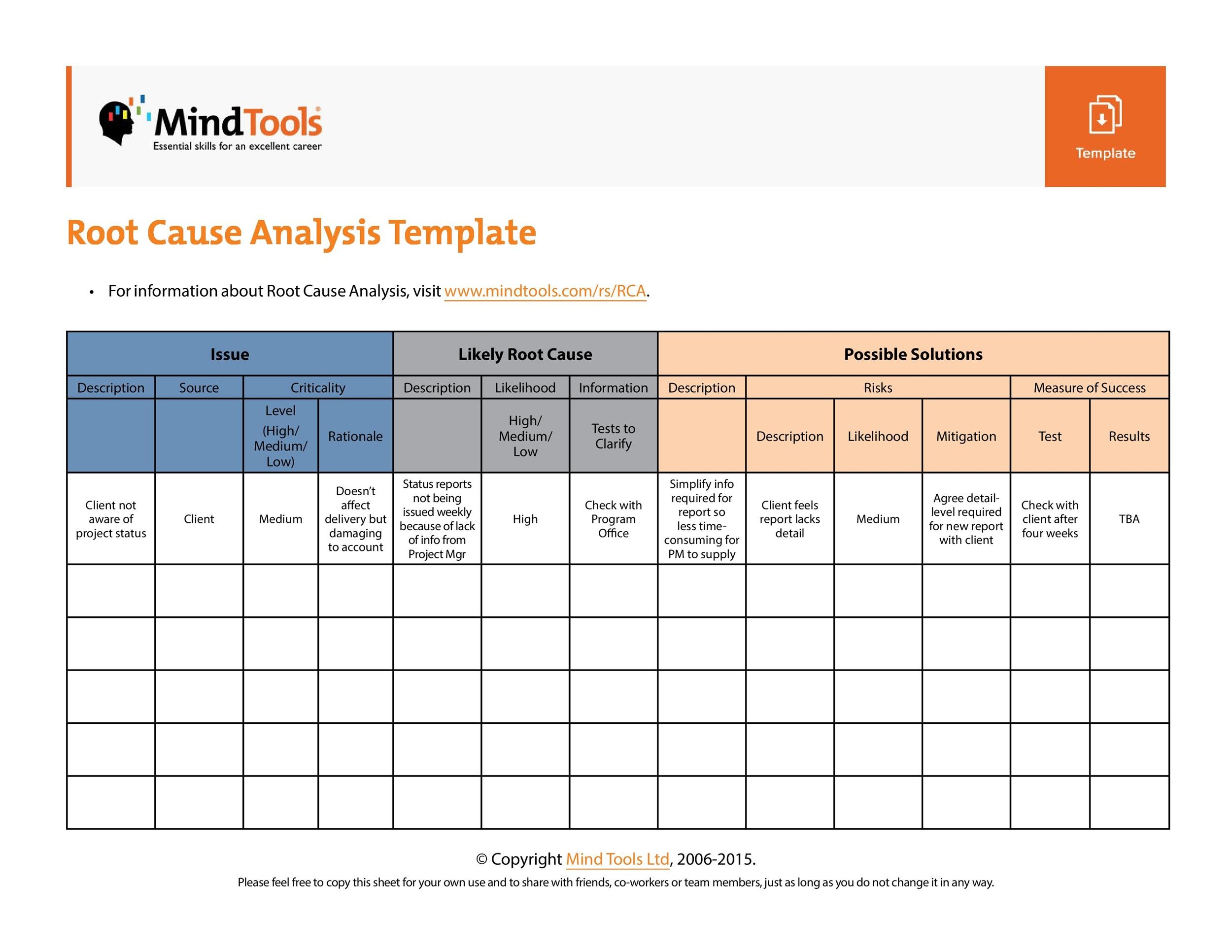
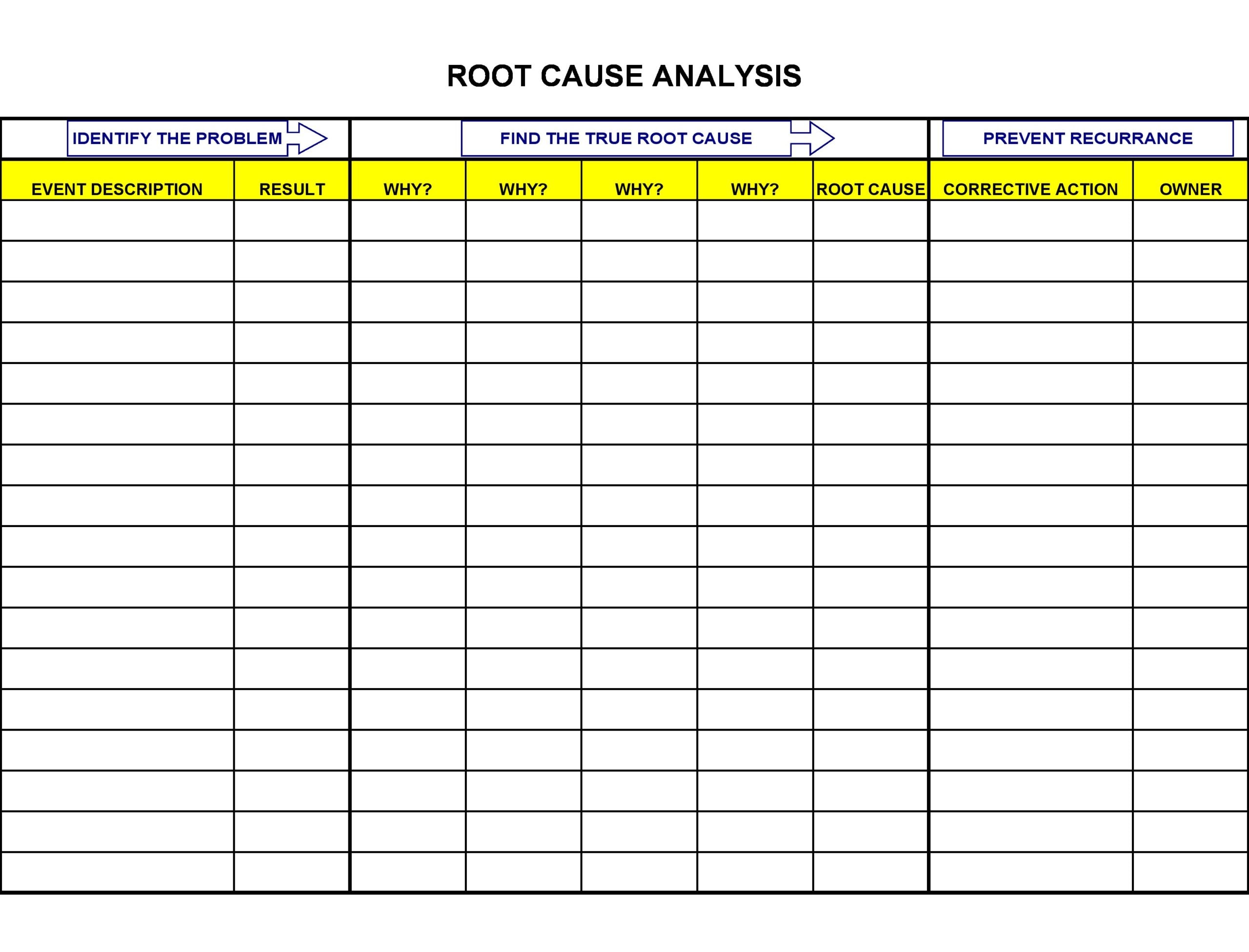
Design a table with columns: Action Item, Owner, Start Date, Due Date, Status, Verification Method. This structured layout ensures accountability and allows managers to track progress at a glance.
Step 5: Test the Template
- Run a pilot on a recent incident.
- Gather feedback on usability, clarity, and completeness.
- Adjust wording or layout based on practical insights.
Step 6: Train and Deploy
Hold workshops that walk employees through the template, emphasizing the importance of data integrity and honest reporting. Use real case studies from the region to illustrate the process.
Practical Tips for Implementation
Even the most well‑designed template can falter if not adopted properly. Here are actionable strategies tailored to an Asian business environment.
1. Align with Existing Management Systems
If your organization already uses ISO 9001 or Lean Six Sigma, embed the RCA template within those frameworks to avoid redundancy and streamline audits.
2. Foster a Blame‑Free Culture
Communicate that RCA is a tool for improvement, not punishment. Encourage open dialogue and protect employees who report issues.
3. Leverage Digital Tools
Use cloud‑based platforms that support real‑time collaboration. Integrate the template with workflow automation to trigger reminders and status updates.
4. Regularly Review and Update
Set quarterly reviews to assess the template’s effectiveness. Adjust fields or analysis methods as processes evolve.
5. Celebrate Successes
Publicly acknowledge teams that effectively apply RCA and achieve measurable improvements. Recognition fuels continuous participation.
Measuring Success and Continuous Improvement

Once RCA is institutionalized, its true value emerges through measurable outcomes. Define KPIs that reflect both process and cultural shifts.
Key Performance Indicators
- Reduction in recurring defect rates (% change after implementation).
- Time to resolution (average days from incident identification to corrective action completion).
- Employee engagement scores related to quality initiatives.
- Audit findings related to corrective action closure.
Feedback Loops
Establish a continuous improvement loop: after corrective actions are verified, conduct a lessons‑learned session. Feed insights back into the template, ensuring it evolves with the organization.
Common Pitfalls to Avoid
Even seasoned teams can stumble. Recognizing these pitfalls helps maintain the integrity of your RCA process.
1. Shallow Analysis
Stopping at surface symptoms dilutes effectiveness. Ensure the 5‑Why or fishbone steps are thoroughly documented and verified.
2. Inadequate Stakeholder Engagement
Excluding frontline workers leads to blind spots. Involve those who directly interact with the process from the outset.
3. Over‑Complex Templates
Long, dense forms increase resistance. Strive for simplicity without sacrificing critical information.
4. Lack of Follow‑Up
Completing a corrective action plan is only part of the journey. Continuous monitoring guarantees that problems do not re‑emerge.
Final Thoughts
Root Cause Analysis And Corrective Action Plan Template is not merely a procedural document—it is a cultural artifact that encapsulates an organization’s commitment to excellence and humility. By integrating structured analysis with a collaborative, blame‑free environment, Asian companies can transform challenges into catalysts for growth. Start today by customizing the template, training teams, and committing to transparent follow‑up. In doing so, you’ll build a resilient process that delivers quality, compliance, and sustained competitive advantage for years to come.



Related posts of "Root Cause Analysis And Corrective Action Plan Template"
