
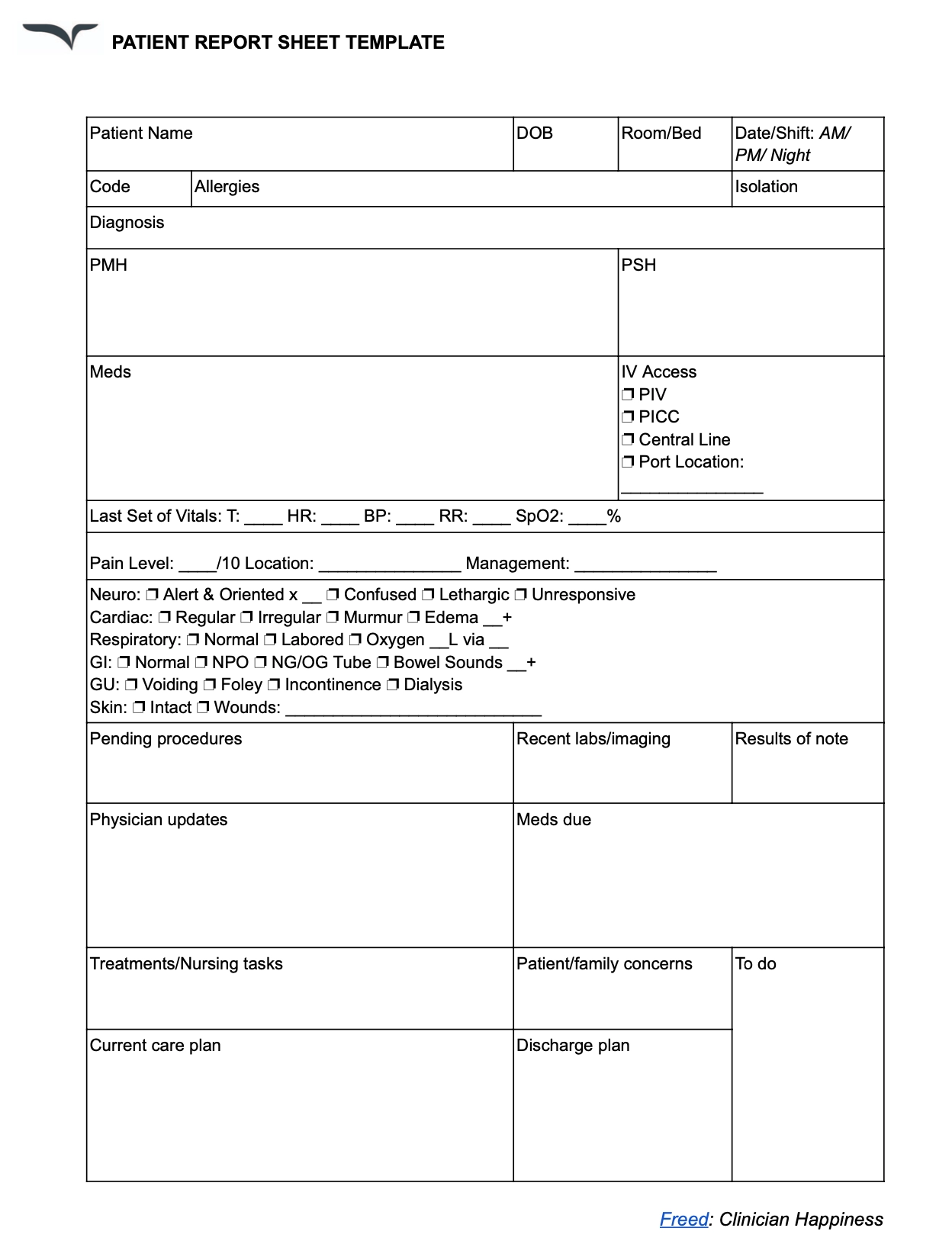
Nursing Handoff Report Template is the secret sauce that turns chaotic shift changes into smooth, safe, and accountable transitions of patient care, and I’m excited to share why it matters so much and how you can craft one that works like a charm on any unit.
Why a Hand‑off Report Matters

Patient Safety First
Every minute a nurse steps away from a bedside, a patient’s condition can shift—sometimes dramatically. A well‑structured handoff report captures vital signs, medication changes, and emerging concerns in a concise snapshot, ensuring that the incoming nurse walks into the room already aware of red flags. Studies consistently link standardized handoffs to reduced medication errors, lower fall rates, and improved overall outcomes, making the report a cornerstone of patient safety culture.
Legal and Regulatory Compliance
Beyond bedside safety, the handoff documentation serves as a legal record. Regulatory bodies such as The Joint Commission and CMS expect clear, accurate, and timely communication during shift changes. A robust Nursing Handoff Report Template provides that paper trail, protecting both the individual nurse and the organization from potential liability.
Core Components of an Effective Template

Patient Identification
Start with name, medical record number, date of birth, and room number. A quick “Name‑DOB‑Room” line eliminates ambiguity and prevents mix‑ups, especially on busy floors where multiple patients share similar conditions.
Clinical Summary
Summarize the primary diagnosis, comorbidities, and current status in 2–3 sentences. Include recent labs or imaging that directly influence care decisions. This gives the incoming nurse a contextual backdrop without having to dig through the chart.
Medications and Allergies
List active orders, recent changes, and any PRN meds that have been administered in the past 24 hours. Highlight known allergies in bold or red text so they stand out instantly.
Recent Changes and Interventions
Document any procedures, wound care updates, or therapy modifications that occurred during the shift. Mention the time of each intervention and the provider who performed it.
Pending Orders and Follow‑Up
Flag orders that are awaiting signature, labs that need results, or consults that haven’t been completed. Use checkboxes or a “To‑Do” column so the next nurse can see at a glance what still needs attention.
Discharge Planning
Outline the anticipated discharge date, required education, and any pending paperwork. Early awareness helps coordinate with case managers and reduces last‑minute surprises.
Designing Your Own Template

Choose the Right Format
Paper remains popular on many units because it can be quickly annotated with a pen, but electronic health records (EHR) now offer customizable forms that can auto‑populate fields and trigger alerts. Decide which medium aligns with your workflow, and consider a hybrid approach—paper for bedside handoffs, digital for official record keeping.
Keep It Concise Yet Comprehensive
A good template fits on a single page (or one screen). Use headings, bullet points, and white space to break up dense text. If you find yourself writing paragraphs, you’re likely overloading the report; trim to the essentials.
Use Checkboxes and Space for Free Text
Checkboxes streamline repetitive items like “IV patency OK” or “Fall risk present.” Reserve a few blank lines for free‑text notes where unique situations arise—this balance keeps the template both structured and flexible.
Incorporate Color Coding (Optional)
Some units use subtle color highlights to differentiate categories (e.g., red for critical alerts, green for stable vitals). If you choose this route, ensure the colors are accessible for color‑blind staff and do not rely on color alone to convey meaning.
Step‑by‑Step Guide to Using the Template

Pre‑Shift Preparation
Before your shift ends, review the patient’s chart, update any pending documentation, and fill out the template sections that you can complete ahead of time. This reduces rush and prevents omissions during the verbal handoff.
Conducting the Verbal Handoff
Stand beside the patient’s bedside, face the incoming nurse, and walk through the template line by line. Speak clearly, pause for questions, and avoid jargon that might be misunderstood. Encourage the receiver to repeat critical points back to you—a simple “read‑back” technique that catches errors instantly.
Documentation After the Handoff
Once the verbal exchange is complete, finalize the written or electronic template. Sign your name, date, and time, then have the incoming nurse sign as well. This dual signature confirms that both parties acknowledge the information shared.
Common Pitfalls and How to Avoid Them

Overloading with Information
Including every minute detail can drown the receiver in noise. Prioritize high‑impact data—abnormal labs, recent medication changes, and safety concerns. Use “add‑on” sections only for truly exceptional notes.
Skipping Critical Data
It’s tempting to skip items that seem routine, like “patient is NPO,” but small omissions can cascade into larger errors. Adopt a checklist mindset; if a checkbox is unchecked, double‑check whether it truly doesn’t apply.
Inconsistent Terminology
Standardize abbreviations and terminology across the unit. For example, always use “IVPB” instead of alternating between “IV piggyback” and “IVPB.” Consistency reduces confusion, especially for newer staff or float nurses.
Real‑World Examples
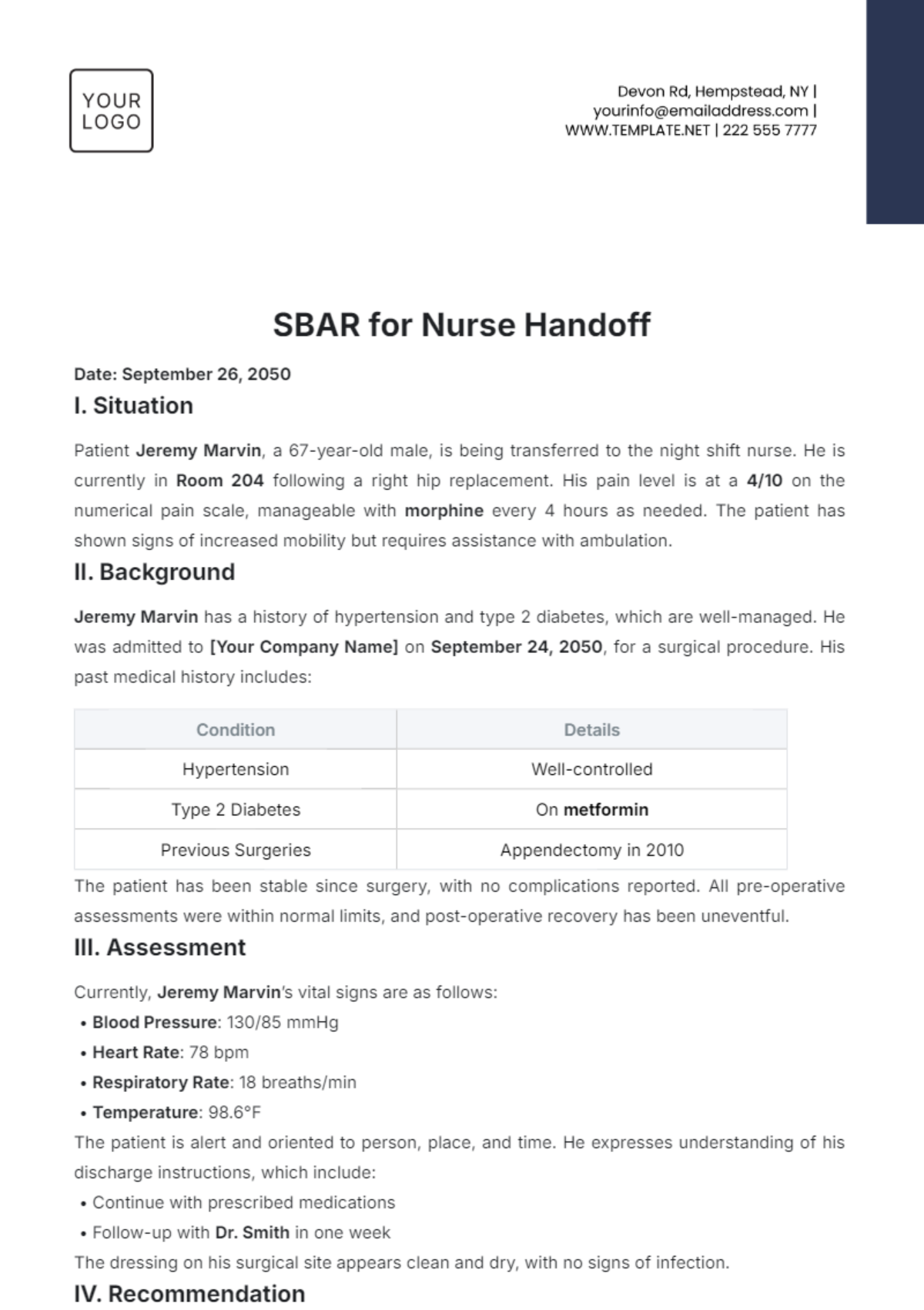
Example 1: Medical‑Surgical Unit
Patient: Jane Doe, MRN 123456, Room 210B
Diagnosis: Post‑operative abdominal surgery
Vitals: T 98.6°F, HR 82, BP 118/72, SpO₂ 96% on room air
Medications: Acetaminophen 650 mg PO q6h PRN, Ceftriaxone 1 g IV q24h (last dose 0800)
Allergies: Penicillin (rash)
Recent Changes: Foley catheter removed at 1500, wound dressing changed at 1600 – dry, no drainage
Pending: Labs (CBC) due at 1900, Physical therapy consult pending for ambulation assistance
Discharge Plan: Anticipated discharge tomorrow, need to arrange home health nurse and medication reconciliation.
Example 2: ICU Setting
Patient: John Smith, MRN 789012, Bed 3
Diagnosis: Acute respiratory distress syndrome (ARDS)
Vent Settings: Vt 450 mL, FiO₂ 0.45, PEEP 12 cm H₂O
Medications: Sedation – Propofol 20 mcg/kg/min, Vasopressor – Norepinephrine 0.05 µg/kg/min
Allergies: None documented
Recent Interventions: Prone positioning initiated at 1400, bronchoscopy performed at 1700 (clear secretions)
Pending: ABG at 2000, consult cardiology for right‑heart strain evaluation
Discharge Plan: Still in ICU, anticipate step‑down transfer in 48 hours pending stability.
Tips for Continuous Improvement

Gather Feedback Regularly
Schedule brief “huddle” meetings once a month to discuss what’s working and what isn’t. Encourage staff to suggest new fields or removal of redundant items. A template that evolves with the team stays relevant.
Audit and Revise
Perform quarterly audits of handoff documentation. Look for missing signatures, incomplete sections, or recurring errors. Use findings to tweak the template, add prompts, or provide targeted training.
Conclusion
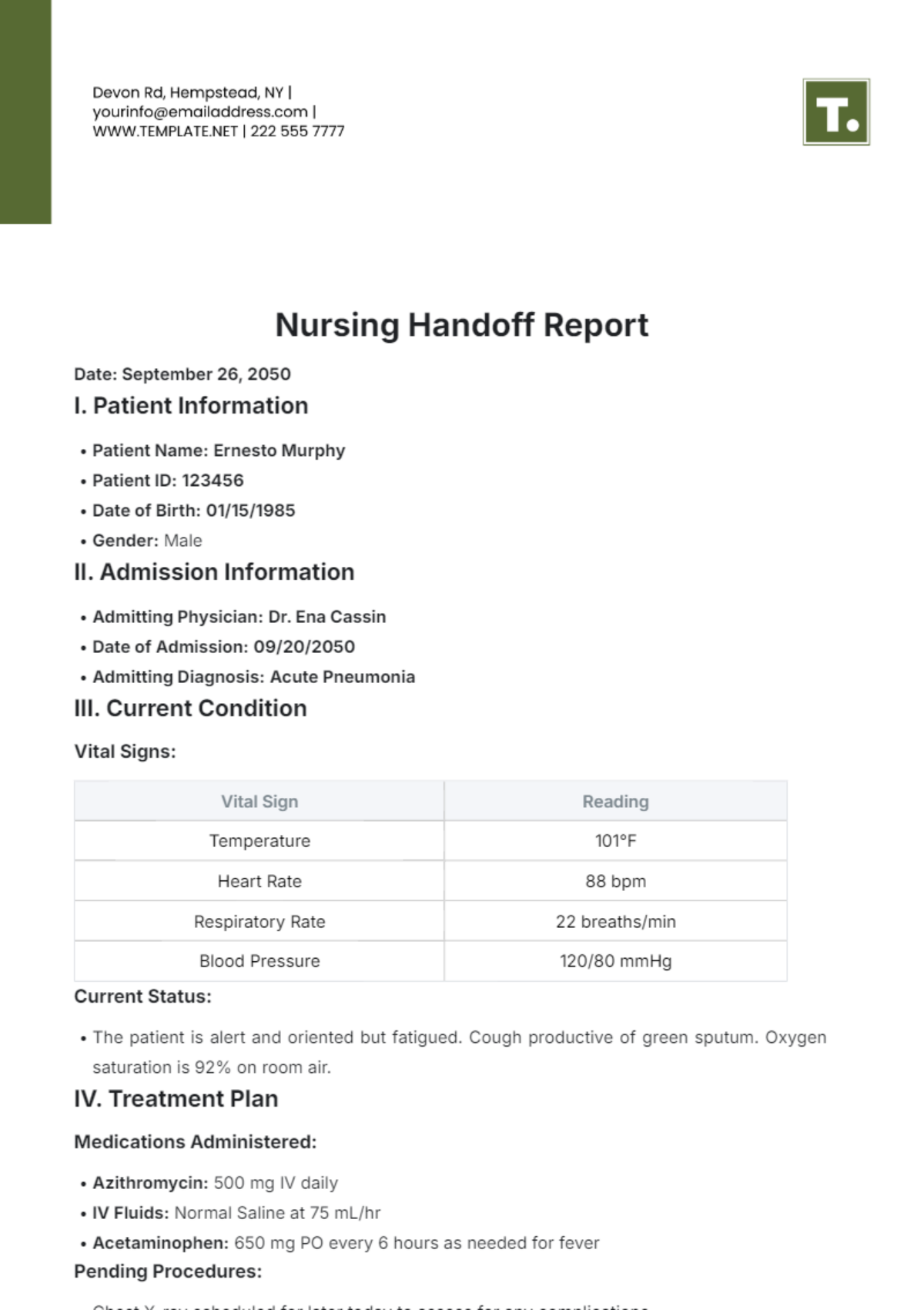
A thoughtfully crafted Nursing Handoff Report Template is more than a checklist—it’s a communication bridge that safeguards patients, supports legal compliance, and empowers nurses to deliver consistent, high‑quality care. By focusing on core components, customizing the format to your unit’s workflow, and committing to ongoing refinement, you’ll turn every shift change into a confident, error‑free transition that both patients and staff can rely on.






Related posts of "Nursing Handoff Report Template"
