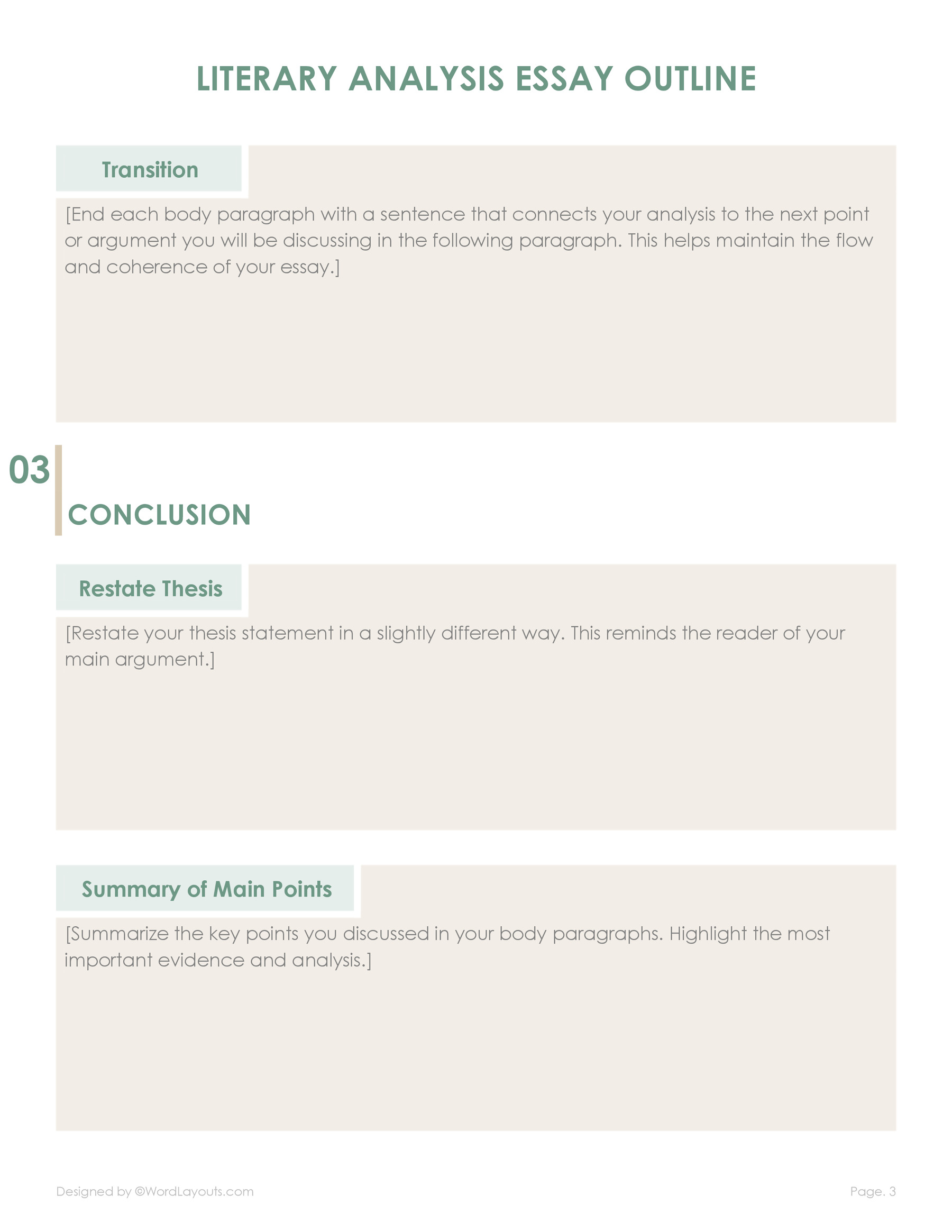
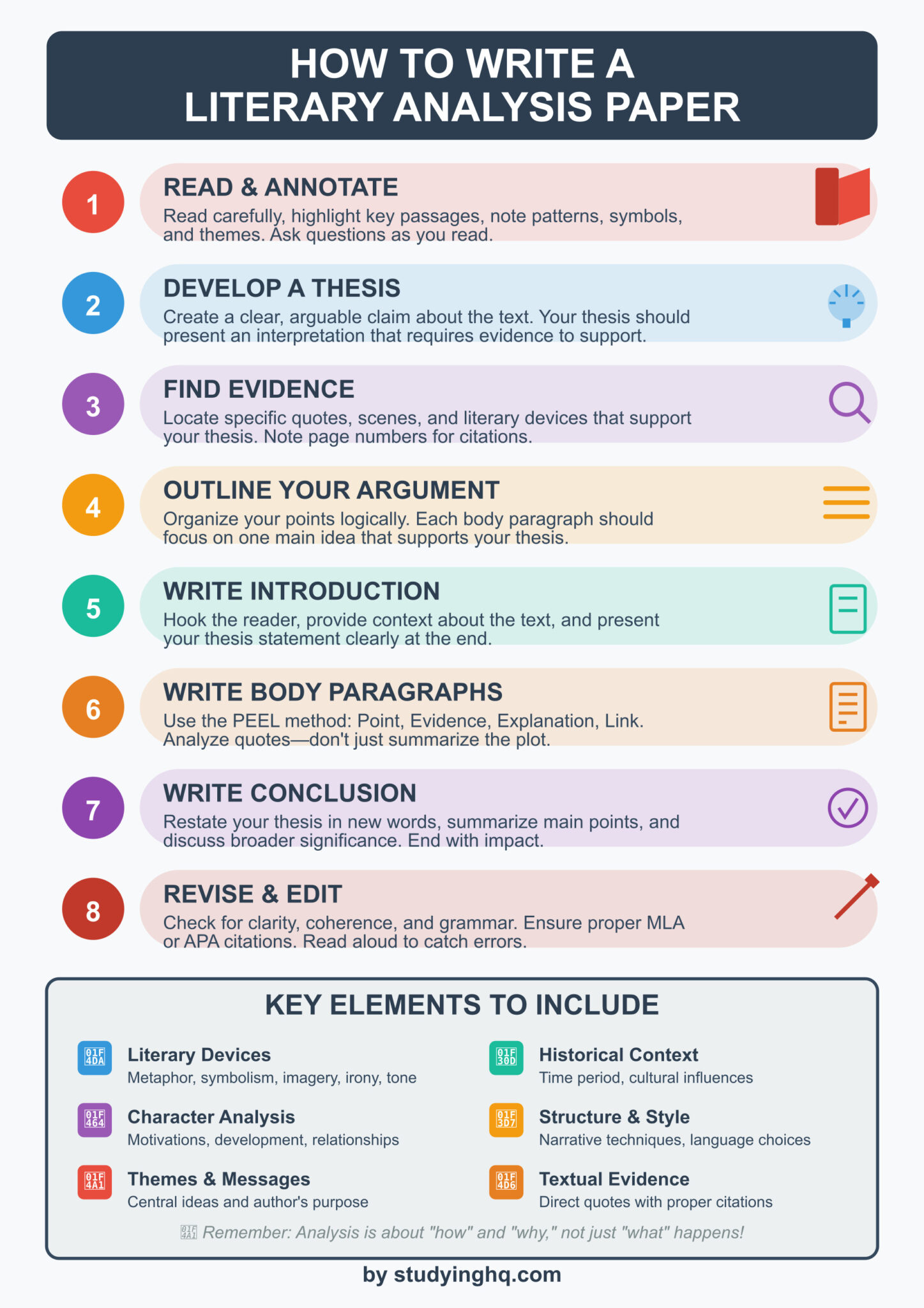
Literary Analysis Essay Outline Template serves as a blueprint that transforms complex literary insights into a coherent, persuasive argument. By following a structured outline, writers can streamline their analysis, avoid common pitfalls, and produce essays that resonate with both professors and peers.
Why a Structured Template Matters
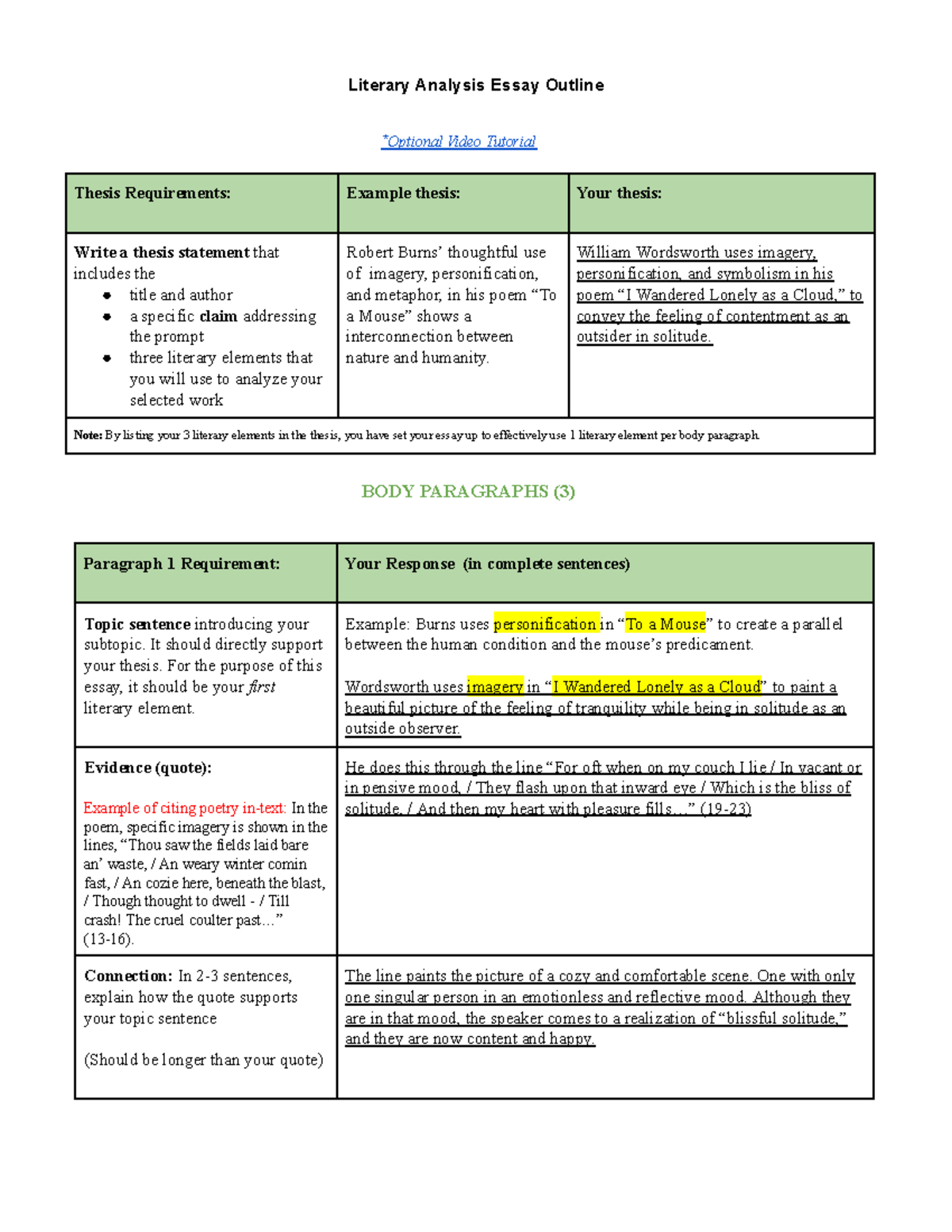
When dissecting a novel, play, or poem, the sheer volume of themes, symbols, and character motivations can overwhelm even seasoned writers. A well‑crafted outline acts as a compass, directing focus toward the essay’s thesis and ensuring every paragraph contributes to that central claim. Without this framework, essays often devolve into fragmented observations that lack a unified narrative.
Academic Confidence
Students who rely on an outline typically demonstrate higher levels of critical thinking. By mapping each argument step by step, they reduce the risk of redundant or contradictory points, thereby reinforcing the integrity of their analysis.
Time Management
Planning ahead saves hours of revising. An outline clarifies which passages to quote, where to integrate scholarly research, and how to transition smoothly between ideas.
Scoring Consistency
Grading rubrics favor structure: clear introduction, cohesive body, and concise conclusion. A template guarantees that these components are addressed and balanced.
Key Components of a Literary Analysis Essay Outline
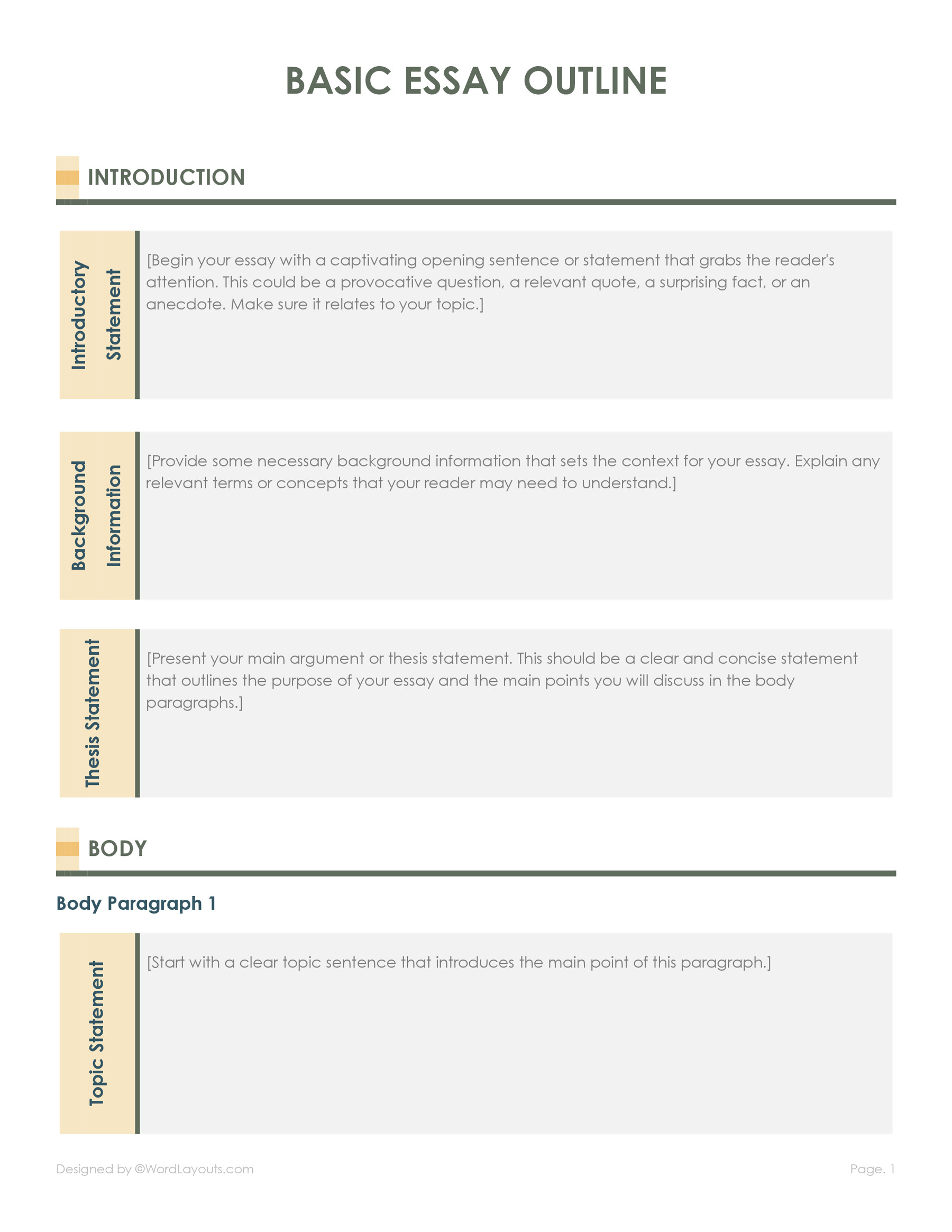
Regardless of genre or length, most literary essays share a set of core elements. The template below incorporates these building blocks and can be adapted to any assignment.
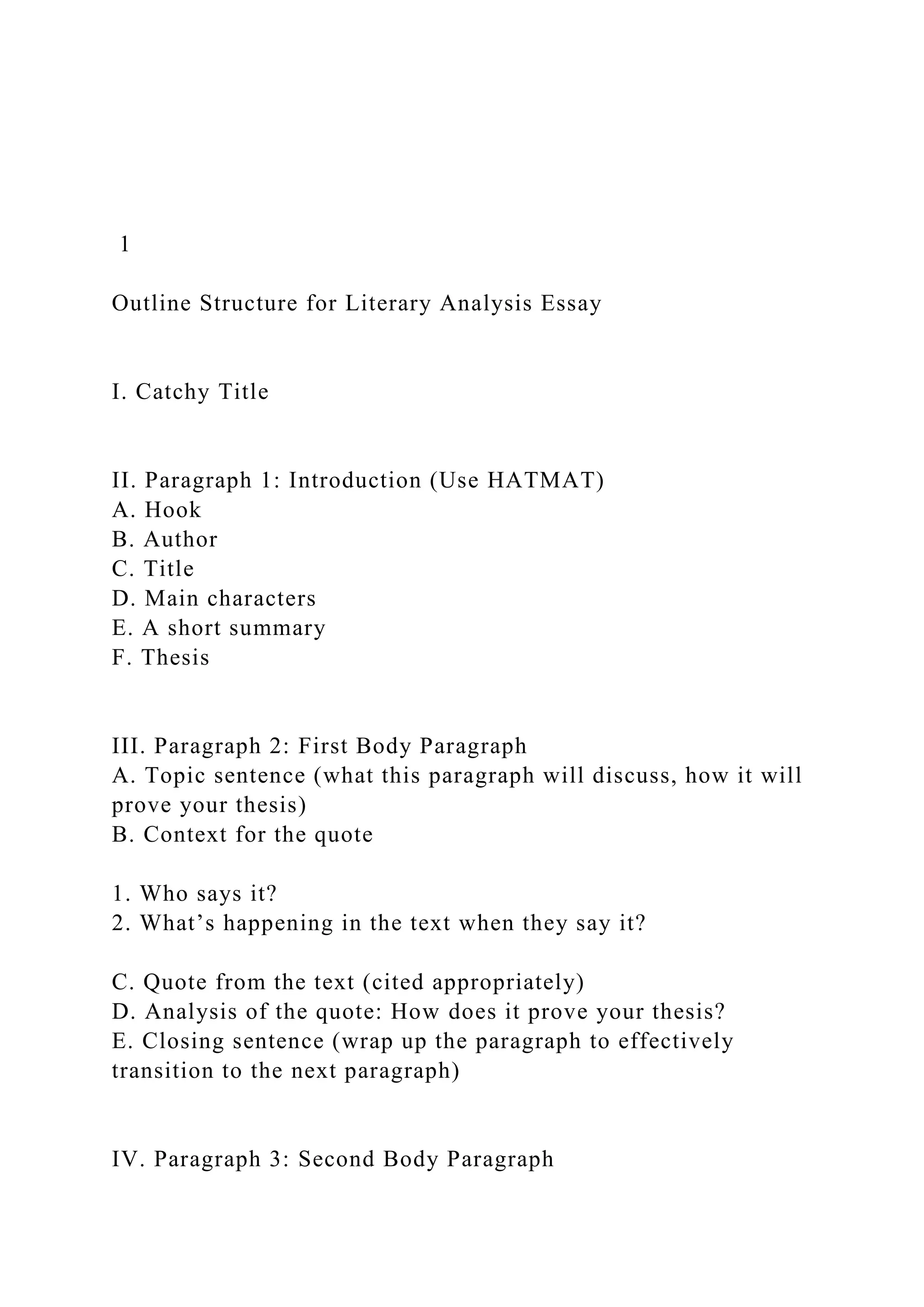
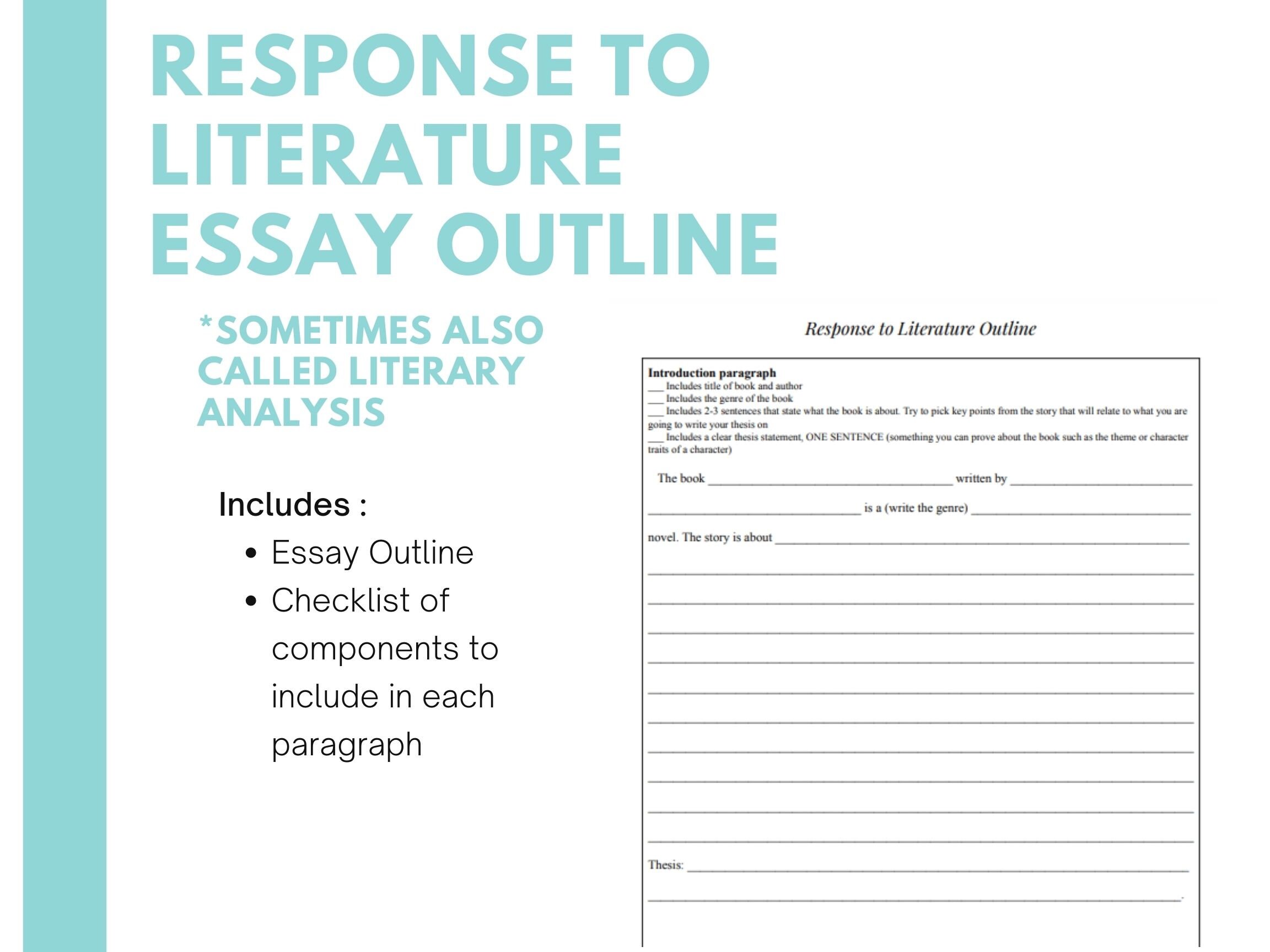
1. Introduction
- Hook: An engaging opening sentence that captures relevance.
- Context: Brief background about the text, author, and historical setting.
- Thesis Statement: A definitive claim that articulates the essay’s analytical focus.
2. Body Paragraphs
- Topic Sentence: States the paragraph’s main idea and connects it to the thesis.
- Evidence: Quotes, scenes, or passages that substantiate the claim.
- Analysis: Interpretation of evidence, discussing technique, symbolism, or character development.
- Link: Transition that connects this paragraph to the next one.
3. Counterargument Section
Optional but powerful: Address potential opposing views, then refute them to strengthen the thesis. This demonstrates depth of understanding and critical engagement.
4. Conclusion
- Restate Thesis: Paraphrase the main claim using fresh language.
- Summarize Key Points: Highlight the most compelling evidence and analysis.
- Final Thought: Offer a broader implication, question, or insight that extends beyond the text.
Step‑by‑Step Guide to Building Your Template
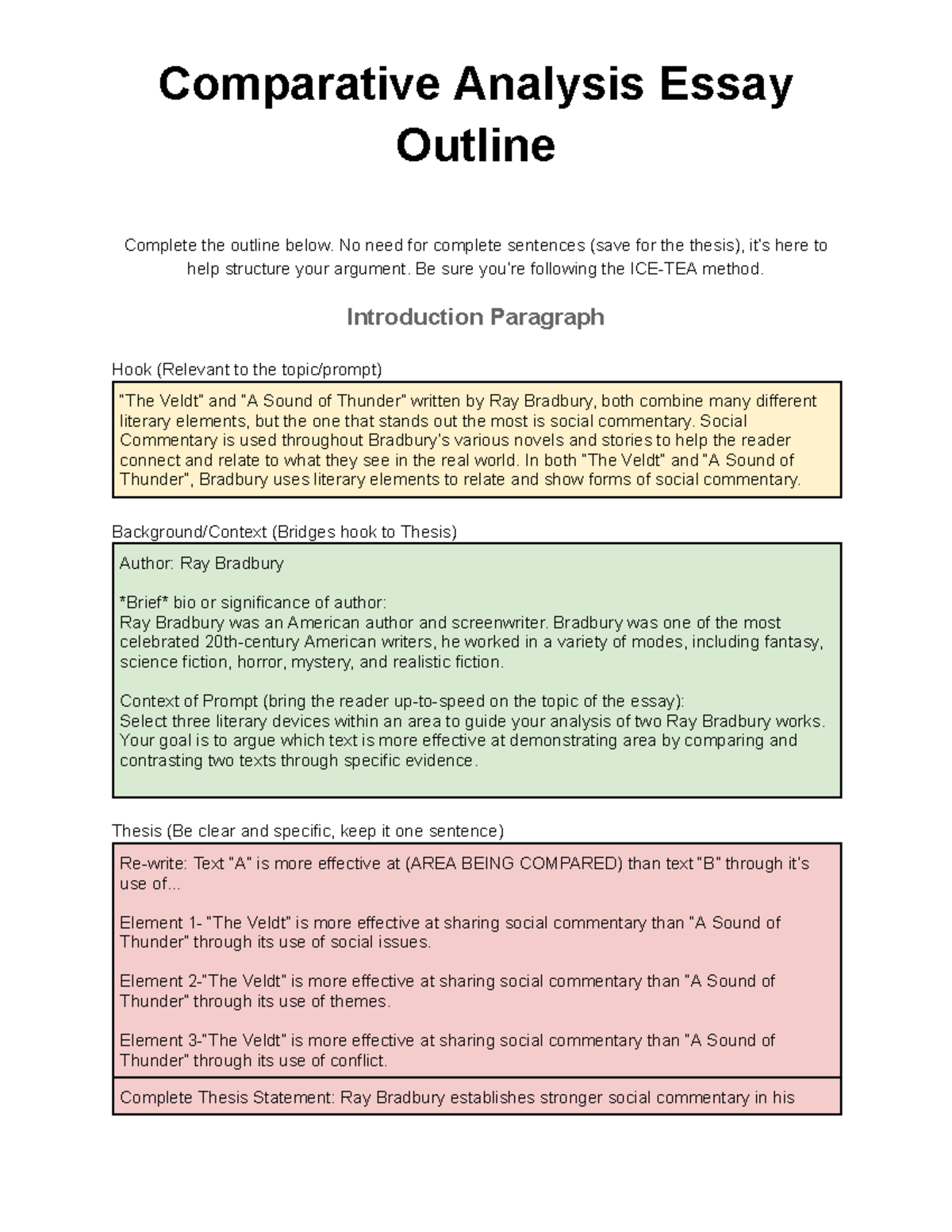
Creating a versatile outline begins with a simple framework that can be expanded or contracted based on assignment length.
Step 1: Define Your Thesis
Spend 30 minutes brainstorming questions about the text. Identify the most significant literary devices or themes that emerge. Combine these insights into a single, clear thesis statement. For example: “In *Pride and Prejudice*, Austen uses social satire to critique class divisions, revealing the hypocrisy embedded in 19th‑century English society.”
Step 2: Organize Main Claims
List three to five main arguments that support the thesis. Each will become a body paragraph. Make sure each claim has enough depth to support an entire paragraph.
Step 3: Gather Evidence
While reading or rereading the text, underline passages that illustrate your claims. Note page numbers or line references for accurate citations.
Step 4: Draft the Outline
Arrange the structure: introduction, body paragraphs, optional counterargument, conclusion. Use bullet points or a table format to keep track of each element.
Step 5: Flesh Out Transitions
Write transition sentences that link ideas logically. This helps maintain flow and reinforces the coherence of your argument.
Step 6: Review and Refine
Read the outline aloud to spot gaps or redundancies. Adjust as needed to keep the essay within word limits and maintain clarity.
Example Template: Analyzing Shakespeare’s *Macbeth*
Below is a ready‑to‑use outline for a 1,500‑word essay on *Macbeth*, demonstrating how to adapt the template to a specific text.
Introduction
- Hook: “The blood‑stained throne of Scotland never truly belonged to any man.”
- Context: Brief overview of the play’s historical background and thematic concerns.
- Thesis: “Macbeth’s descent into tyranny is a tragic exploration of unchecked ambition, foreshadowed by the supernatural and reinforced by character interactions.”
Body Paragraph 1 – Ambition as a Catalyst
- Topic Sentence: “The witches’ prophecy ignites Macbeth’s latent ambition.”
- Evidence: “All hail, Thane of Glamis!” (Act 1, Scene 3).
- Analysis: Discuss how prophecy functions as a psychological trigger.
- Link: Transition to how this ambition escalates with Lady Macbeth’s influence.
Body Paragraph 2 – The Role of the Supernatural
- Topic Sentence: “Supernatural elements underscore the moral deterioration of the protagonists.”
- Evidence: “Out, damned spot!” (Act 5, Scene 1).
- Analysis: Interpret guilt manifesting through hallucinations.
- Link: Connect to the theme of fate vs. free will.
Body Paragraph 3 – Character Interactions and Power Dynamics
- Topic Sentence: “Interactions between Macbeth and Banquo reveal the corrosive nature of power.”
- Evidence: Banquo’s “I am not what I am.” (Act 4, Scene 1).
- Analysis: Contrast authenticity with deceit.
- Link: Lead to the downfall of the kingdom.
Counterargument
- Claim: “Some scholars argue that Macbeth’s fate was predetermined rather than self‑created.”
- Refutation: Highlight evidence of his free agency and personal choice.
Conclusion
- Restate Thesis: “The tragedy of Macbeth rests on a complex interplay of ambition, supernatural influence, and interpersonal power.”
- Summarize: Revisit key points about ambition, supernatural elements, and character dynamics.
- Final Thought: “Shakespeare’s tragedy warns that the pursuit of power without moral restraint can unravel society itself.”
Customizing the Template for Different Genres

The same structural principles apply whether you’re analyzing a modernist novel, a dystopian short story, or a classic poem. Here’s how to tweak the template:
Short Essays (800‑1,200 words)
Limit the body to two or three core arguments, and combine the counterargument with the conclusion for brevity.
Long Essays (1,800‑2,500 words)
Expand each body paragraph into sub‑paragraphs, add sections for literary criticism, or include a comparative analysis with another text.
Poetry Analysis
Emphasize form and meter in the evidence section, and weave close readings of diction and imagery into the analysis.
Common Pitfalls and How to Avoid Them

Even with a solid outline, certain mistakes can derail an essay. Recognize and prevent them early.
1. Overreliance on Quotes
While evidence is crucial, an essay dominated by quotes can feel like a summary rather than an analysis.
2. Lack of Cohesive Flow
Ensure each paragraph transitions smoothly; avoid abrupt jumps between ideas.
3. Vague Thesis Statements
Thesis should be specific and arguable, not simply descriptive.
4. Ignoring Counterarguments
Addressing opposing views shows depth and strengthens credibility.
Tips for Using the Template Effectively

Turn your outline into a living document that evolves during the writing process.
Start Early
Begin outlining at least a week before the deadline to allow time for research and revisions.
Integrate Annotated Bibliography
Place a separate section in your outline for academic sources, including author, publication, and key points.
Use Color Coding
Highlight main claims, evidence, and analysis in different colors to visualize structure quickly.
Proofread the Outline
Even a perfect outline can contain logical gaps. Have a peer review it before writing the first draft.
Digital Tools and Resources
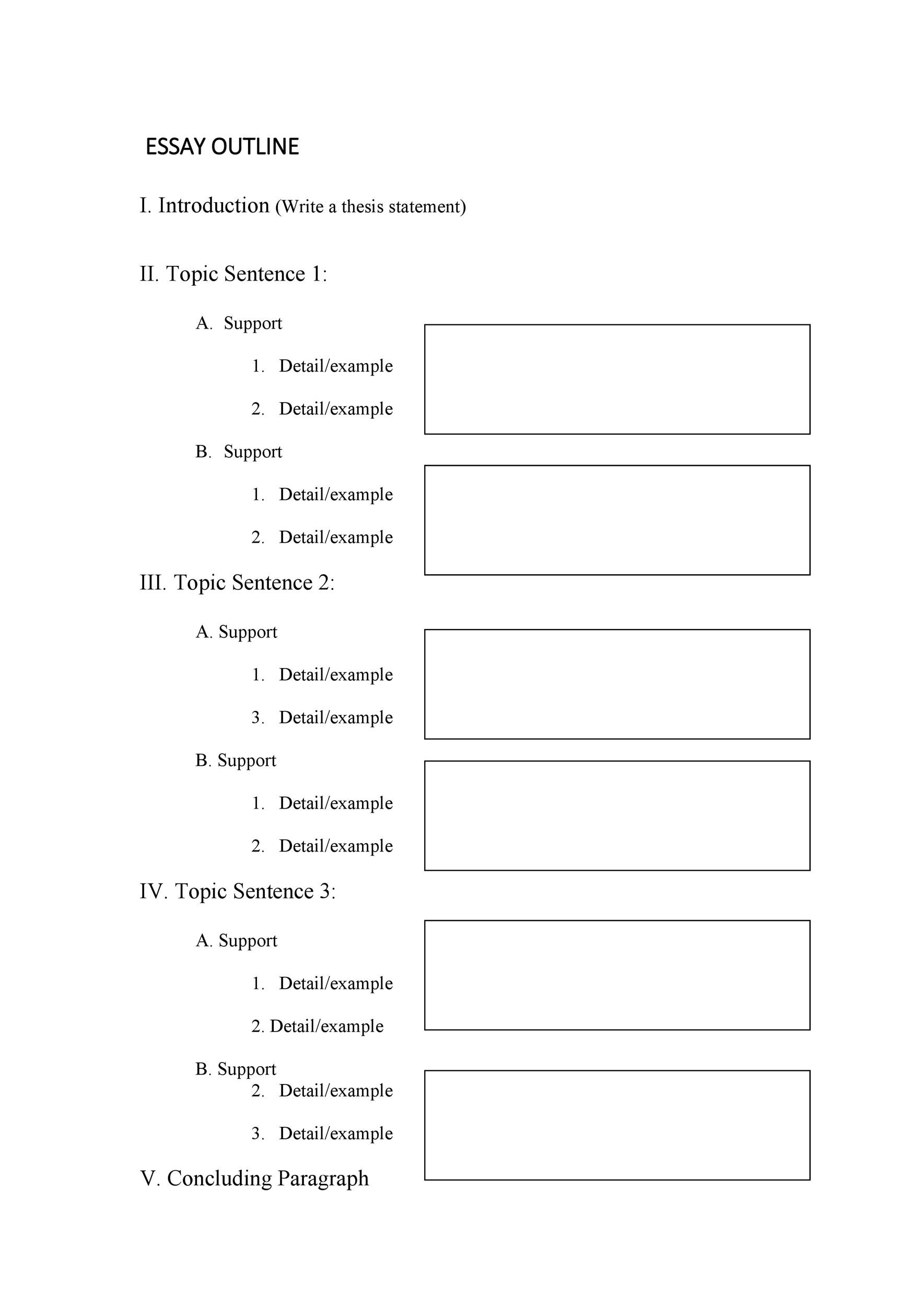
Leverage technology to streamline the outline creation process.
Mind‑Mapping Software
Tools such as MindMeister or Coggle allow you to visualize connections between themes and characters.
Citation Managers
Zotero or Mendeley helps you attach annotations to sources directly within your outline.
Template Libraries
Many academic writing centers offer downloadable outline templates that can be customized to fit various assignment requirements.
Conclusion
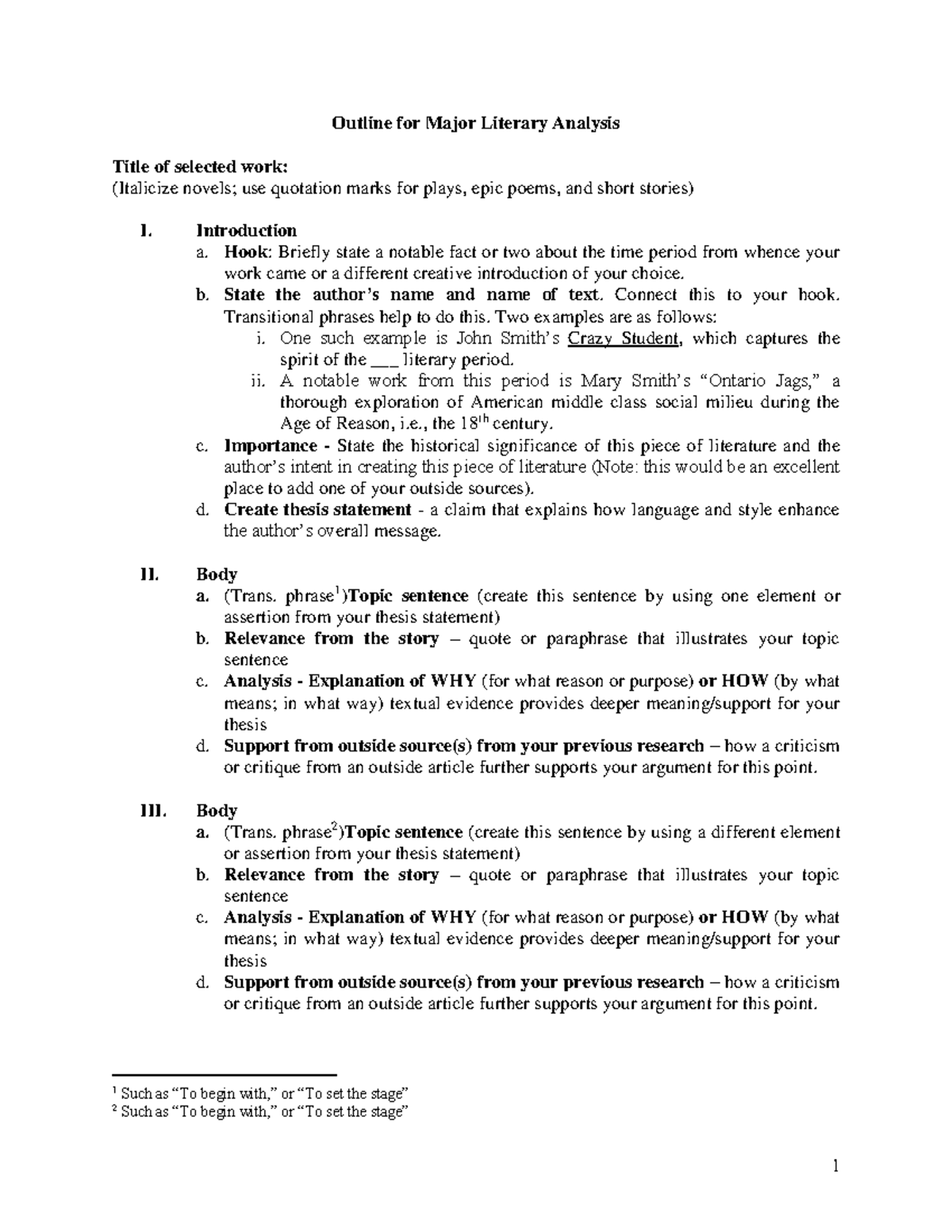
A thoughtfully constructed Literary Analysis Essay Outline Template is more than a planning aid—it is the backbone of a compelling argument. By clearly defining your thesis, organizing evidence, and anticipating counterpoints, you create an essay that not only meets academic standards but also showcases your analytical depth. Adopt this template, adapt it to your writing style, and watch as your literary essays transform from fragmented thoughts into coherent, persuasive works that capture the nuances of the texts you study.