
Dsmb Report Template is the silent guardian lurking behind every high‑stakes clinical trial, a structured manuscript that transforms chaotic data streams into an unassailable narrative for the Data Safety Monitoring Board. In the shadowed corridors of drug development, where lives hinge on the slightest statistical tremor, this template is the only weapon that guarantees the board’s verdict is rooted in rigor, transparency, and unforgiving clarity.
Why a Dedicated Template Matters
In the world of clinical research, the Data Safety Monitoring Board (DSMB) functions as the ultimate arbiter of patient safety. Without a standardized reporting framework, the board would be forced to piece together fragmented information, risking misinterpretation and delayed decisions. A dedicated Dsmb Report Template eliminates ambiguity by:
- Enforcing consistent data presentation across multiple study sites.
- Highlighting safety signals before they evolve into crises.
- Providing a reproducible audit trail for regulators and sponsors.
- Streamlining the review process, allowing the board to focus on critical judgments rather than formatting woes.
The result is a document that speaks in a single, unambiguous language—one that regulators, auditors, and investigators can all read without translation.
Core Components of a Robust Dsmb Report Template
Executive Summary
The opening salvo must deliver the verdict at a glance. A concise executive summary should encapsulate:
- Study identifier and phase.
- Key safety findings to date.
- Any pre‑planned interim analysis outcomes.
- Recommendations for continuation, modification, or termination.
This section is the board’s first line of defense, allowing them to decide whether a deep dive is required.
Study Design Overview
Even the most seasoned DSMB member needs a refresher on the trial’s architecture. The template must outline:
- Randomization scheme and blinding methodology.
- Primary and secondary endpoints, with clear definitions.
- Inclusion and exclusion criteria that shape the patient population.
- Statistical analysis plan, especially the stopping rules for efficacy and safety.
Clarity here prevents misalignment when interpreting adverse event trends later in the document.
Participant Demographics and Baseline Characteristics
Safety signals can masquerade as demographic noise. Presenting these data in tables, with absolute numbers and percentages, lets the DSMB spot outliers. Include:
- Age distribution, gender breakdown, and racial/ethnic composition.
- Baseline disease severity scores.
- Relevant comorbidities that could confound safety outcomes.
Every figure should be cross‑referenced to the corresponding analysis section, ensuring nothing is left to speculation.
Adverse Event Reporting
The heart of the Dsmb Report Template is its adverse event (AE) section. Structure it to convey both breadth and depth:
- Summary tables that list total AEs, serious adverse events (SAEs), and relatedness to study drug.
- Time‑to‑event curves for key safety endpoints.
- Severity grading per CTCAE or an equivalent framework.
- Narrative descriptions of any unexpected or severe events, including investigator assessments and follow‑up actions.
When possible, juxtapose incidence rates against historical controls or placebo arms to contextualize risk.
Interim Analyses and Stopping Rules
Interim looks are the DSMB’s checkpoints. The template must detail:
- Statistical boundaries (e.g., O’Brien‑Fleming, Pocock) used for early stopping.
- Current data points relative to those boundaries.
- Any recommendations from the independent data monitoring committee.
Providing a clear visual—often a funnel plot or a sequential monitoring chart—allows the board to assess whether the trial is veering toward danger or staying within the safety corridor.
Data Quality and Integrity Checks
Garbage in, garbage out. The template should document:
- Missing data rates and imputation methods.
- Source data verification outcomes.
- Any protocol deviations that could affect safety interpretation.
Transparency here shields the board from hidden biases that could skew the safety narrative.
Regulatory and Ethical Considerations
Every clinical trial lives under the watchful eye of regulatory bodies. The template must reference:
- Compliance with ICH GCP guidelines.
- Ethics committee approvals and any subsequent amendments.
- Patient consent updates related to emerging safety information.
Embedding these details reinforces the trial’s legitimacy and reassures the board that ethical lines have not been crossed.
Designing the Template for Maximum Impact

Visual Hierarchy and Readability
A black‑tone narrative does not mean the document should be a bleak wall of text. Use visual hierarchy to guide the DSMB’s eye:
- Bold headings for each major section.
- Consistent table styling with shaded alternate rows.
- Color‑coded alerts (e.g., red for SAEs, orange for moderate AEs) that stand out against a muted background.
White space is not a luxury; it is a strategic element that prevents fatigue during intensive safety reviews.
Modular Structure for Adaptive Use
Trials evolve, and so must their reporting. A modular template—divided into interchangeable sections—allows sponsors to add or remove components without breaking the overall flow. For example, a Phase I first‑in‑human study might omit efficacy tables, while a Phase III trial would demand them.
Digital Integration and Automation
Manual data entry is a breeding ground for error. Modern Dsmb Report Templates integrate with electronic data capture (EDC) systems to auto‑populate tables, generate plots, and flag out‑of‑range values. Embedding macros or scripts that pull real‑time data ensures the board always receives the freshest safety snapshot.
Real‑World Application: Case Studies

Case Study: Oncology Trial Stopping Early for Toxicity
In a multi‑center Phase II trial evaluating a novel checkpoint inhibitor, the DSMB used a rigorously formatted Dsmb Report Template. Within the adverse event tables, Grade 3‑4 immune‑related pneumonitis appeared in 12% of patients—far exceeding the pre‑specified safety boundary of 5%. The visual trend line in the interim analysis section crossed the O’Brien‑Fleming stopping boundary, prompting the board to recommend immediate trial suspension. The template’s clear, concise layout left no room for ambiguity, allowing the sponsor to act swiftly and protect patients.
Case Study: Cardiovascular Study Adjusting Dose Based on Safety Signals
A Phase III cardiovascular outcomes trial employed a template that included a dedicated dose‑response safety matrix. As the DSMB reviewed the interim report, they observed a dose‑related increase in QT‑interval prolongation. The matrix highlighted the signal, and the board recommended a dose reduction for the remaining cohorts. The structured template facilitated a data‑driven decision that preserved the trial’s integrity while mitigating risk.
Best Practices for Maintaining the Template

Version Control and Documentation
Each iteration of the Dsmb Report Template should be version‑controlled, with a change log documenting:
- Added or removed sections.
- Modifications to table formats or statistical thresholds.
- Date of revision and responsible personnel.
This audit trail is essential for regulatory inspections and for ensuring that every DSMB member is reviewing the same version.
Training and Familiarization
Even the most elegant template is useless if the team cannot navigate it. Conduct regular training sessions that cover:
- Data entry protocols.
- Interpretation of visual cues and safety thresholds.
- Procedures for flagging and escalating unexpected findings.
Embedding a quick‑reference guide within the template itself—perhaps as a hidden comment layer—can reduce errors and accelerate the review cycle.
Periodic Review and Continuous Improvement
Safety reporting standards evolve. Schedule semi‑annual reviews of the template against the latest ICH guidelines, FDA recommendations, and industry best practices. Solicit feedback from DSMB members, statisticians, and clinical monitors to identify pain points and areas for enhancement.
SEO Considerations for the Dsmb Report Template Article

Crafting an SEO‑friendly piece about a niche subject like the Dsmb Report Template requires strategic keyword placement without sacrificing readability. Key tactics include:
- Embedding the primary keyword Dsmb Report Template within the first paragraph, headings, and meta‑descriptive sentences.
- Utilizing related terms such as “Data Safety Monitoring Board,” “clinical trial safety reporting,” “interim analysis,” and “adverse event tables” throughout the content.
- Creating internal links to complementary topics—like “How to Conduct an Interim Analysis” or “Understanding Serious Adverse Events”—to boost topical authority.
- Ensuring the article exceeds 1,000 words, which signals depth to search engines.
By weaving these SEO elements naturally into a compelling narrative, the article stands a better chance of ranking high for professionals seeking guidance on safety reporting.
Conclusion

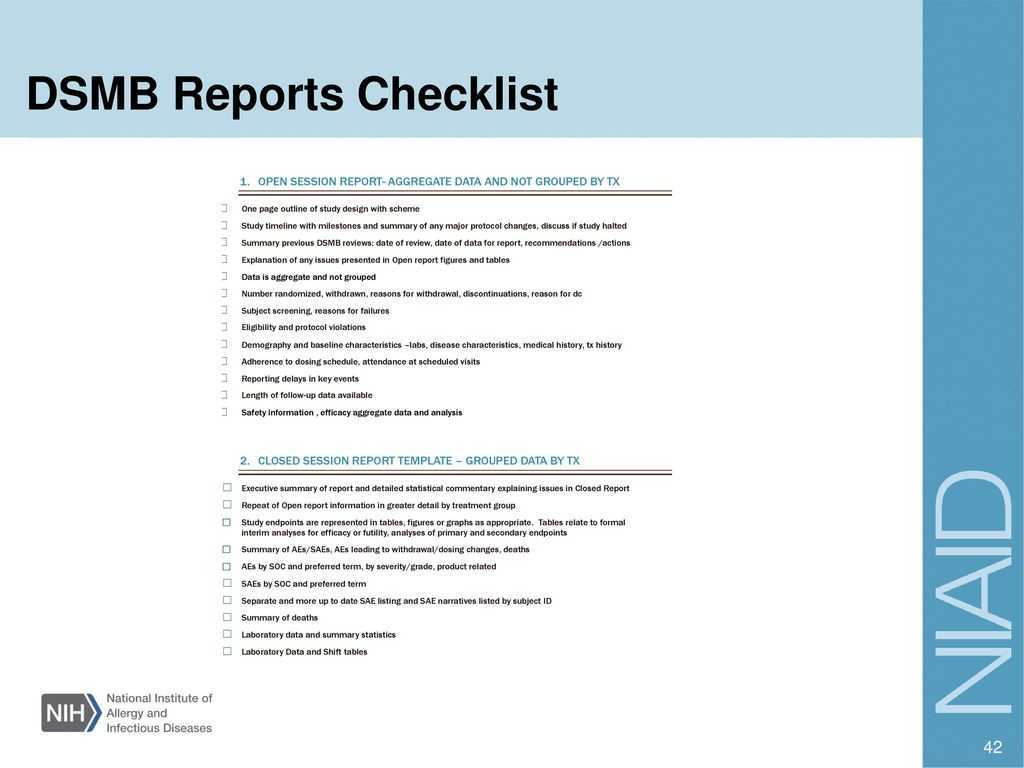
The Dsmb Report Template is not a mere formality; it is the backbone of safety oversight in clinical trials, a meticulously engineered instrument that transforms raw data into decisive action. Its components—executive summary, study design, demographics, adverse events, interim analyses, data integrity checks, and regulatory considerations—must be woven together with precision, visual clarity, and an unyielding commitment to transparency. When built on a modular, automated foundation, the template becomes a living document, capable of evolving alongside the trial it serves.
In the unforgiving arena of drug development, where each data point can tip the scales between life and death, a well‑crafted Dsmb Report Template is the only ally that ensures the Data Safety Monitoring Board can fulfill its solemn duty without hesitation. By adhering to the best practices outlined above—maintaining rigorous version control, providing thorough training, and continuously refining the template—sponsors safeguard not only their scientific integrity but, more importantly, the patients who entrust their lives to the promise of new therapies.




Related posts of "Dsmb Report Template"
