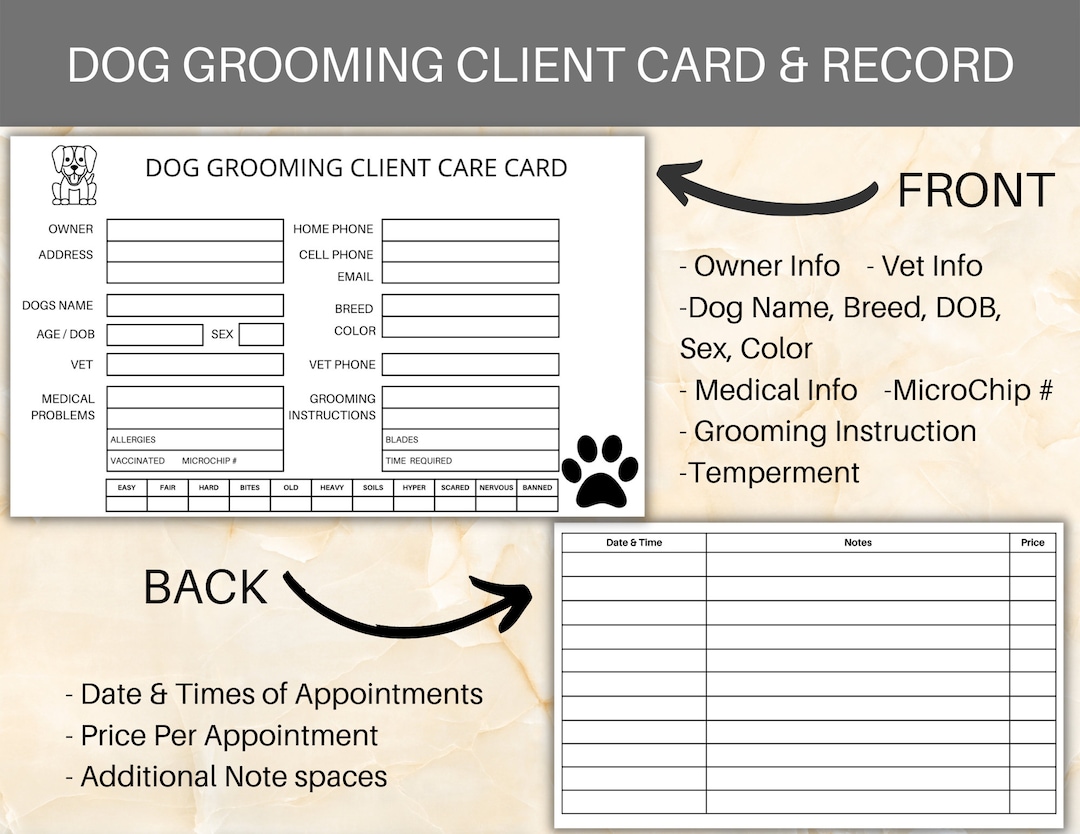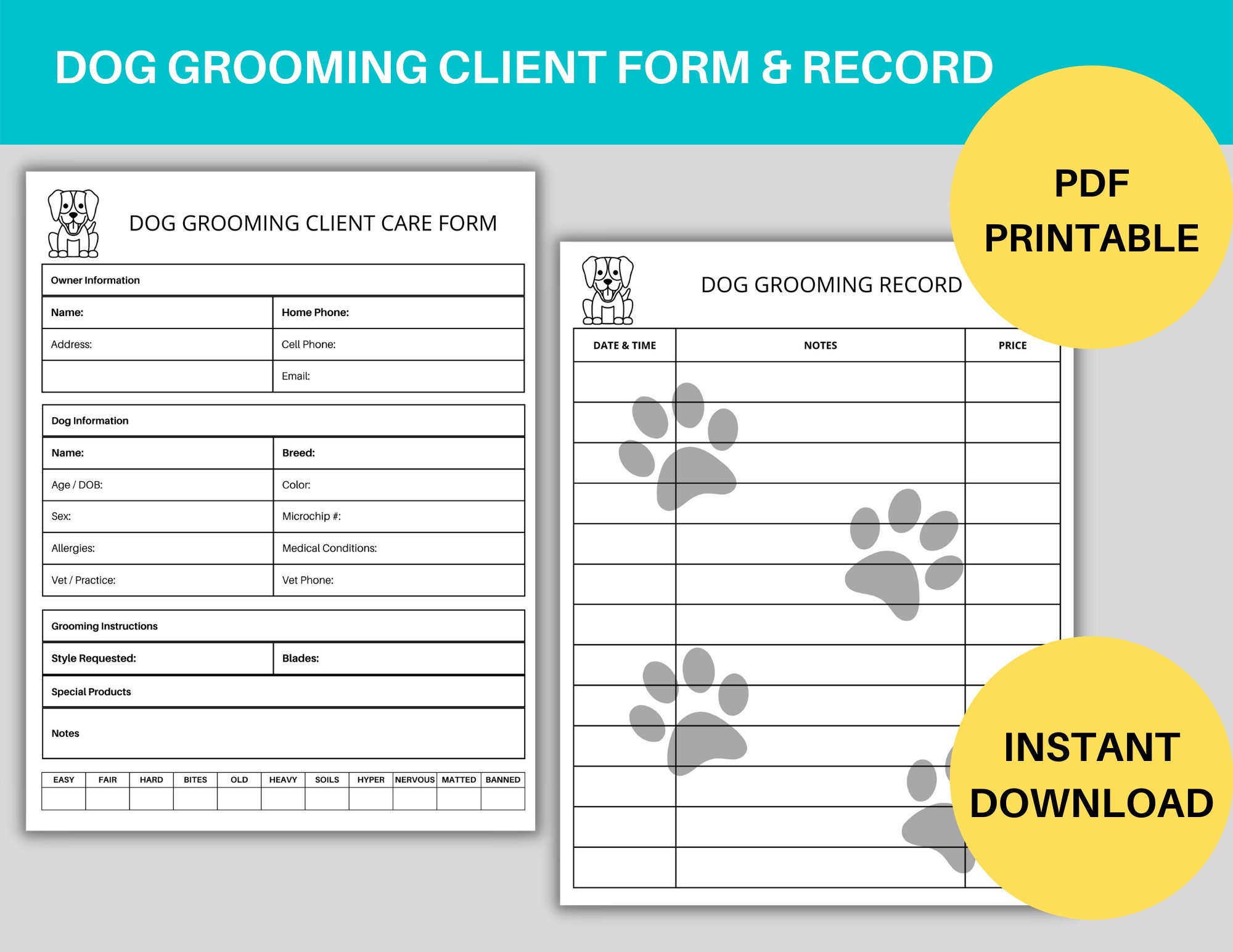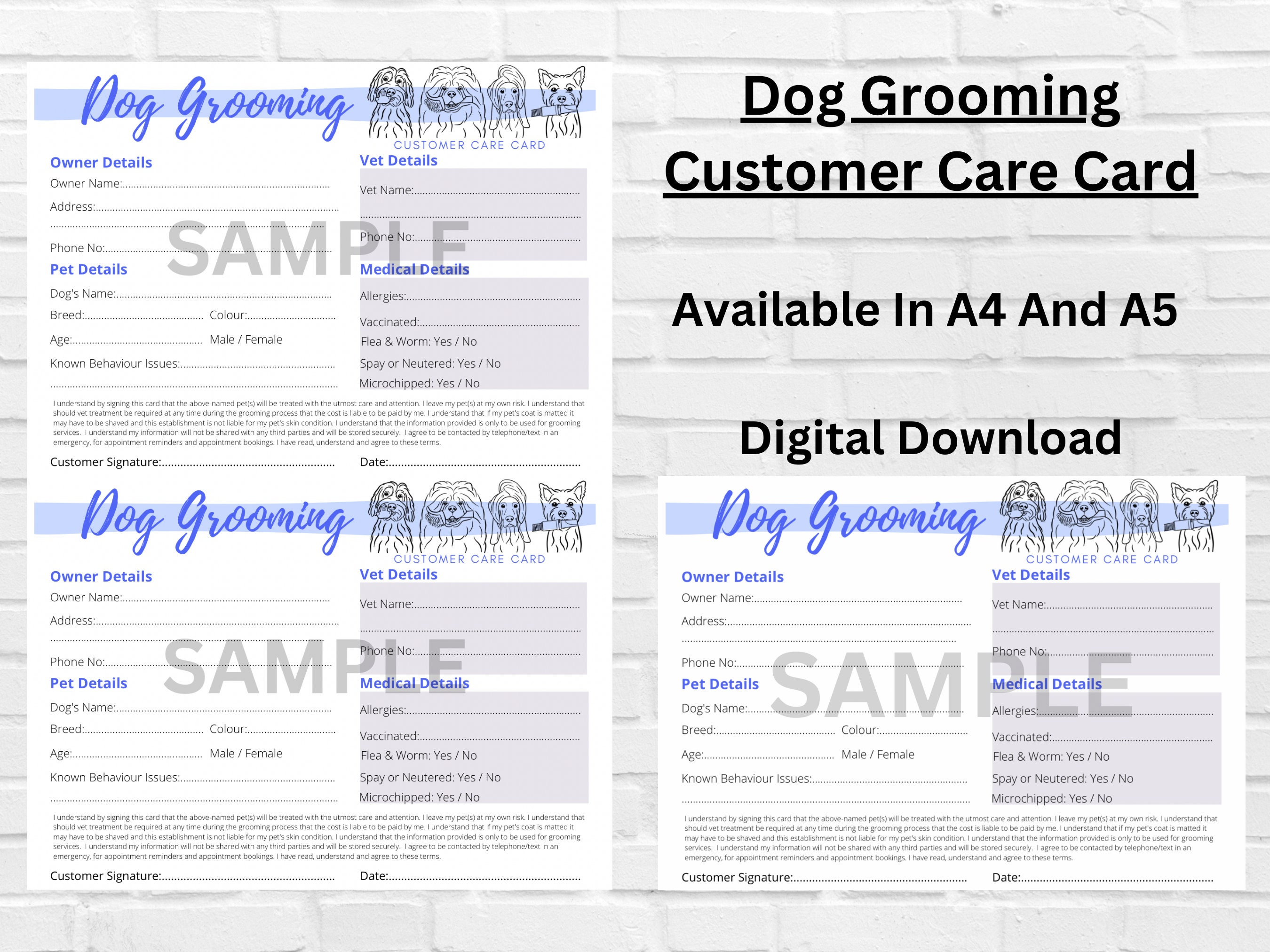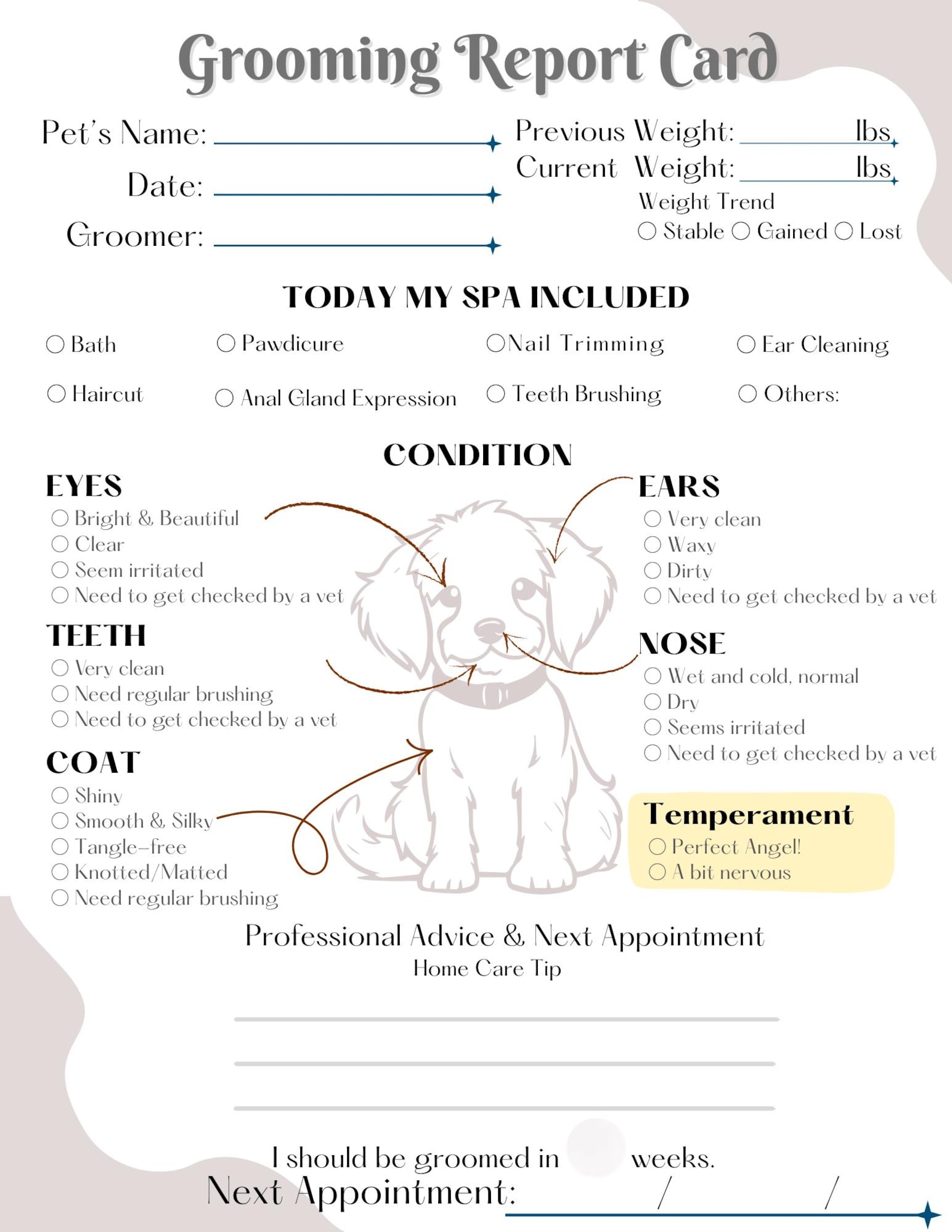
Dog Grooming Record Card Template serves as the cornerstone of consistent, high-quality pet care, allowing groomers to track every detail from a single swipe of a pen to a quick click on a tablet. When every grooming session is documented, clients see tangible proof of their dog’s progress, while groomers can make data‑driven decisions that elevate their service.
Why You Need a Record Card

Grooming a dog is more than just a routine haircut; it’s a blend of health checks, skin inspections, and behavioral observations. A record card transforms scattered notes into a cohesive timeline that benefits both the groomer and the pet owner. By maintaining an accurate log, you can detect early signs of allergies, skin infections, or behavioral changes that may require a veterinary referral.
In addition, a well‑structured record card serves as a professional portfolio for your salon. It demonstrates commitment to meticulous care and provides a reference point for recurring grooming needs. When you return to a client, you can instantly retrieve their last grooming history and tailor your service to match their unique requirements.
Key Features of an Ideal Template

Design and Layout
The visual layout should be intuitive: a top‑section header, followed by a body of data fields and a footer for notes. Use a clean sans-serif font, ample white space, and subtle color accents to distinguish sections. The header typically includes the groomer’s logo, the dog’s name, and the groomer’s contact details.
Information Fields
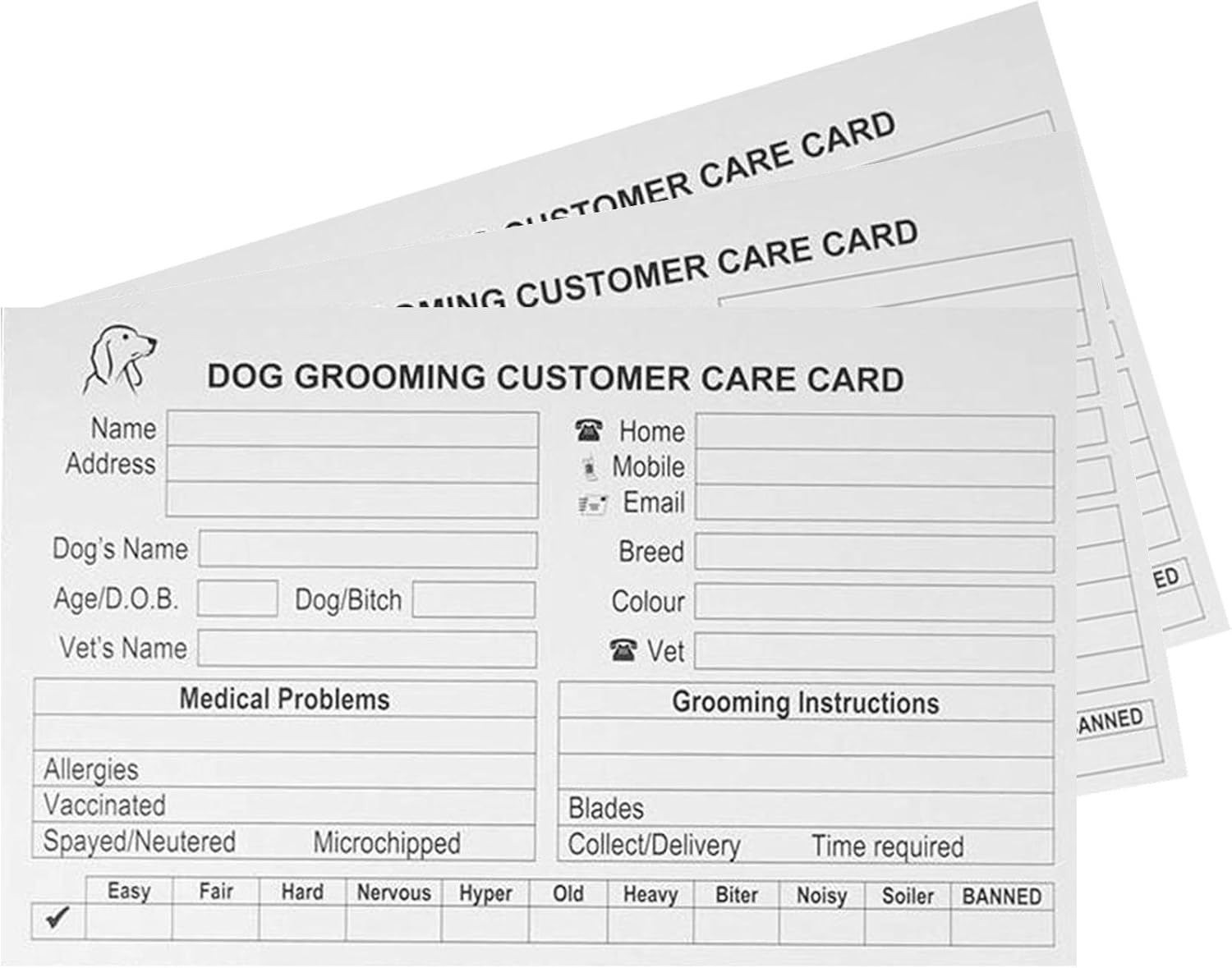
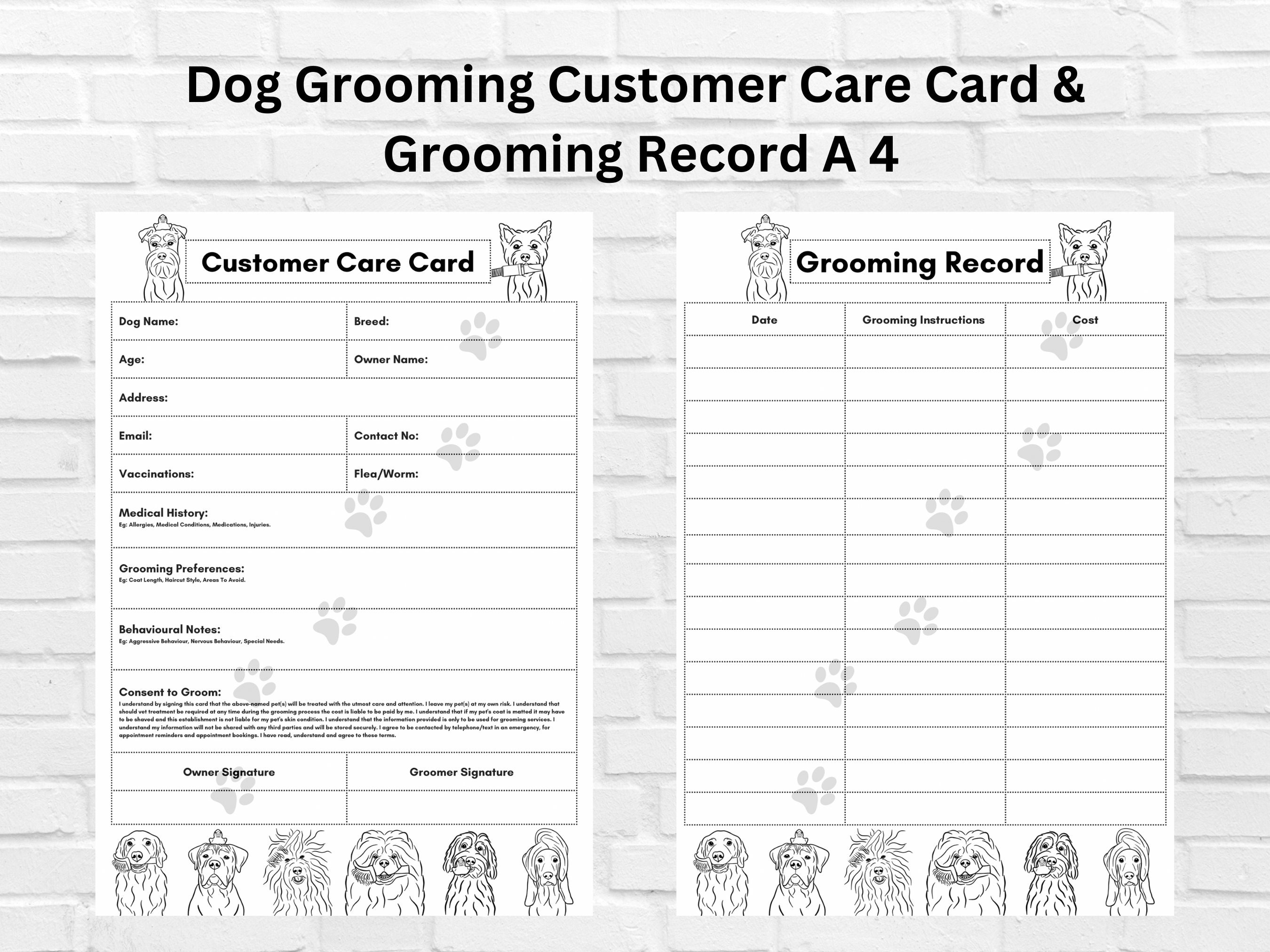
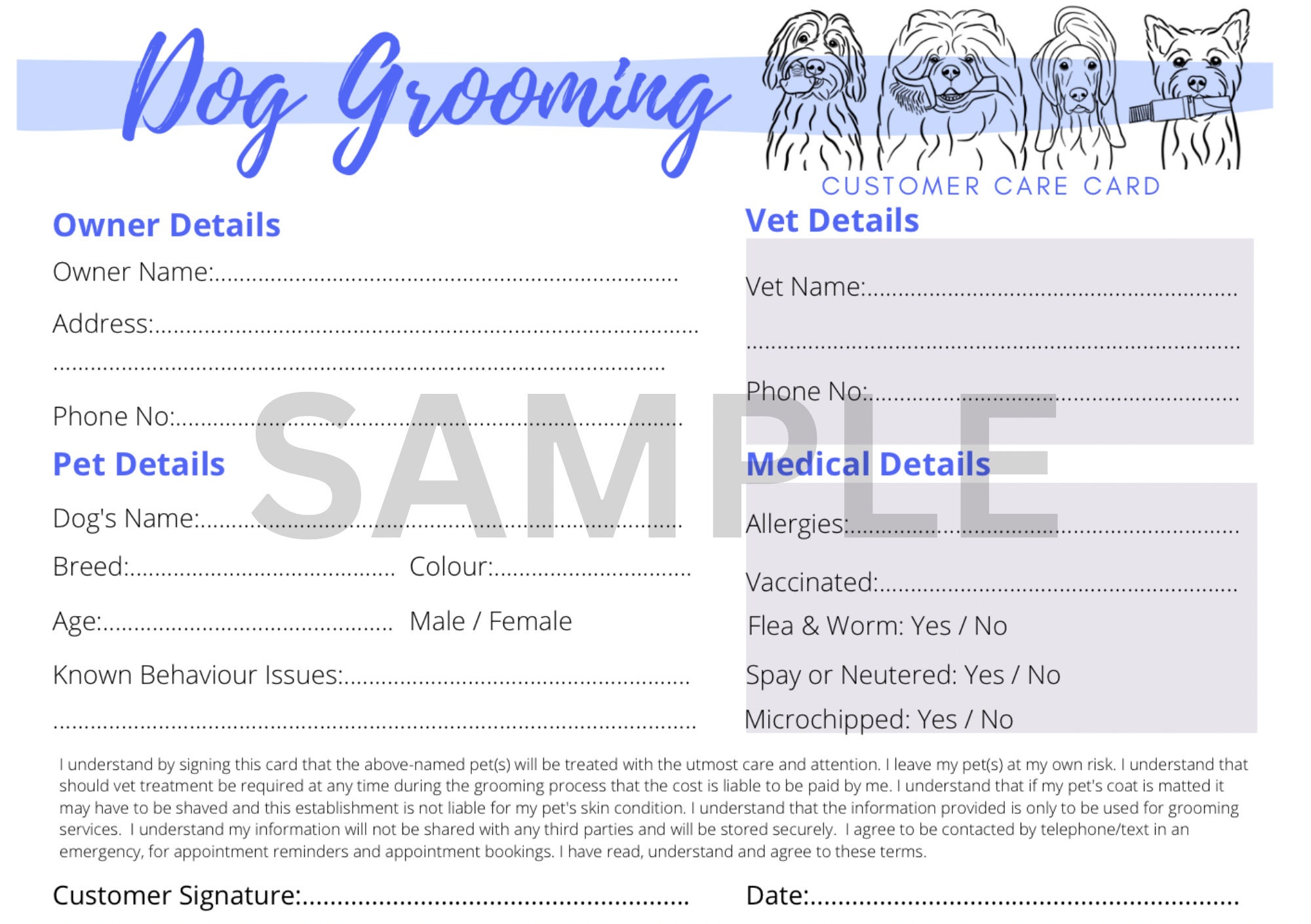
Essential fields to capture include:
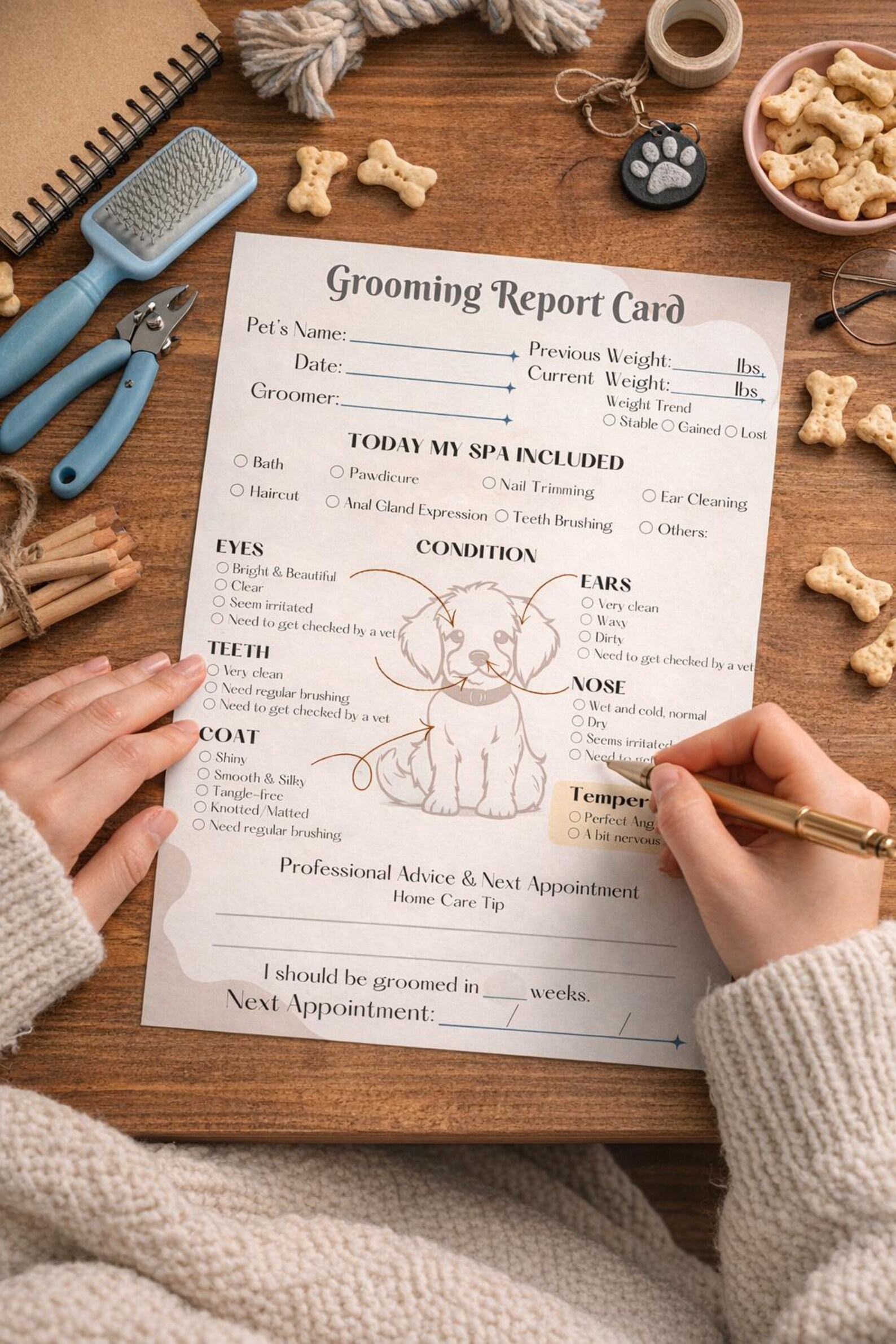
- Dog’s Information: Name, breed, age, weight, and medical history.
- Grooming Date and Time: Helps track frequency.
- Services Performed: Bath, brush, trim, ear cleaning, nail clipping, etc.
- Products Used: Shampoo, conditioner, wax, and any specialty items.
- Observations: Skin condition, coat quality, ear health, and behavioral notes.
- Client Notes: Special requests or concerns.
- Signature: Groomer and client signatures to confirm completion.
Adding a small photo box encourages owners to submit before‑and‑after images, which enriches future grooming sessions and provides visual evidence of progress.
How to Create Your Own Record Card

Choosing the Right Software
Decide whether a digital or paper format suits your workflow. For salons with a digital booking system, integrating a PDF form that can be filled on a tablet streamlines the process. If you prefer traditional paper, a printed card with pre‑printed lines and placeholders ensures consistency.
Step‑by‑Step Design Process
- Draft the Layout: Sketch a rough blueprint on paper or using design software like Canva or Adobe InDesign.
- Define Field Hierarchies: Place the most critical information near the top to minimize scrolling.
- Add Branding Elements: Include your salon’s logo, color palette, and contact info for a cohesive look.
- Test Fillability: Create a sample card and fill it out during a mock grooming session to spot missing fields or formatting issues.
- Finalize and Distribute: Print high‑quality cardstock for physical cards or export as a fillable PDF for digital use.
Remember to keep the card’s size manageable—ideally the dimensions of a standard legal or A4 sheet so that it’s easy to store and transport.
Using the Record Card in Practice

Daily Grooming Sessions
Start each session by updating the dog’s basic info, ensuring you have the latest weight or medical updates. Record the time you begin and end the grooming; this helps track labor costs and provides a reference for clients who pay hourly.
Weekly, Monthly, Quarterly Reviews
At the end of a grooming cycle, use the record card to review trends. For instance, if a dog’s coat shows signs of shedding more than usual, you can recommend a deeper conditioning treatment or a veterinary check‑up. Highlight any recurring issues in the notes section so that future groomers are aware.
Examples from Professional Groomers

Example 1: Small Breed Routine
For a small dog like a French Bulldog, the record card might include a daily ear cleaning check, a weekly coat brushing, and a bi‑monthly teeth brushing. The template can feature a checkbox for “Ear moisture level” and a dropdown for “Coat texture” to capture subtle changes over time.
Example 2: Large Breed Routine
Large breeds such as Great Danes benefit from a quarterly deep bath and a monthly paw pad inspection. The record card can include a field for “Paw pad moisture” and a photo slot for any cuts or abrasions that require additional care.
Tips to Maximize Effectiveness
Consistency
Enforce a strict protocol: every groomer must fill out the card at the start and finish of each session. A consistent process reduces errors and ensures that no detail slips through the cracks.
Photographic Documentation
Incorporate a photo area for before and after shots. Even a single image can highlight the transformation achieved and provide a visual history that helps clients remember the benefits of regular grooming.
Client Communication
After a session, share a copy of the record card with the owner. This transparency builds trust and allows clients to see exactly what was done, fostering loyalty and repeat visits.
Digital vs. Physical Record Cards
Digital Advantages
Digital cards offer instant backup, easy editing, and integration with scheduling software. They can also trigger automatic reminders for next grooming sessions and generate analytics dashboards for business owners.
Physical Advantages
Paper cards provide a tangible record that can be signed in real time, ensuring authenticity. They also require no tech setup, making them ideal for salons with limited digital infrastructure.
Common Mistakes to Avoid
1. Skipping the “Observations” section: This often contains critical health indicators.
2. Inconsistent field formats: Mixed fonts or spacing can lead to misinterpretation.
3. Failing to update weight or medical notes: Outdated data can compromise grooming decisions.
4. Neglecting signature lines: Without client signatures, the record may be challenged during disputes.
Conclusion
Adopting a robust Dog Grooming Record Card Template is more than a formality; it’s an investment in precision, client trust, and business growth. By integrating clear design, essential data fields, and consistent usage practices, groomers can elevate their service, safeguard pet health, and create a transparent record that delights owners and protects your professional reputation. When every grooming session is documented with care, both you and your canine clients reap the benefits of a cleaner, healthier, and more harmonious relationship.