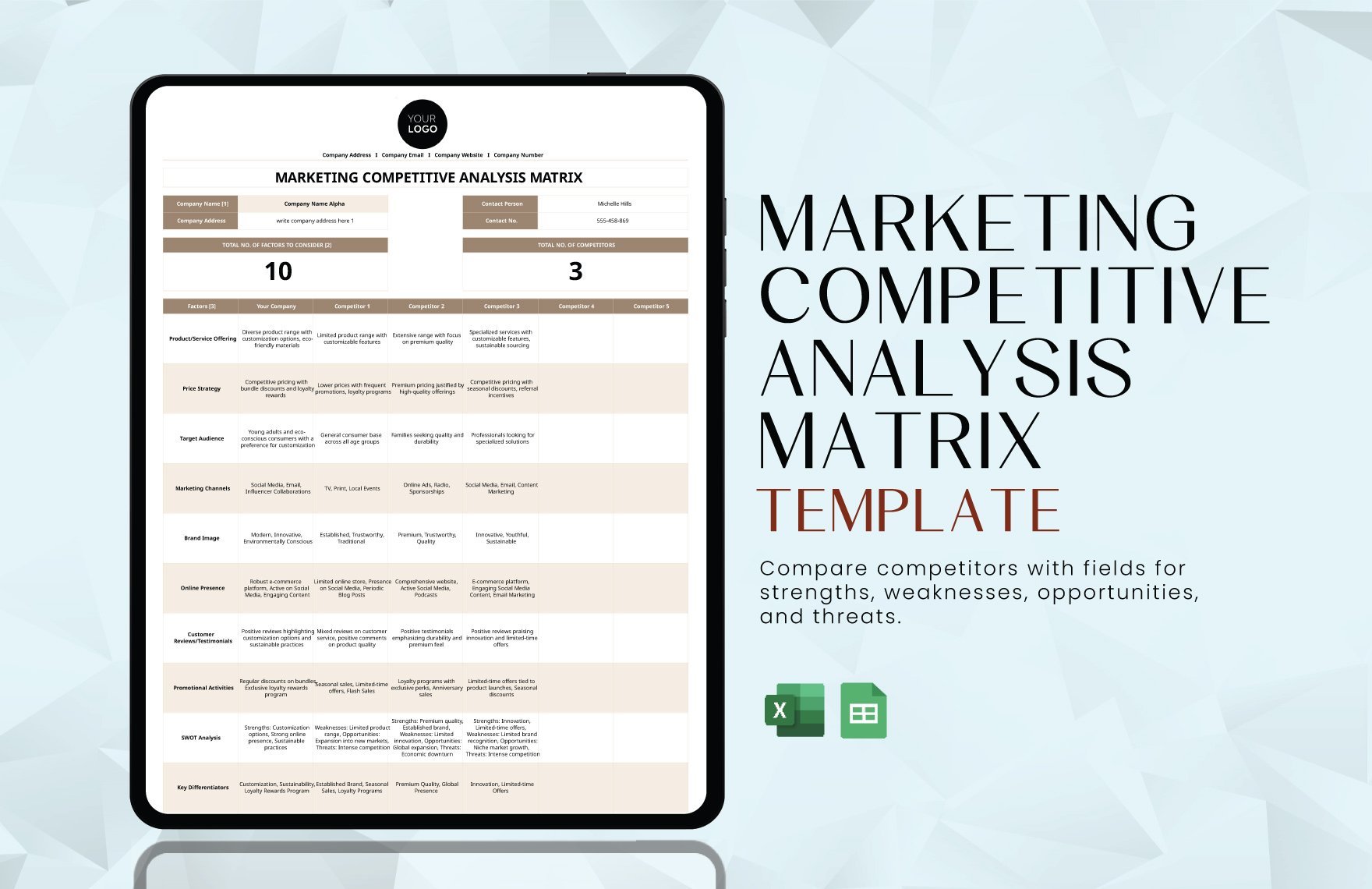
Competitive Analysis Template For Digital Marketing is the secret sauce that turns clueless marketers into strategic ninjas who can sniff out a competitor’s weakness faster than a bloodhound on a scent trail, and all while sipping a latte and cracking jokes about spreadsheets. If you’ve ever stared at a blank Excel sheet wondering whether you should chart your rival’s social media followers or just guess their coffee budget, this guide will hand you a fully loaded template, sprinkle in a dash of humor, and give you enough actionable insight to out‑wit, out‑play, and out‑post anyone in the digital arena.
Why a Competitive Analysis Template Is Your New Best Friend

In the chaotic jungle of digital marketing, data points swing from tree to tree like mischievous monkeys, and without a sturdy vine—aka a template—you’ll end up tangled in KPIs you don’t understand. A well‑crafted template does three things: it organizes chaos, it highlights gaps, and it makes reporting feel like a breezy walk through a park (with occasional coffee stops). Moreover, search engines love structured content, so a template that consistently captures the right metrics can boost your SEO credibility, because Google appreciates marketers who do their homework instead of just copying memes.
Key Components of a Winning Competitive Analysis Template

Think of your template as a multi‑layered sandwich. Each layer adds flavor, texture, and a reason to brag to your boss. Below are the essential ingredients that should never be missing:
Audience Profile
Identify who your competitor is targeting. Demographics, psychographics, and even the type of memes they share on Instagram can reveal a lot. Use columns for Age Range, Interests, Pain Points, and Preferred Platforms. This helps you spot underserved niches you can swoop into.
Channel Performance Matrix
Map out every digital channel—SEO, PPC, social, email, and that mysterious “TikTok” corner. Track metrics such as Organic Traffic, Cost‑Per‑Click, Engagement Rate, and Conversion Rate. A color‑coded heat map (green for strong, red for weak) makes it instantly readable, even for your CFO who thinks “CTR” stands for “Can’t Trust Reports.”
Content Strategy Snapshot
List the top‑performing content pieces of your rival: blog posts, videos, infographics, and that oddly popular “10 Ways to Use Avocado” article. Note the publishing frequency, headline formulas, and SEO keywords. This reveals patterns you can replicate—or deliberately avoid if you want to stay original.
SEO and Keyword Landscape
Capture primary and secondary keywords, domain authority, backlink count, and the number of indexed pages. Tools like Ahrefs or SEMrush can feed this data straight into your template, turning raw numbers into strategic gold.
Paid Advertising Playbook
Record ad copy, budget estimates, target demographics, and placement (Google Search, Display, Social). Don’t forget to note ad extensions and call‑to‑action styles. This section is the playground where you can spot budget leaks and opportunities to outbid your rivals without breaking the bank.
Social Media Pulse
Track follower counts, posting frequency, engagement types (likes, comments, shares), and the tone of voice. A quick glance at a competitor’s meme strategy can tell you whether they’re a “serious brand” or a “fun‑loving cat enthusiast,” and you can decide which vibe fits your brand better.
Step‑by‑Step: Building Your Own Competitive Analysis Template

Ready to roll up your sleeves? Follow this no‑nonsense, laugh‑friendly roadmap to assemble a template that even your grandma could understand (if she were into digital marketing, of course).
Step 1: Choose Your Tool
Pick a platform you love—Google Sheets for real‑time collaboration, Excel for powerful pivot tables, or a specialized SaaS solution if you enjoy spending money on shiny dashboards. The key is accessibility; you want your team to actually use it, not treat it like a museum artifact.
Step 2: Set Up the Master Sheet
Create a master tab titled “Dashboard” that pulls key metrics from all other tabs using formulas like =SUM() or =IMPORTXML(). This high‑level view should answer the question, “Are we winning, losing, or just mildly confused?” at a glance.
Step 3: Build Individual Tabs
For each component listed above, create a dedicated tab. Label them clearly: “Audience,” “Channels,” “Content,” “SEO,” “Paid,” “Social.” Use column headers that are short but descriptive, like “Metric,” “Current Value,” “Competitor A,” “Competitor B,” “Gap,” and “Action.”
Step 4: Populate the Data
Gather data from reliable sources: Google Analytics for your own site, SimilarWeb for competitors, and social listening tools for sentiment analysis. Input the numbers, then use conditional formatting to highlight gaps—red for “needs attention,” green for “nailed it.”
Step 5: Add Visual Flair
Charts are the visual equivalent of a stand‑up comedy routine: they keep the audience engaged. Insert bar graphs for channel performance, line charts for traffic trends, and pie charts for budget allocation. Remember to label axes and add a witty title like “Who’s the Real Traffic Hero?”
Step 6: Automate Updates
If you’re using Google Sheets, set up Google Apps Script (or a Zapier integration) to pull fresh data weekly. Automation ensures your template stays current, so you’re never presenting last month’s memes as “trending.”
Step 7: Review and Iterate
Schedule a monthly “Template Tasting” meeting where the team reviews findings, celebrates wins, and decides which sections need a fresh coat of paint. This keeps the template alive and prevents it from turning into a dusty spreadsheet fossil.
Tools and Tips to Keep Your Template Fresh
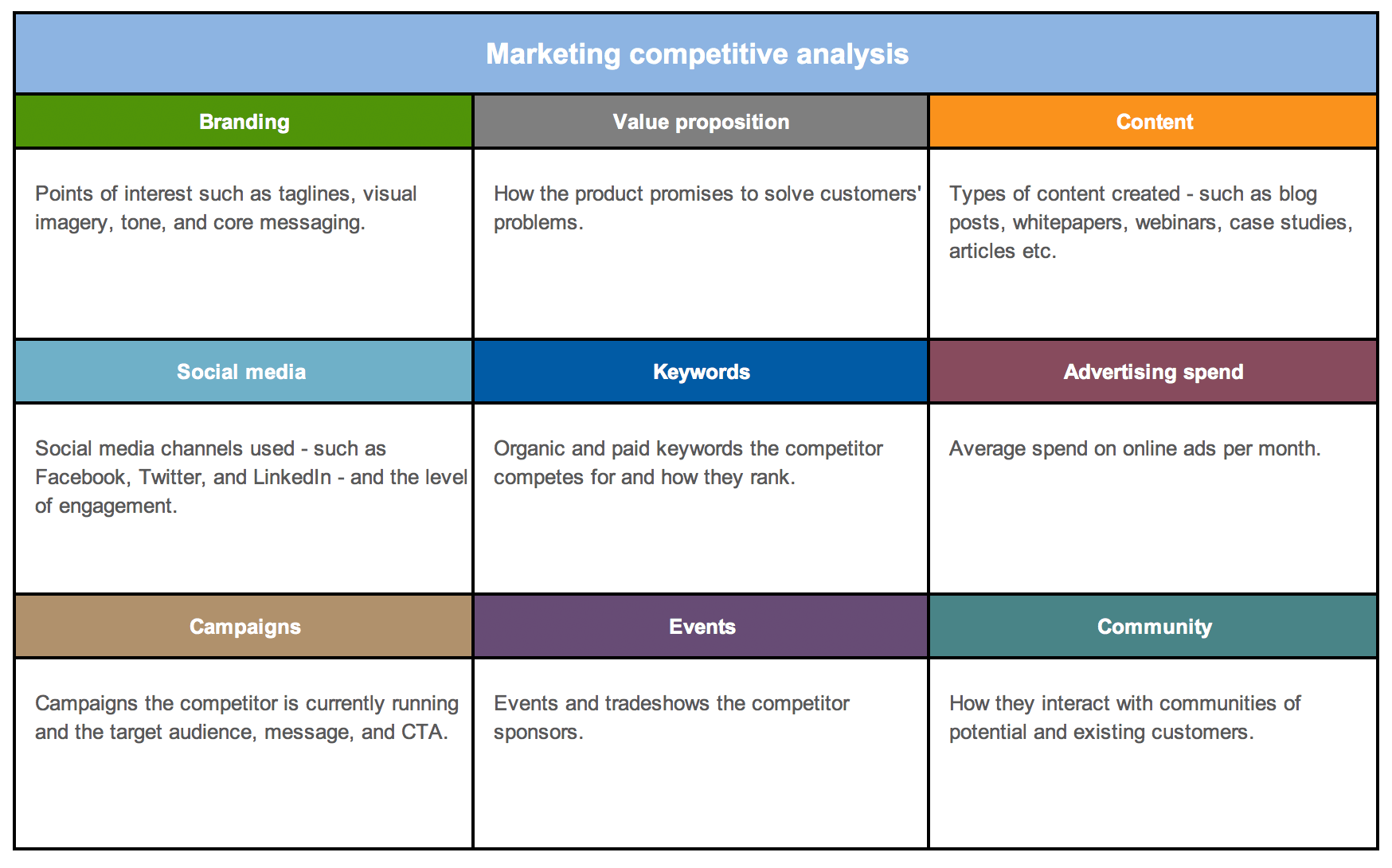
-1.png)
Even the best template can become stale if you forget to feed it data. Here are some tools and pro tips that will keep your competitive analysis humming like a well‑tuned saxophone.
- Data Aggregators: Use platforms like Ahrefs, SEMrush, or Moz to pull keyword rankings, backlink profiles, and traffic estimates automatically.
- Social Listening: Tools such as Brandwatch or Sprout Social reveal sentiment trends, viral content, and influencer partnerships your rivals are leveraging.
- Automation Wizards: Zapier, Integromat, or native Google Apps Scripts can schedule data imports, email alerts, and even generate summary PDFs for stakeholders.
- Visualization Add‑ons: Explore Google Data Studio or Power BI for interactive dashboards that turn raw numbers into story‑telling visuals.
- Collaboration Hacks: Comment directly in the sheet to ask questions like “Why did they spend $10k on this ad?” and let teammates reply with GIFs for extra morale.
Real‑World Example: The Pizza vs. Taco Showdown

Let’s put theory into practice with a deliciously competitive scenario: Pizza Palace versus Taco Titan. Both dominate the fast‑food digital space, but they approach marketing like night and day—one uses cheesy puns, the other goes full salsa.
Audience Profile
Pizza Palace targets families and millennials who love comfort food, while Taco Titan aims at Gen Z snackers who crave bold flavors. By mapping these audiences, you discover a crossover segment: college students who enjoy both pizza nights and taco Tuesdays. This is your sweet spot for a joint “Pizza‑Taco Fusion” campaign.
Channel Performance Matrix
Pizza Palace shines on Instagram with high‑quality food photography (average engagement 4.2%). Taco Titan dominates TikTok with short, spicy videos (engagement 7.8%). Your template highlights that you could boost Instagram reels for pizza and start a TikTok challenge for tacos, merging both strengths.
Content Strategy Snapshot
Pizza Palace’s top blog post, “10 Creative Pizza Toppings,” drives 12k monthly visits, while Taco Titan’s “How to Make the Perfect Taco Shell” video racks up 3M views. By noting the formats (listicle vs. tutorial) and the topics, you can produce a hybrid “Ultimate Party Snack Guide” that appeals to both audiences.
SEO and Keyword Landscape
Both brands rank for “best pizza near me” and “taco recipes.” However, Taco Titan outranks Pizza Palace for “quick dinner ideas.” This insight suggests you should optimize your pizza blog for “quick pizza recipes” to capture that traffic slice.
Paid Advertising Playbook
Pizza Palace spends $15k monthly on Google Search ads targeting “order pizza online,” while Taco Titan allocates $8k to YouTube ads showcasing sizzling taco footage. By analyzing cost‑per‑acquisition, you discover that Taco Titan’s video ads have a 30% lower CPA, prompting you to test video ads for pizza.
Social Media Pulse
Pizza Palace’s brand voice is warm and cheesy, while Taco Titan’s tone is bold and spicy. By juxtaposing these tones, you can craft a “Cheese & Heat” social campaign that alternates between witty pizza puns and fiery taco memes, capturing the best of both worlds.
Common Mistakes and How to Avoid Them

Even seasoned marketers stumble when building a competitive analysis template. Here are the most frequent blunders and the antidotes you need.
Overloading with Data
Filling every cell with every metric imaginable turns your template into a data swamp. Focus on the metrics that directly impact your goals—traffic, conversion, and ROI. Trim the rest, and your team will actually read the report instead of falling asleep.
Neglecting Updates
A template that isn’t refreshed is as useless as a broken compass. Set automated data pulls and calendar reminders. If you manually update once a quarter, you’ll miss crucial market shifts like a competitor’s sudden TikTok fame.
Skipping the “Why”
Numbers without context are just pretty decorations. Always add a column for “Insight” or “Action.” For example, “Competitor’s CTR is 2.5% higher → Test new ad copy with stronger CTA.” This ensures the template drives decisions, not just data collection.
Ignoring Qualitative Signals
Metrics tell you the “what,” but customer reviews, brand sentiment, and visual branding reveal the “why.” Include a qualitative notes section for each competitor, capturing things like “uses cartoon mascots” or “offers 24‑hour live chat.”
Using One‑Size‑Fits‑All Templates
What works for a B2B SaaS company may not suit a consumer e‑commerce brand. Tailor the template to your industry, audience, and marketing mix. A flexible, modular design lets you add or remove sections without breaking the whole thing.
Conclusion

Crafting a Competitive Analysis Template For Digital Marketing is not just about filling cells; it’s about turning raw data into a strategic narrative that makes you the hero of the digital battlefield. By understanding why a template matters, including the right components, following a step‑by‑step build process, leveraging the best tools, and learning from real‑world examples, you’ll be able to outsmart competitors, seize untapped opportunities, and perhaps even have a laugh while you’re at it. Remember to keep the template fresh, focus on actionable insights, and celebrate every win—no matter how small—because in the ever‑evolving world of digital marketing, even a well‑placed meme can be a game‑changer. Happy analyzing!






Related posts of "Competitive Analysis Template For Digital Marketing"
