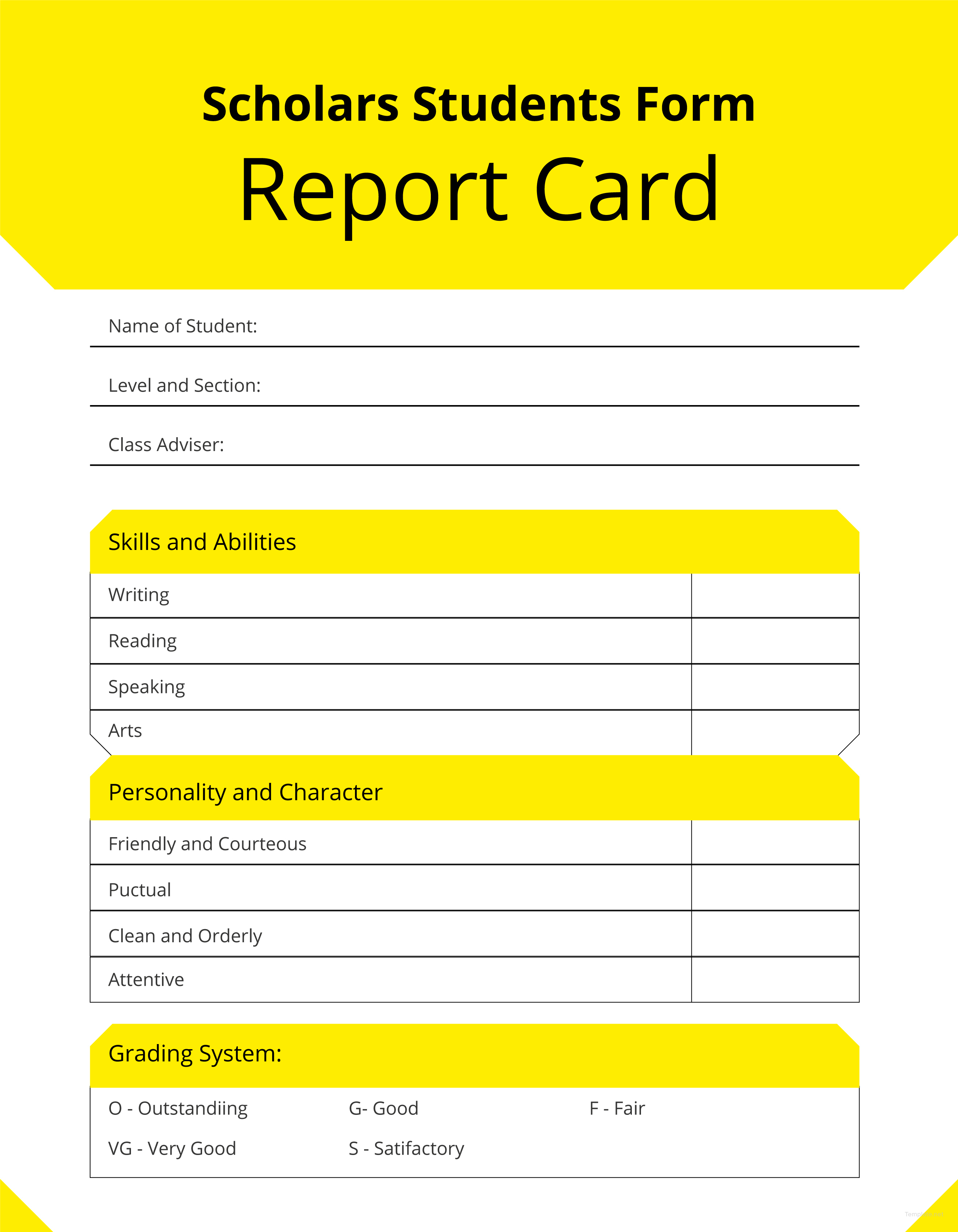
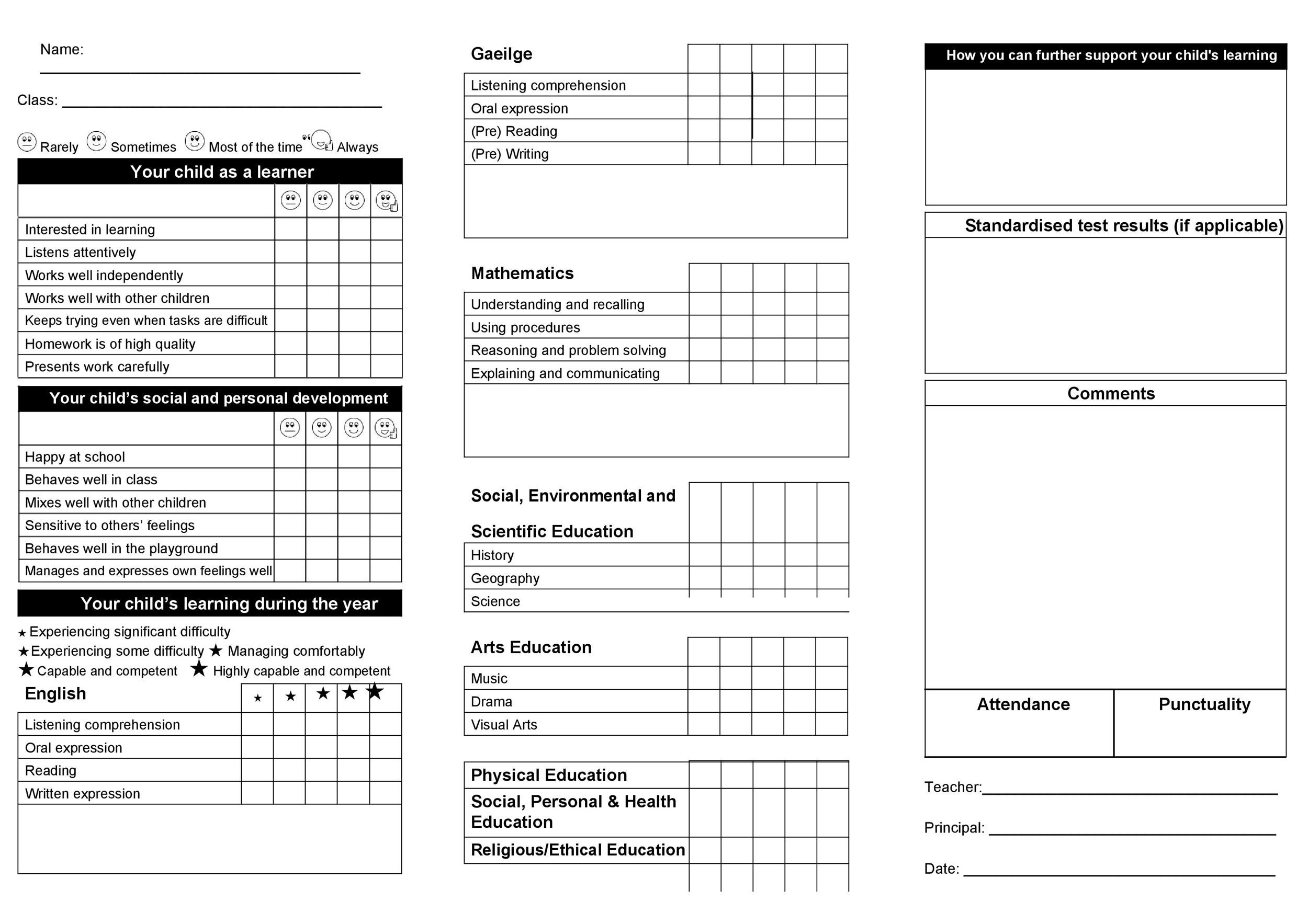
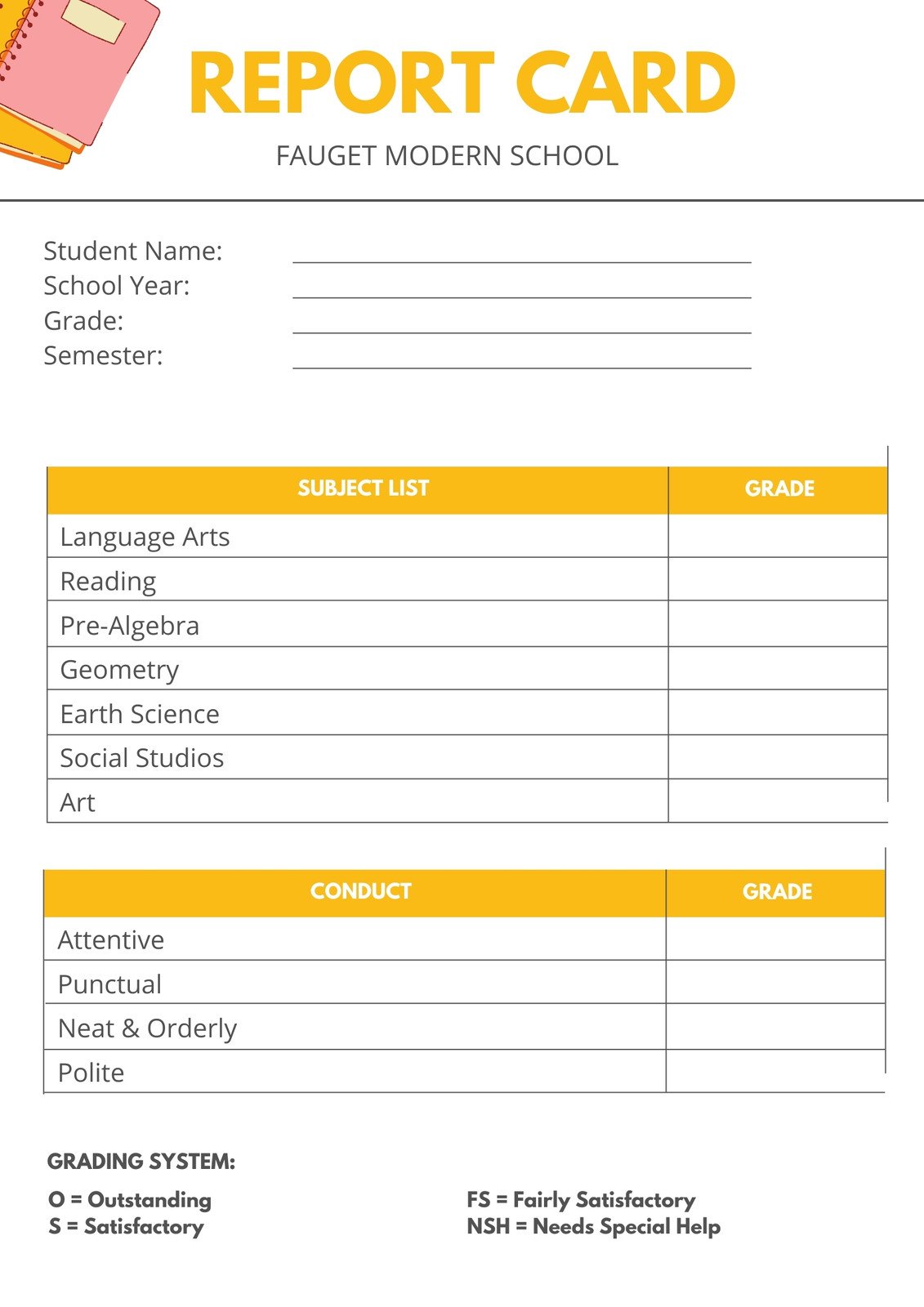
Character Report Card Template is the secret sauce that turns ordinary classroom assessments into a comedy show starring your students, their personalities, and a dash of glitter. Imagine a report card that grades bravery, kindness, and snack‑time etiquette with the same seriousness as math, but with a wink and a grin—yes, that’s the magic you’re about to unleash. In this guide we’ll dive deep into why you need this whimsical tool, how to design one that dazzles, and practical steps to roll it out without causing a rebellion (or at least a very enthusiastic applause).
Why a Character Report Card Template Rocks
First off, let’s address the elephant in the hallway: traditional report cards are about as exciting as watching paint dry on a rainy Tuesday. Parents get the grades, teachers get the paperwork, and kids wonder why their gold star turned into a red mark. A Character Report Card Template flips the script by celebrating the invisible superpowers that every child (and adult) possesses. It acknowledges the social‑emotional skills that are increasingly recognized as core competencies in modern education, and it does so with humor that keeps everyone smiling.
Boosts Engagement and Motivation
When students see their “Creativity” or “Teamwork” grades displayed alongside “Math” and “Science,” they feel seen for who they truly are. The novelty factor alone spikes motivation—kids are more likely to aim for an “A” in “Patience” when they know their teacher will proudly display a gold‑bordered sticker next to it. This kind of intrinsic motivation fuels better behavior and stronger classroom community.
Provides Insight for Parents
Parents often feel left out of the day‑to‑day social dynamics that shape their child’s growth. A character‑focused report card bridges that gap, giving families concrete talking points beyond “Your child got a C in spelling.” It opens doors for meaningful conversations at the dinner table, like “Did you notice how you helped your friend during recess today?” The result? A stronger home‑school partnership.
Supports Whole‑Child Education
Educators worldwide are embracing the Whole‑Child approach, which emphasizes academic, social, emotional, and physical development. A Character Report Card Template is the perfect vehicle for documenting progress across these domains. It turns abstract qualities into measurable, trackable data—think of it as a radar for personal growth.
Design Essentials for an Irresistibly Funny Template
Design is the stage on which your comedy unfolds. A well‑crafted template balances clarity, humor, and functionality. Below are the essential elements you should include, along with tips to keep the laughs coming without sacrificing professionalism.
Eye‑Catching Header
Start with a bold header that screams “We take fun seriously!” Use playful fonts (but not Comic Sans—unless your class is a circus) and incorporate a mascot or cartoon that embodies the spirit of your classroom. A smiling owl wearing glasses or a superhero hamster works wonders.
Clear Categories and Descriptors
List categories such as “Kindness,” “Creativity,” “Resilience,” “Teamwork,” “Humor,” and “Snack‑Sharing Skills.” For each, provide a short, witty descriptor. Example: “Kindness – How often you turn a frown upside down, even if you’re secretly plotting world domination.” This keeps the tone light while setting expectations.
Rating Scale with a Twist
Instead of the typical A‑F scale, try “Sparkles,” “High‑Five,” “Meh,” “Oops,” and “Needs More Coffee.” Pair each level with a funny emoji or doodle. Kids love visual cues, and adults appreciate the break from monotony.
Comments Section for Personalized Humor
Leave space for teachers to write personalized notes. Encourage them to sprinkle in jokes or puns. A comment like “You navigated the group project like a pirate on a calm sea—except the treasure was a perfectly organized spreadsheet” makes feedback memorable.
Signature and Signature‑Sticker
End the card with a place for the teacher’s signature and a “Stamp of Awesomeness.” The stamp can be a gold star, a smiley face, or a tiny rubber chicken—whatever gets a giggle.
Step‑by‑Step Guide to Creating Your Own Template
Now that you know what makes a stellar template, let’s roll up our sleeves and build one from scratch. Whether you’re a tech‑savvy teacher or a DIY enthusiast, these steps will get you there faster than a hamster on a treadmill.
Gather Your Materials
Computer with a word processor or design software (Google Docs, Canva, or Microsoft Word work fine).
Fun fonts and icons (free resources like Google Fonts and Flaticon are your friends).
Printer or digital distribution platform (Google Classroom, email, etc.).
Optional: Laminator and dry‑erase markers for reusable cards.
Sketch the Layout
Start with a rough sketch on paper. Draw boxes for each category, a space for the rating scale, and a comment area. Keep the layout symmetrical but leave room for doodles. Remember, a cluttered card can feel like a “Choose Your Own Adventure” novel—fun, but confusing.
Choose a Color Scheme
Pick a palette that’s bright enough to catch eyes but not so loud that it looks like a fireworks display in a library. A combination of teal, coral, and mustard yellow works well for most classrooms. Use color coding for each category if you want to add an extra layer of organization.
Insert the Header and Mascot
Place your header at the top, centered, with a size that dominates but doesn’t overwhelm. Add your mascot beside or below the title. If you’re using a digital template, embed the mascot as a PNG with a transparent background for a clean look.
Add Categories and Descriptors
List each character trait in a bold font, followed by the witty descriptor in italics. Example: Creativity– How many times you turned a plain paper into a masterpiece that would make Picasso blush.
Design the Rating Scale
Create a row of boxes or circles under each category for the rating symbols. Label each symbol with its meaning. Use emojis sparingly to maintain readability. For a printable version, make sure the symbols are simple enough to be cut out or colored.
Allocate Space for Comments
Draw a wide rectangle at the bottom of the card for personalized notes. Encourage teachers to write short, punchy comments that reflect each student’s unique quirks.
Finalize and Test Print
Run a test print on regular paper. Check for alignment, spelling errors, and whether the mascot looks like a pixelated monster (adjust resolution if needed). Once satisfied, print on heavier cardstock for durability or save as a PDF for digital distribution.
Digital vs. Printable: Choosing the Right Format
Both digital and printable formats have their own set of advantages, and the choice largely depends on your classroom dynamics, resources, and personal preferences. Below we break down the pros and cons of each, so you can decide which fits your style like a glove—preferably a glove with glitter.
Printable Templates
Tactile Experience: Kids love holding something real, especially when it involves crayons and stickers.
Easy to Display: Pin them on a bulletin board for instant bragging rights.
Reusable Options: Laminated cards can be reused with dry‑erase markers, reducing waste.
Low Tech Requirement: No need for internet or devices, which is great for schools with limited tech budgets.
Digital Templates
Instant Delivery: Send directly to parents via email or a learning management system.
Automatic Tracking: Use spreadsheets or apps to compile data over the semester.
Customizable Animations: Add subtle animations to make the experience more interactive.
Eco‑Friendly: Saves paper and reduces clutter.
Hybrid Approach
Why choose one when you can have both? Create a digital version for record‑keeping and a printable version for the classroom wall. This hybrid model ensures you capture data efficiently while still giving students the tactile joy of a physical card.
Integrating the Template into Classroom Routines
Even the most dazzling template will flop if it’s not woven into the fabric of everyday classroom life. Below are proven strategies to embed the Character Report Card Template into routines, making it a natural part of your educational ecosystem.
Weekly “Character Check‑In”
Set aside five minutes each Friday for a quick review. Have students self‑assess using the rating symbols, then discuss as a class. This not only reinforces the traits but also teaches self‑reflection—a skill that will serve them longer than any test prep.
Monthly Teacher Conferences
During parent‑teacher conferences, bring the completed cards to illustrate a student’s growth. Use the humorous comments as ice‑breakers to ease tension and showcase progress beyond grades.
Reward System Integration
Link the character grades to a classroom economy. For example, a “Sparkles” in “Teamwork” earns a student a token they can trade for extra recess time or a mystery snack. This gamifies the experience while reinforcing positive behavior.
Peer‑Feedback Sessions
Occasionally allow students to give each other constructive feedback using the template’s categories. Teach them how to phrase comments with kindness, turning the process into a lesson in empathy and communication.
Real‑World Examples and Success Stories
To prove that humor and heart can coexist in assessment, let’s explore a few real‑world scenarios where educators have implemented a Character Report Card Template and reaped surprising benefits.
Case Study: The Elementary School That Turned “Oops” into “Opportunities”
At Maple Grove Elementary, teachers introduced a character card with a rating called “Oops.” Instead of penalizing mistakes, the “Oops” level celebrated learning moments. Within a semester, the school reported a 30% decrease in disciplinary referrals, and students began using the word “Oops” to acknowledge their own slip‑ups—turning a negative into a growth mindset catalyst.
Case Study: High School Drama Club’s “Stage Presence” Score
The drama club at Riverbend High created a special category called “Stage Presence,” rated with “Standing Ovation,” “Encore,” “Polite Applause,” and “Silent Stare.” The humorous scale motivated students to push their performance boundaries. Attendance at rehearsals rose by 45%, and the club’s final production sold out weeks in advance.
Case Study: Remote Learning Adaptation
During a period of virtual schooling, a middle school teacher used a digital character card integrated with Google Slides. Parents could view the cards in real time, and students added animated stickers to represent their achievements. The interactive nature kept engagement high, and end‑of‑year surveys showed a 92% satisfaction rate among families.
Tips for Keeping the Humor Fresh and Inclusive
Humor is a powerful tool, but it can backfire if not handled with care. Here are some guidelines to ensure your jokes land with everyone, regardless of background or ability.
Know Your Audience
Tailor jokes to the age group and cultural context of your students. What’s hilarious to a fifth‑grader might be puzzling to a kindergartener. Keep references broad and avoid sarcasm that could be misinterpreted.
Avoid Sensitive Topics
Steer clear of jokes about race, religion, gender, or personal challenges. Focus on light‑hearted, universal themes like “Snack‑Sharing Skills” or “Superhero Stamina.”
Encourage Student Contributions
Invite students to suggest funny rating names or mascots. This not only makes the template more relatable but also fosters a sense of ownership.
Balance Humor with Seriousness
While the tone is playful, the underlying purpose remains educational. Ensure that the feedback is constructive and that the humor never undermines the seriousness of the growth areas.
Common Pitfalls and How to Avoid Them
Even the best‑intentioned teachers can stumble when introducing a new assessment tool. Below are common mistakes and proactive strategies to keep your Character Report Card Template on track.
Over‑Complicating the Design
Too many categories or an overly busy layout can overwhelm students. Stick to 5‑7 core traits and use clean, simple graphics. Remember, less is more—unless you’re designing a superhero cape, then more is definitely more.
Neglecting Follow‑Up
A report card that sits on a shelf gathers dust. Schedule regular check‑ins, celebrate improvements, and adjust goals as needed. This shows students that their growth matters beyond the paper.
Inconsistent Scoring
All teachers should calibrate their ratings to maintain fairness. Conduct a brief “calibration meeting” at the start of the term, reviewing sample scenarios to align interpretations of “Sparkles” vs. “High‑Five.”
Ignoring Parent Feedback
Parents may have valuable insights about a child’s behavior at home that differs from school observations. Invite them to share perspectives during conferences and incorporate that feedback into the next iteration of the card.
Future Trends: Where Character Report Cards Are Headed
The world of education is evolving faster than a squirrel on a caffeine binge. Here’s a sneak peek at emerging trends that will shape the next generation of character assessments.
AI‑Powered Personalization
Artificial intelligence can analyze student data to suggest personalized growth goals, automatically adjust rating scales, and even generate witty comments tailored to each child’s personality. Imagine a teacher receiving a prompt that says, “Your student turned a group project into a ‘mission impossible’—great job!”
Gamified Platforms
Interactive platforms that turn character development into a game with levels, badges, and leaderboards are gaining traction. Students earn points for “Kindness Quests” and unlock virtual trophies—think Pokémon for personal growth.
Virtual Reality (VR) Immersions
VR experiences can simulate real‑world scenarios where students practice empathy, conflict resolution, and teamwork. Their performance can be recorded and translated into a character report card, providing immersive feedback.
Cross‑Curricular Integration
Future curricula may embed character traits directly into core subjects. For example, a math problem could assess “Patience” by requiring multiple solution attempts, while a science lab evaluates “Curiosity” through hypothesis generation.
Conclusion
Implementing a Character Report Card Template transforms the mundane act of assessment into a vibrant celebration of each student’s unique strengths and quirks. By blending humor, thoughtful design, and actionable feedback, teachers can foster a classroom culture where growth is measured not just in numbers but in giggles, high‑fives, and genuine connections. Whether you choose a printable masterpiece, a sleek digital version, or a hybrid of both, the key is consistency, inclusivity, and a dash of creativity. So grab your favorite marker, unleash your inner cartoonist, and start handing out those sparkle‑filled grades—because every child deserves a report card that makes them feel like the hero of their own story.
Fake Report Card Template is a versatile design tool that lets educators, parents, and creative professionals simulate student performance records for various purposes, from mock exams to themed events. Whether you’re drafting a mock grading sheet for a classroom exercise, preparing a graduation party prop, or testing a new design layout, a well-crafted fake report...