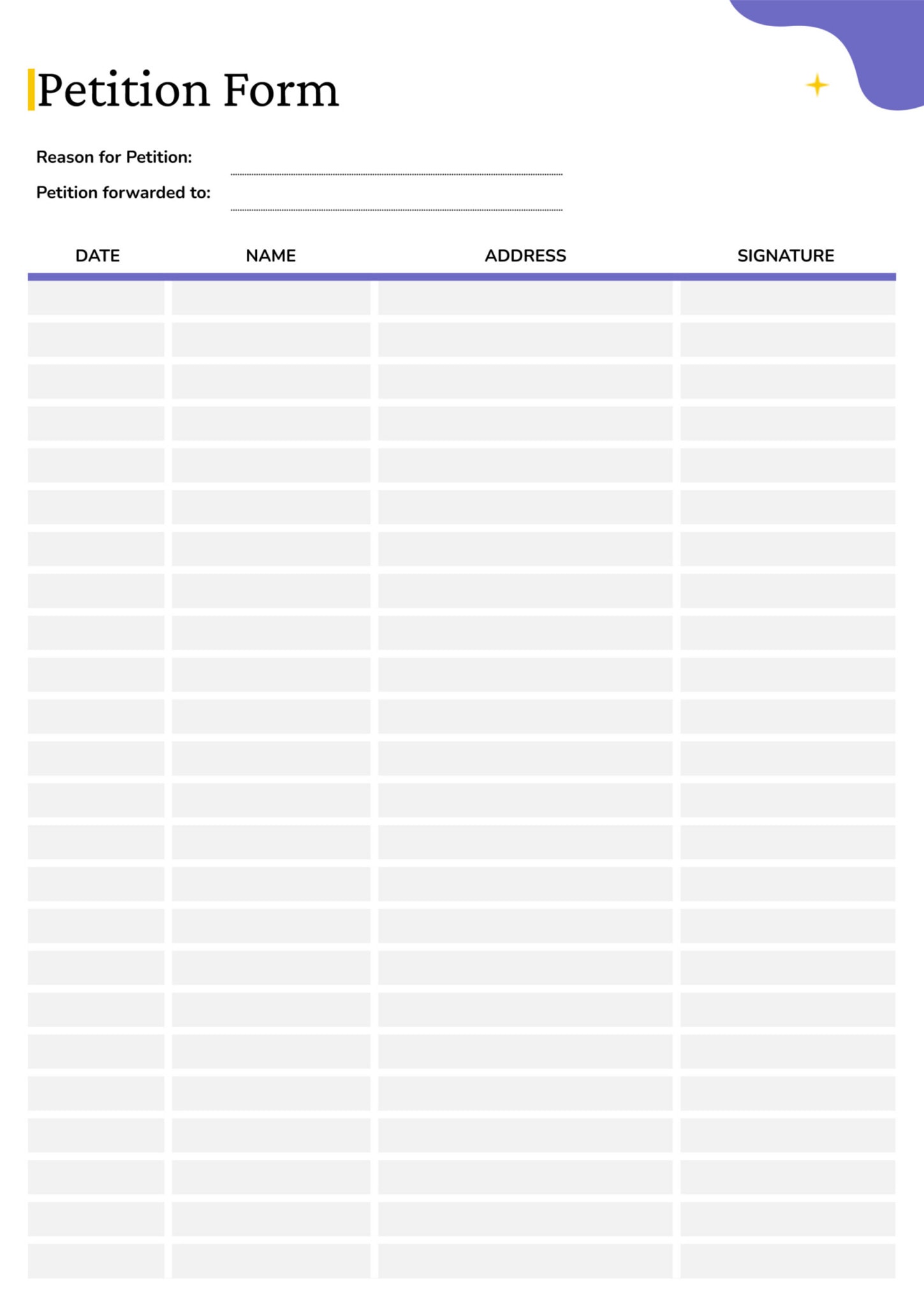
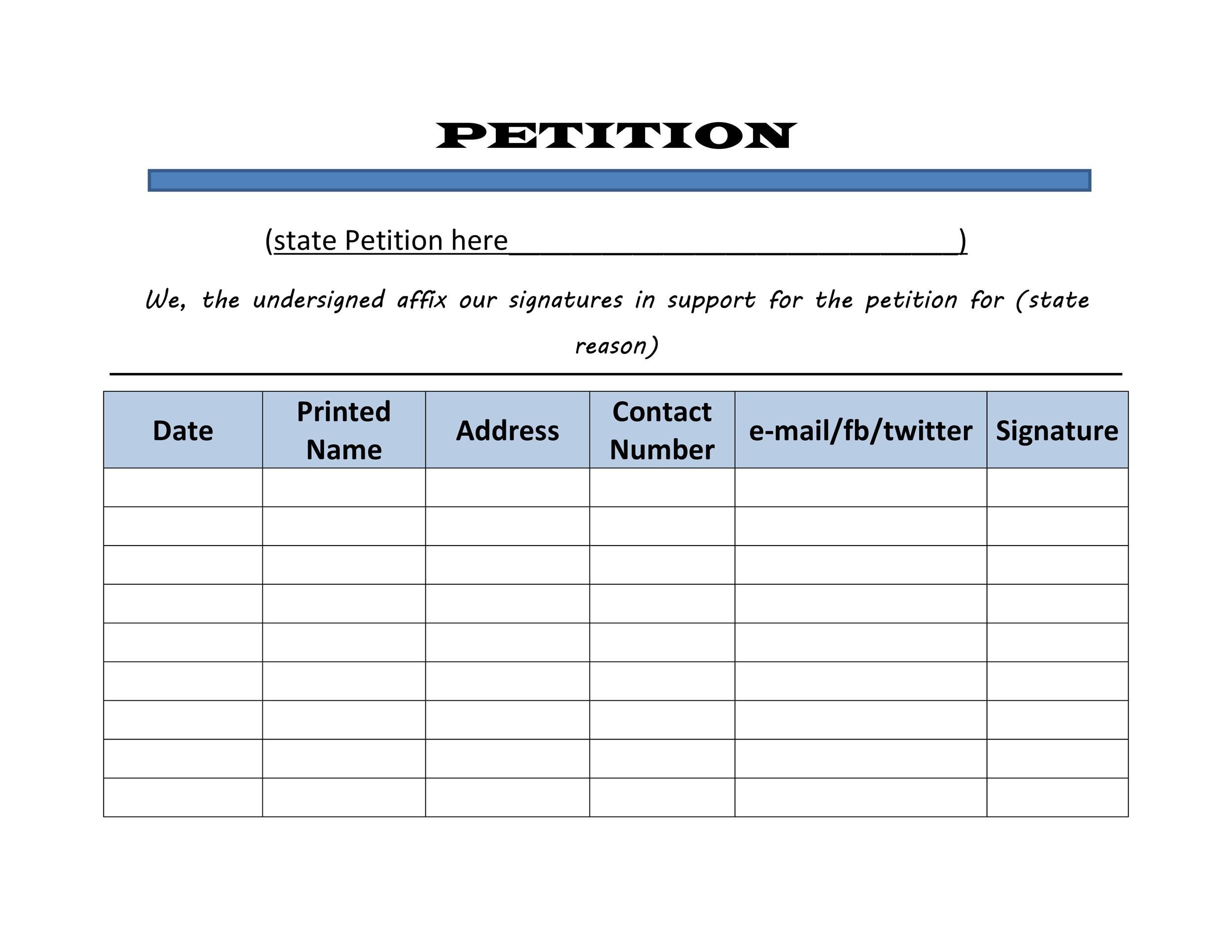
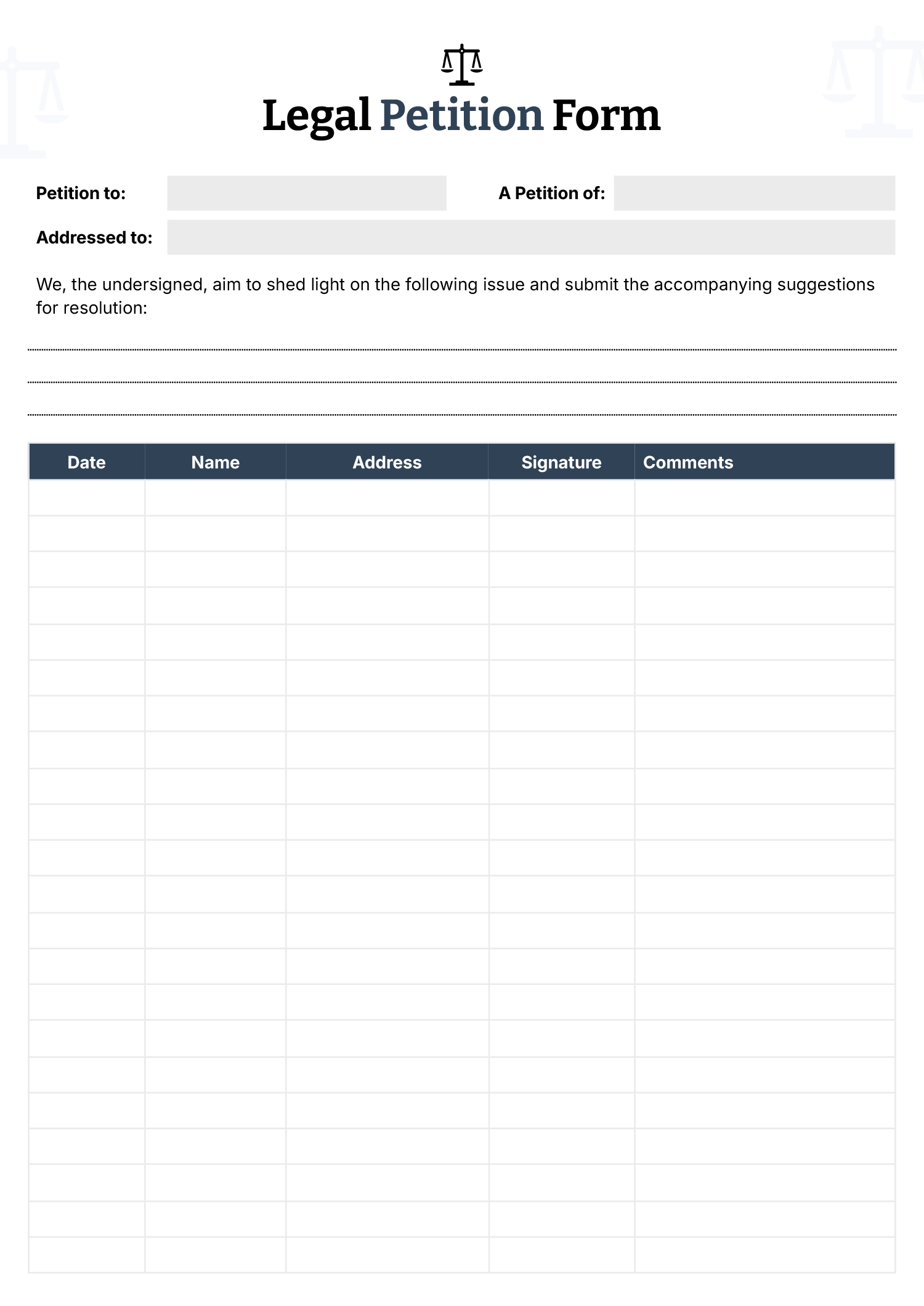
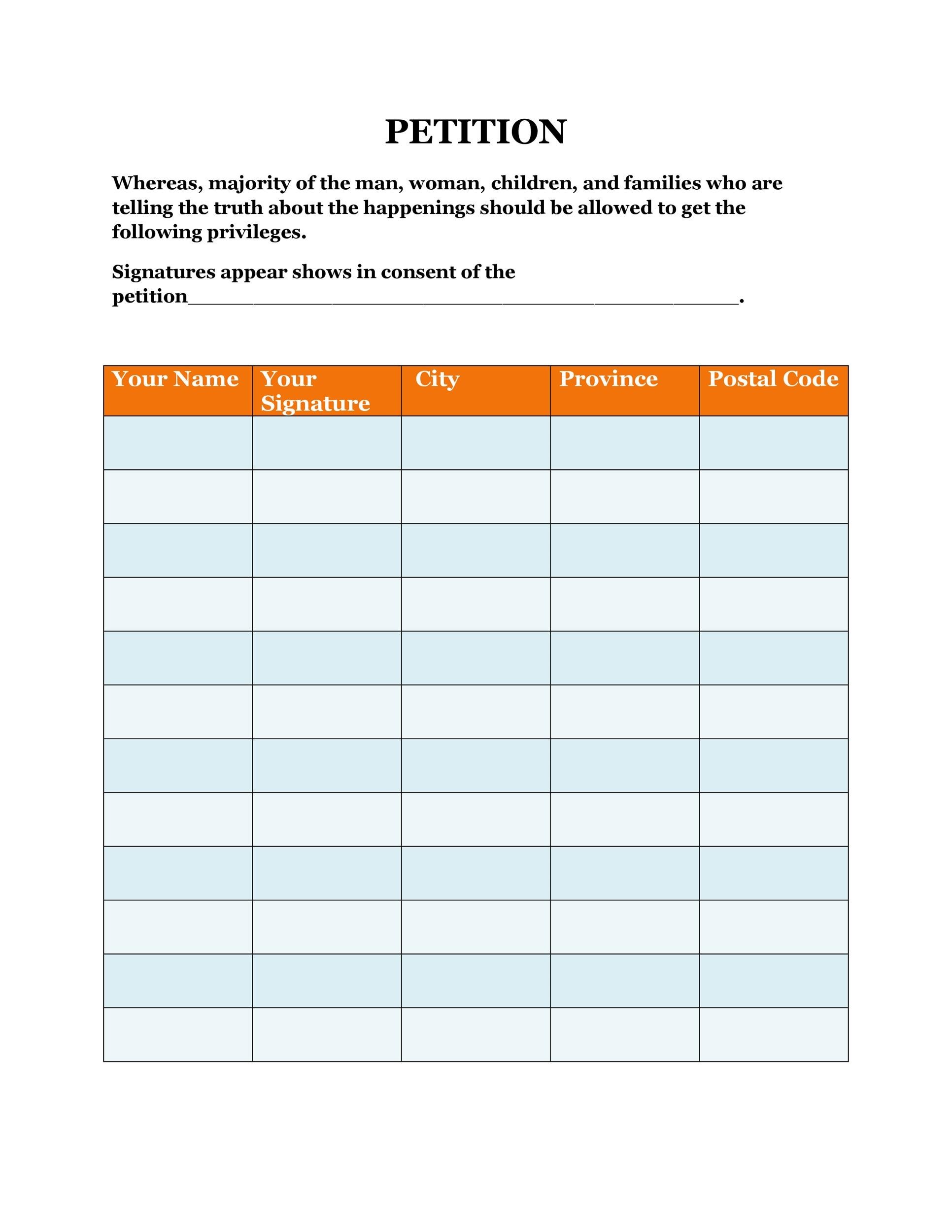
Blank Petition Template is more than just a plain document—it’s the foundation for turning your voice into a powerful, organized appeal that can mobilize communities, influence policy, and spark change. Whether you’re a student organizing a campus initiative, a small business owner advocating for local regulations, or a nonprofit championing environmental reforms, a well‑structured petition can elevate your mission from a personal desire to a collective demand.
Why a Blank Petition Template Is Essential

Imagine drafting a petition from scratch, juggling legal terminology, layout design, and persuasive language. A template cuts through that confusion, giving you a clear framework to focus on the message rather than formatting. It guarantees consistency, ensures all critical information is captured, and boosts credibility in the eyes of recipients and signatories.
Time and Effort Savings
Templates are pre‑formatted, allowing you to insert your content in minutes. You can reuse the same structure for multiple campaigns, simply updating the title, goals, and signature fields.
Professional Appearance
A clean, standardized layout signals seriousness. Signatories are more likely to trust and support petitions that look polished, especially in professional or civic contexts.
Accessibility Across Platforms
Most blank petition templates are compatible with Word, Google Docs, and PDF editors, enabling collaboration and easy digital distribution.
Common Types of Petitions You Can Craft

Understanding the purpose of your petition helps you choose the right format and language. Below are the most prevalent categories:
- Community Requests – Requesting local government to build a playground, adjust zoning, or improve public services.
- Corporate Advocacy – Urging companies to adopt sustainable practices, modify policies, or support employee initiatives.
- Political Campaigns – Petitioning lawmakers to pass or repeal specific legislation.
- Environmental Causes – Mobilizing public support for conservation projects or climate action.
- Social Justice Initiatives – Addressing issues like discrimination, gender equity, or public health.
Choosing the Right Tone
Align your voice with your audience. A formal tone works best for governmental petitions, while a conversational style may resonate more in community or student settings.
Essential Components of a Blank Petition Template

Every effective petition must contain the following elements, neatly organized to guide readers from introduction to signature:
Header and Title
Clearly state the purpose in a bold, concise heading. Example: “Petition for a Community Recycling Center.”
Introduction and Purpose
Provide context: why the petition matters, whom it impacts, and what change is sought.
Statement of Facts and Supporting Data
Back claims with statistics, anecdotes, or expert opinions to build credibility.
Clear Call to Action
Specify the exact demand, e.g., “We ask that the City Council approve a new recycling facility by July 2025.”
Signature Section
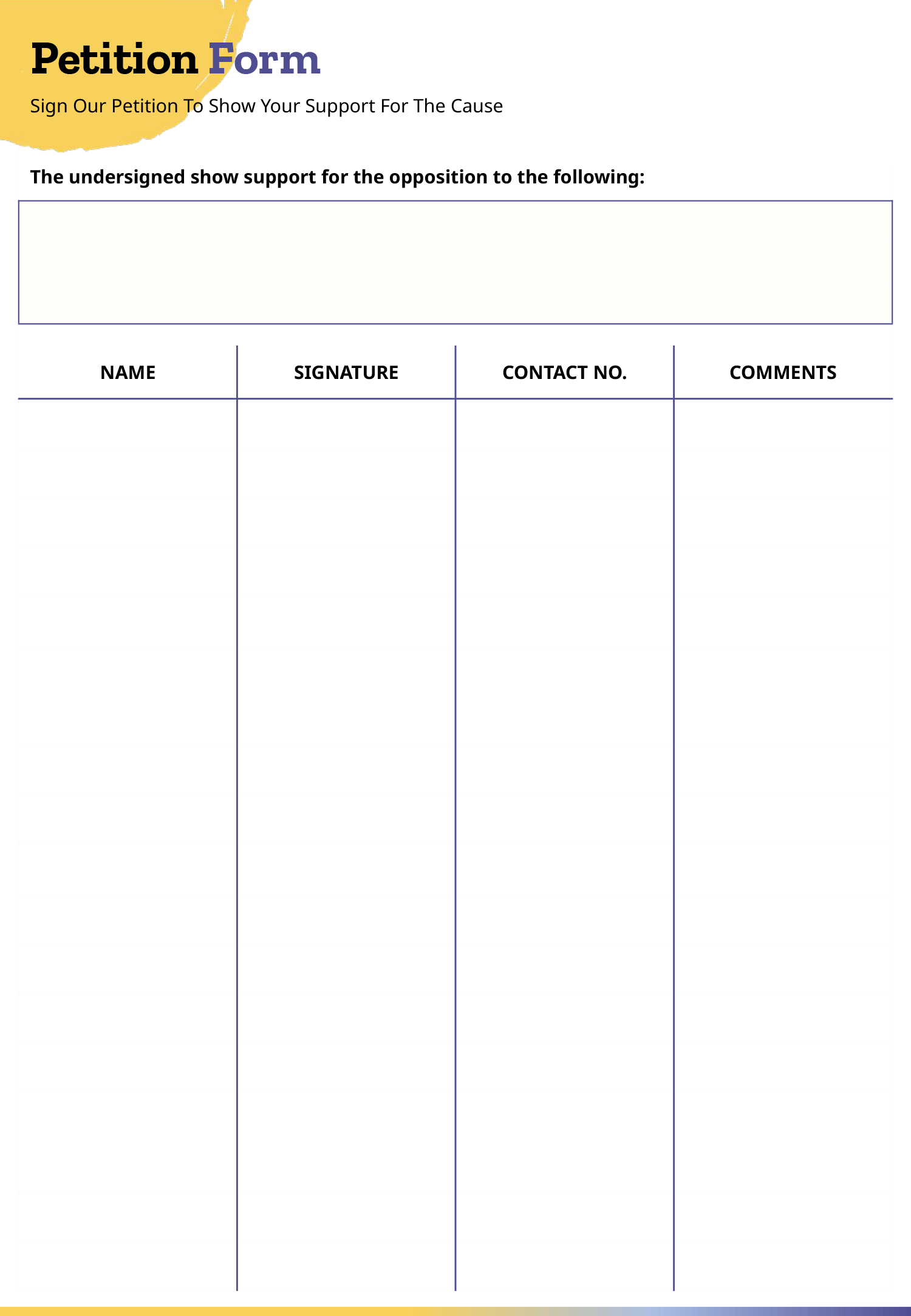
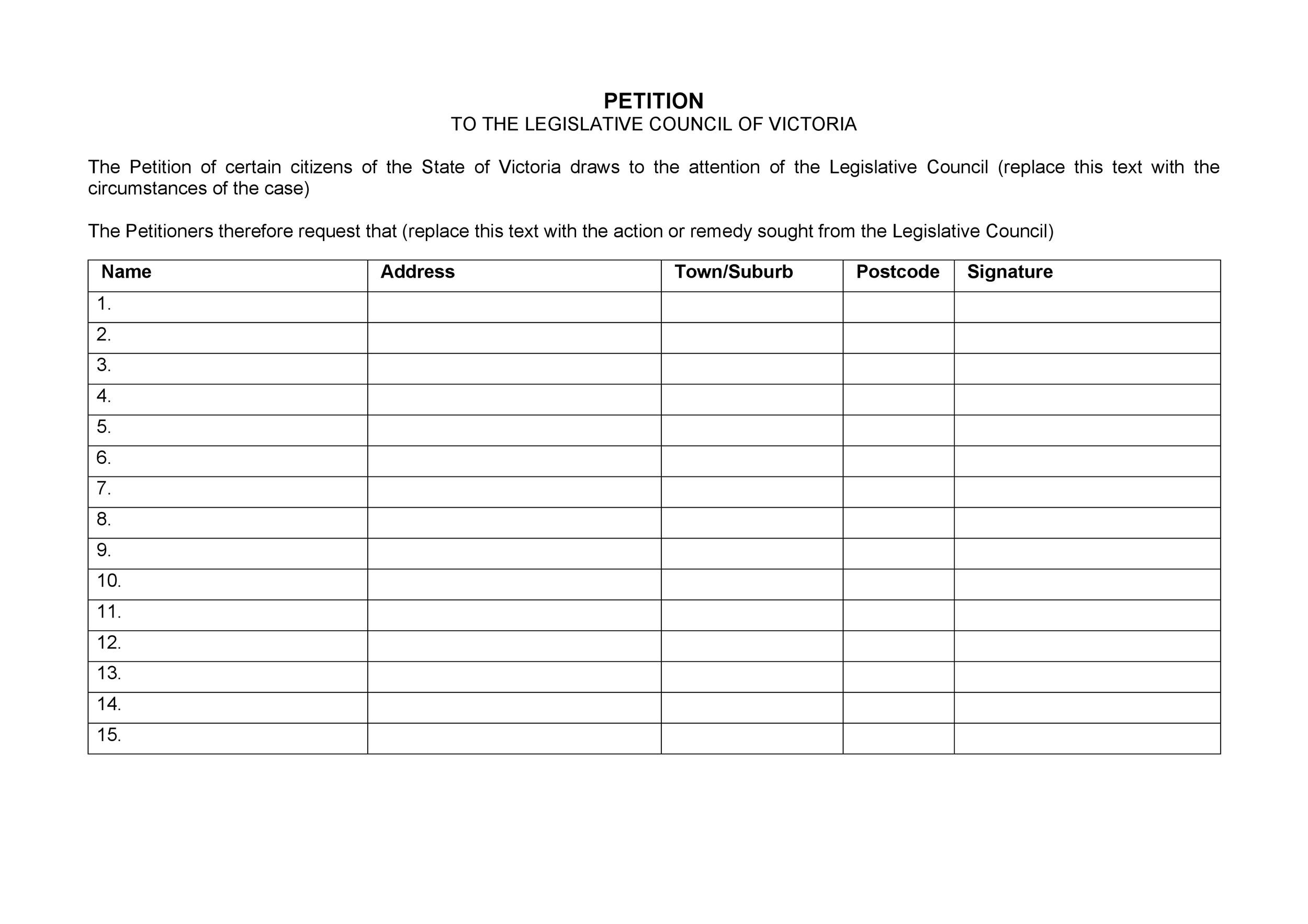
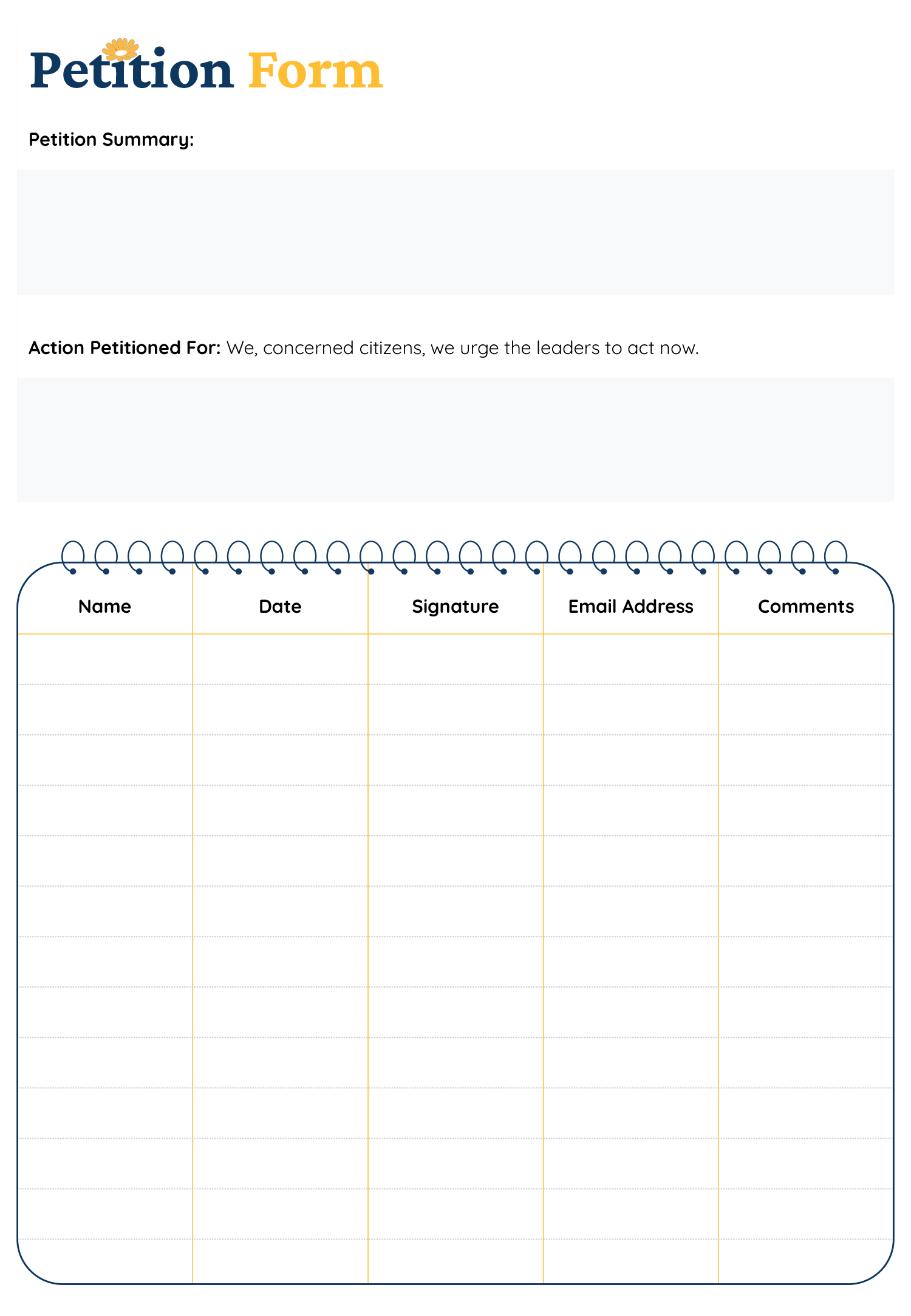
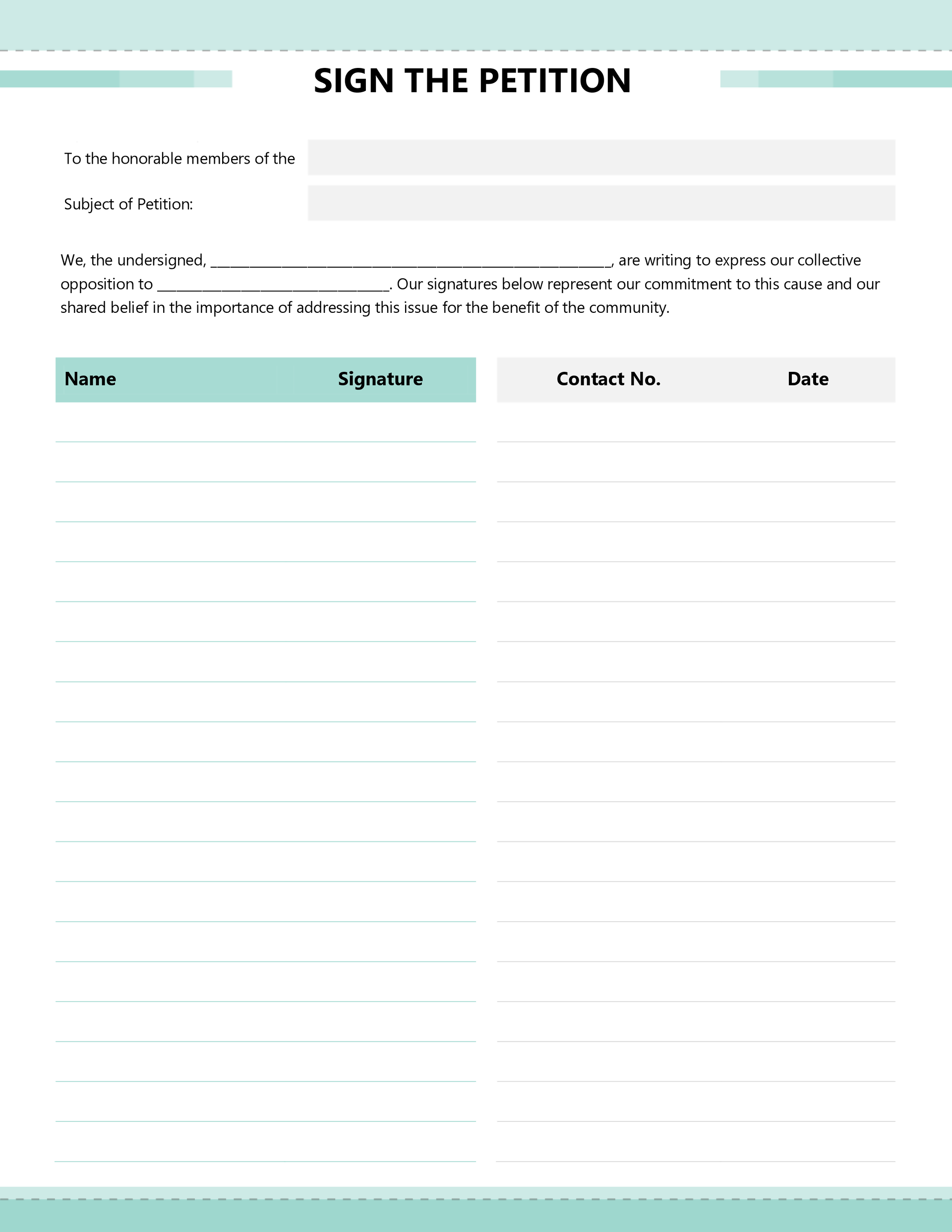
Include fields for name, address, phone/email, and a space for signatures. Optional: a checkbox for consent to share contact information.
Thank‑You Note and Contact Information
Close with gratitude and provide a way for signatories to follow up or receive updates.
How to Design Your Blank Petition for Maximum Impact
Beyond content, visual appeal influences perception. Follow these design guidelines:
Consistent Font and Layout
Use 11‑ or 12‑point Times New Roman or Calibri for readability. Maintain 1.5 line spacing and generous margins.
Logical Flow
Arrange sections so the reader naturally progresses: headline → problem → evidence → request → signatures.
Whitespace and Bullet Points
Use whitespace to prevent clutter and bullet points to summarize complex data.
Professional Graphics
Include a subtle logo or icon if representing an organization, ensuring it doesn’t distract from the text.
Paper Quality (for Print)
If printing, use high‑quality, slightly heavier paper (e.g., 80‑gram cardstock) to enhance durability and feel.
Collecting Signatures: Traditional vs. Digital

The method of gathering signatures can affect reach and legal weight. Below, we compare both approaches.
Print‑And‑Drop Petitions
- Pros: Tangible, accessible to tech‑averse audiences, and often viewed as more personal.
- Cons: Manual distribution, limited tracking, and higher printing costs.
Online Petition Platforms
- Pros: Instant reach, easy analytics, and social media sharing capabilities.
- Cons: Requires internet access, potential privacy concerns, and may not always carry legal weight without physical signatures.
Hybrid Strategy
Combine both: launch an online campaign to drive awareness, then provide print copies for local events, community centers, or businesses.
Step‑by‑Step Guide to Drafting Your Petition

Follow these actionable steps to ensure nothing is missed.
1. Define Your Goal Clearly
Ask: “What single, actionable change do I want?” Keep it specific and measurable.
2. Research and Gather Evidence
Collect data from reputable sources: government reports, academic studies, or local statistics.
3. Draft a Draft Title
Use keywords that capture attention and search intent, e.g., “Petition for Affordable Housing in Downtown.”
4. Write the Introduction
Briefly describe the issue and its impact on the community. Keep it engaging.
5. Present Supporting Facts
Use bullet lists or short paragraphs. Cite sources in a small font at the bottom of the page.
6. State the Request
Clearly articulate the desired outcome. Use a direct statement.
7. Add the Signature Block
Include lines for the signatory’s name, address, and contact details. Consider adding a small line for the signatory’s declaration of authenticity.
8. Add a Thank‑You and Contact Section
Thank the reader, provide a way to stay informed, and include your organization’s contact info.
9. Proofread and Test the Layout
Check for typos, grammar, and ensure that the document prints correctly on different printers.
10. Publish and Distribute
Decide on distribution channels—online, local events, mailers, etc.—and start gathering signatures.
Common Mistakes to Avoid
Even seasoned advocates fall into pitfalls. Here’s how to sidestep them:
Overloading with Jargon
Use plain language. If technical terms are unavoidable, explain them succinctly.
Vague Calls to Action
Ambiguous requests dilute impact. State exactly what you want and by whom.
Ignoring Legal Validity
Some jurisdictions require notarized signatures or specific formats. Verify local rules before launching.
Neglecting Follow‑Up
A petition’s life doesn’t end with signatures. Plan a strategy to keep supporters updated and maintain momentum.
Underestimating Design
A messy layout can undermine credibility. Use a template to keep the document professional.
Legal Considerations for Petitions

Although many petitions are informal, some contexts demand adherence to specific regulations:
Signature Collection Laws
Check if your region requires signatures to be witnessed, or if certain demographic details are mandatory.
Privacy Regulations
Ensure you comply with GDPR, CCPA, or local privacy laws when collecting personal information.
Submission Requirements
Some councils require petitions to be submitted on official stationery or within specific deadlines. Verify with the relevant authority.
How to Distribute and Promote Your Petition
A great petition needs a strong launch strategy to attract signatories.
Leverage Social Media
Create shareable graphics, use relevant hashtags, and ask followers to spread the word.
Collaborate with Influencers
Partner with local figures or community leaders to endorse or sign your petition.
Host Signature Drives
Set up booths at events, markets, or office lobbies where people can sign on the spot.
Use Email Campaigns
Send personalized emails to stakeholders and ask them to forward the petition.
Involve the Media
Press releases or local news coverage can amplify reach.
Measuring Success and Maintaining Momentum
After gathering signatures, track your progress and keep your supporters engaged.
Count and Verify Signatures
Maintain a spreadsheet to tally signatories and cross‑check details if necessary.
Provide Updates
Send regular newsletters or social media posts about the petition’s status.
Plan Follow‑Up Actions
Schedule meetings with decision‑makers, organize public demonstrations, or prepare a counter‑petition if necessary.
Celebrate Milestones
Recognize milestones publicly—e.g., reaching 1,000 signatures—to sustain enthusiasm.
Conclusion: Transform Your Vision into Reality with a Blank Petition Template

Harnessing the power of a Blank Petition Template means turning a simple idea into a structured, persuasive tool that can influence change. By incorporating a clear goal, solid evidence, and an organized layout, you give your cause the professional polish it needs to resonate with both the public and decision‑makers. Whether you’re drafting a single document or launching a series of campaigns, remember that the most effective petitions are concise, credible, and easy for others to sign and share. Armed with these strategies, you’re ready to create, distribute, and champion petitions that spark real, lasting impact. Good luck, and may your voice echo across the community it intends to change.