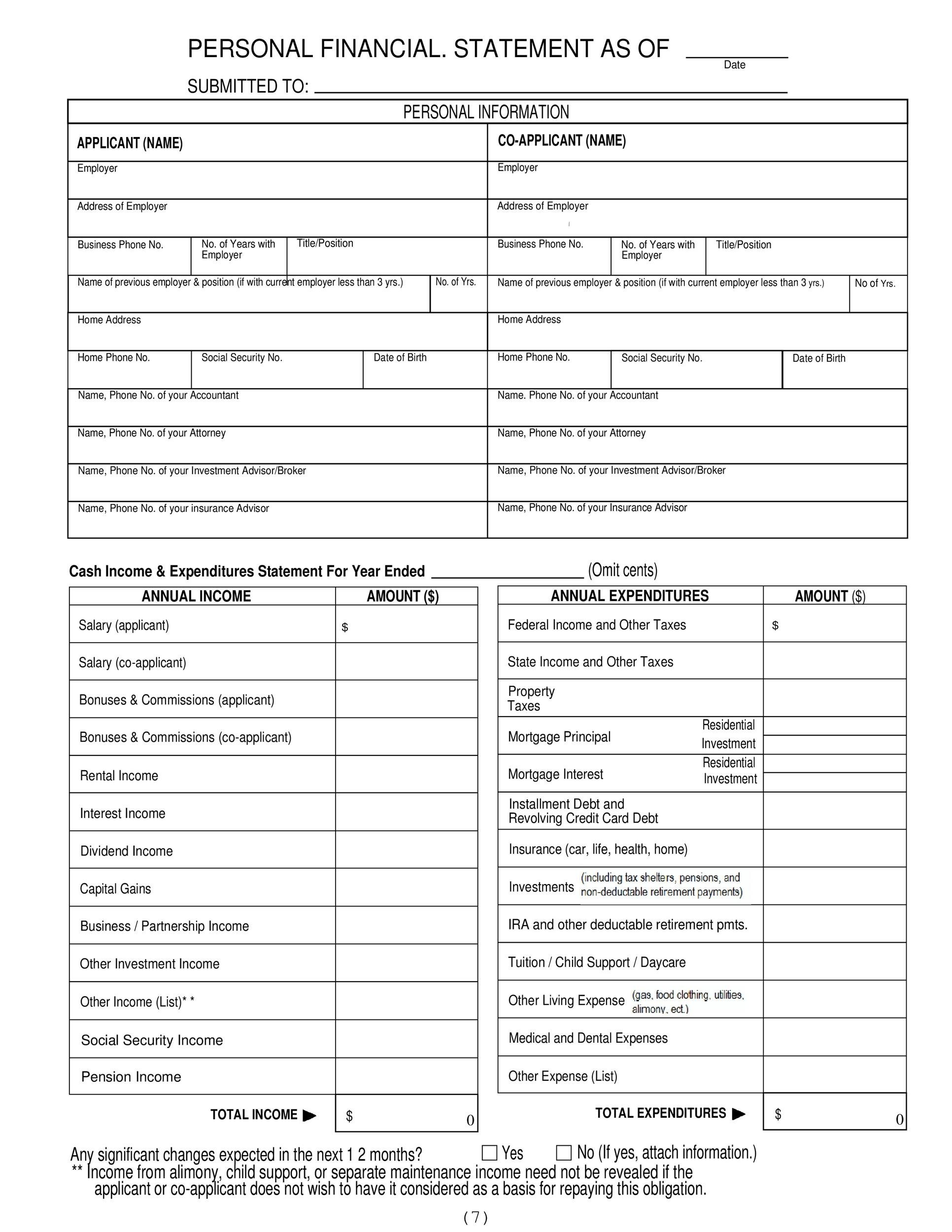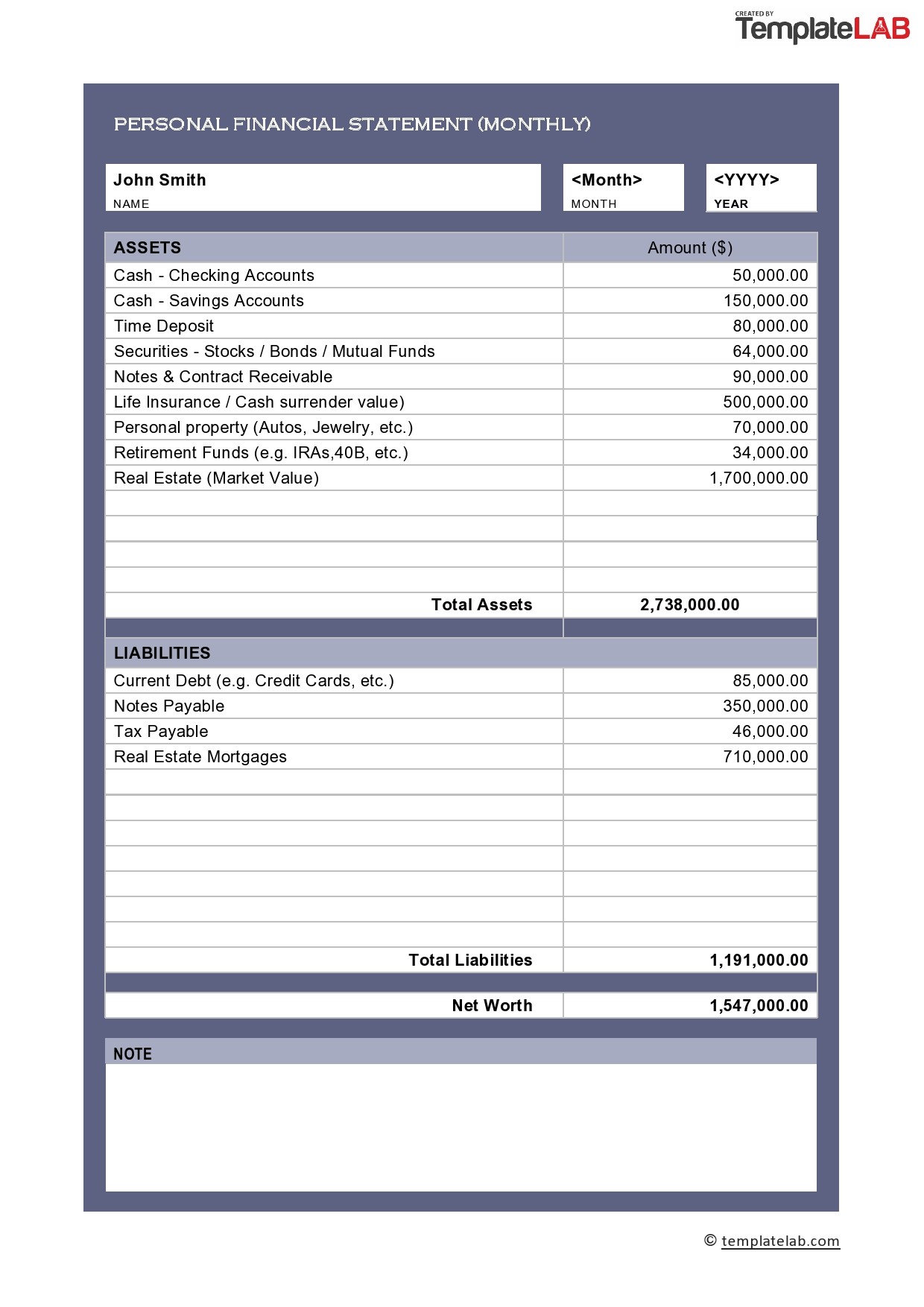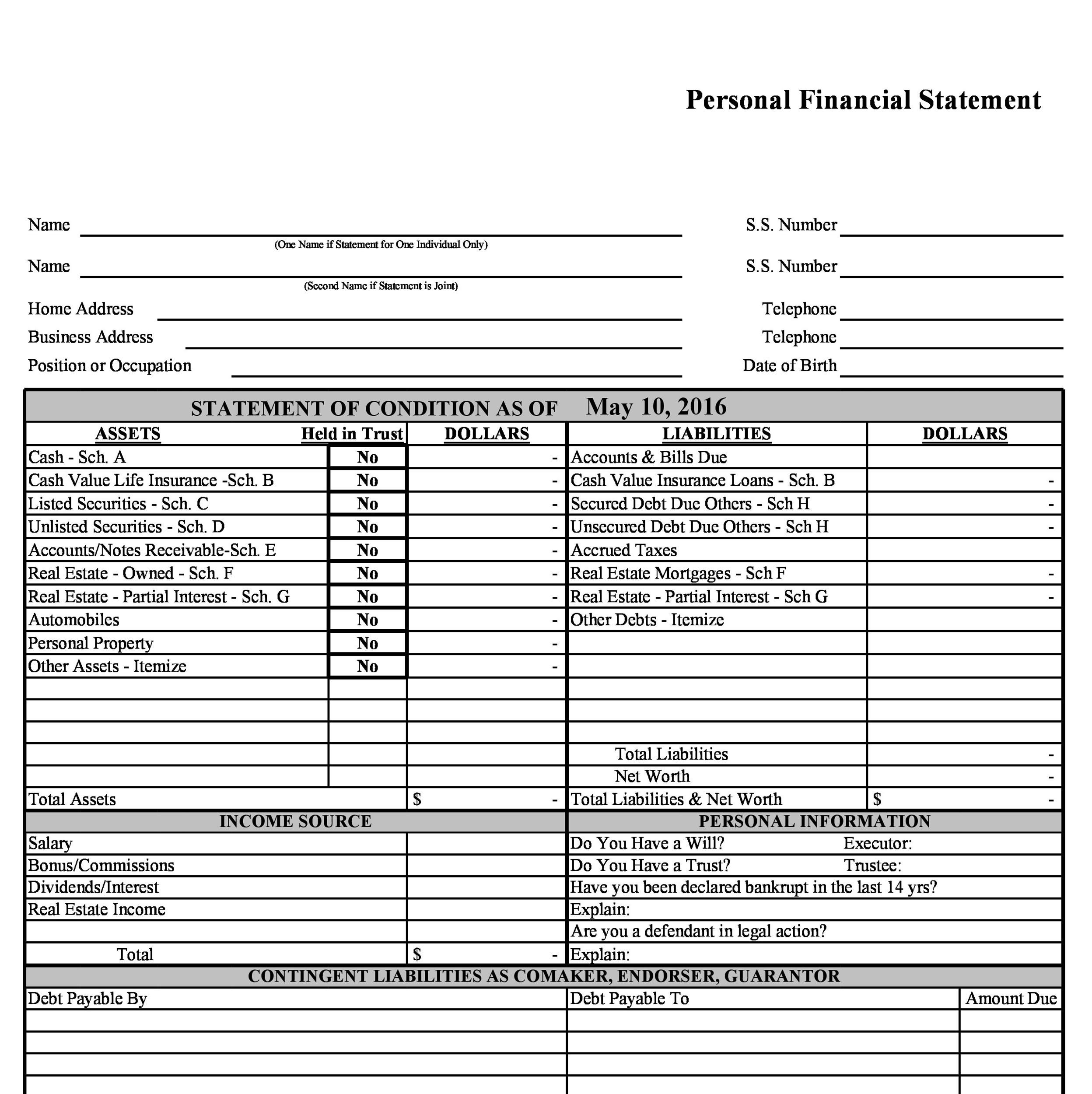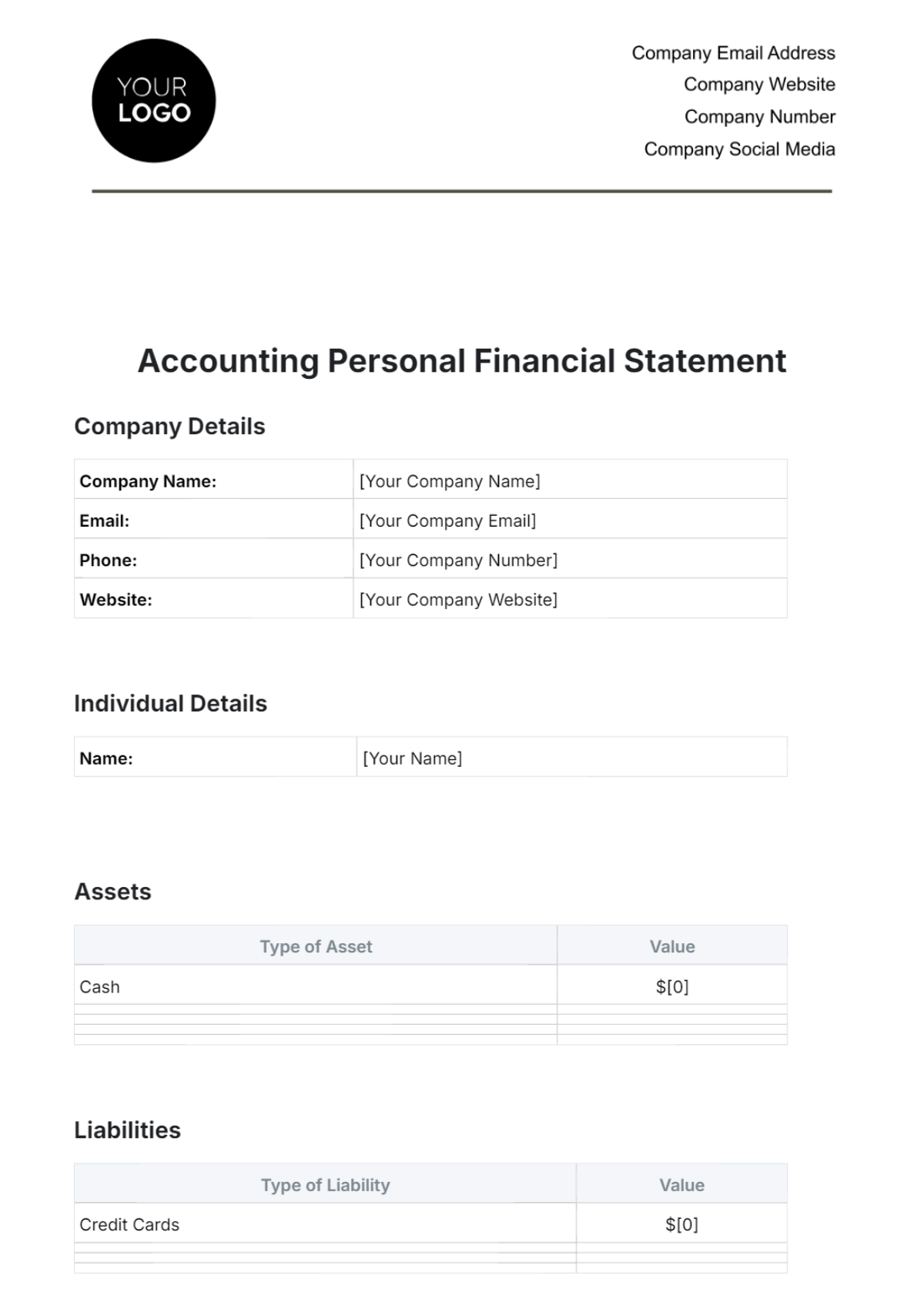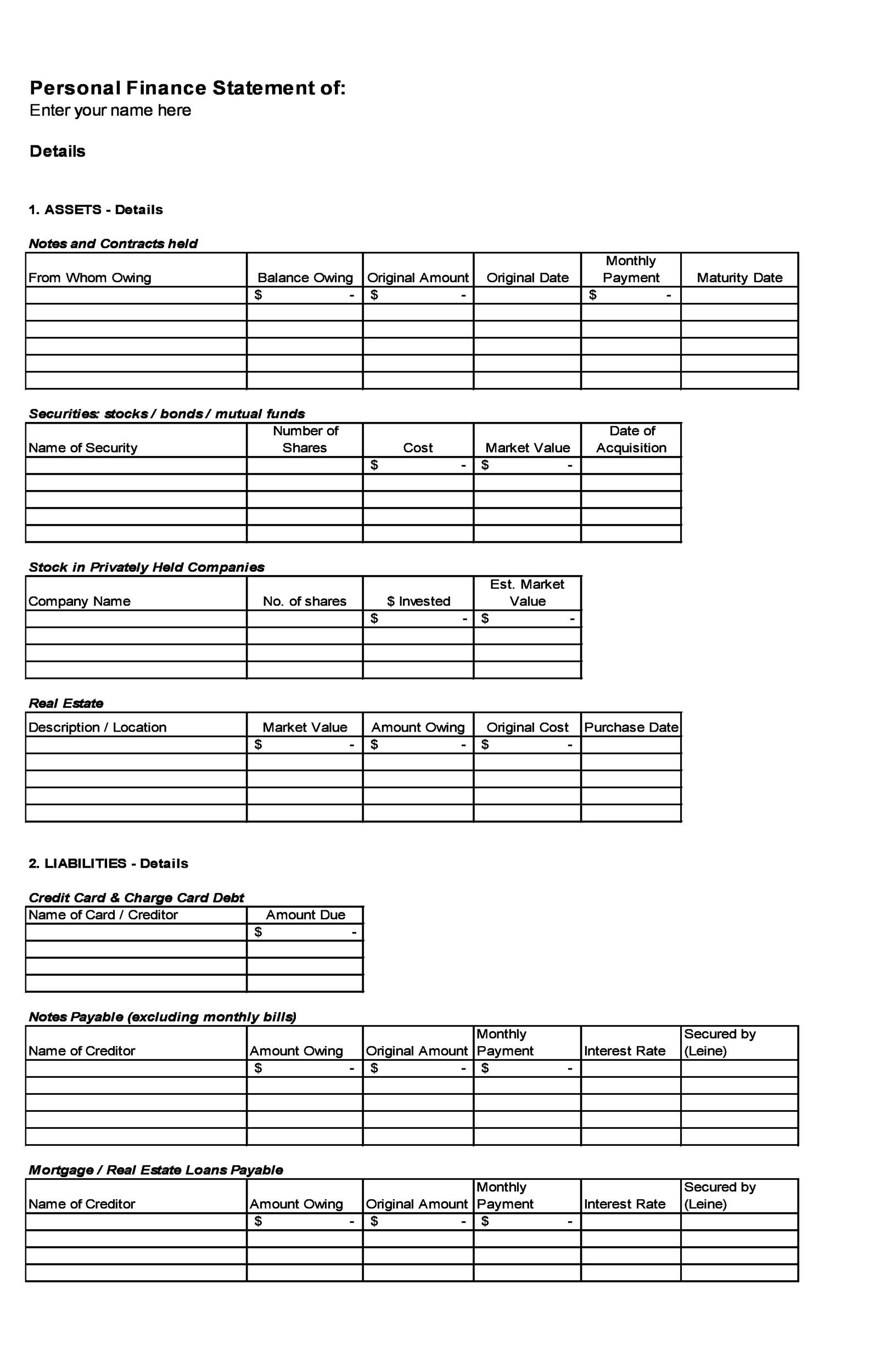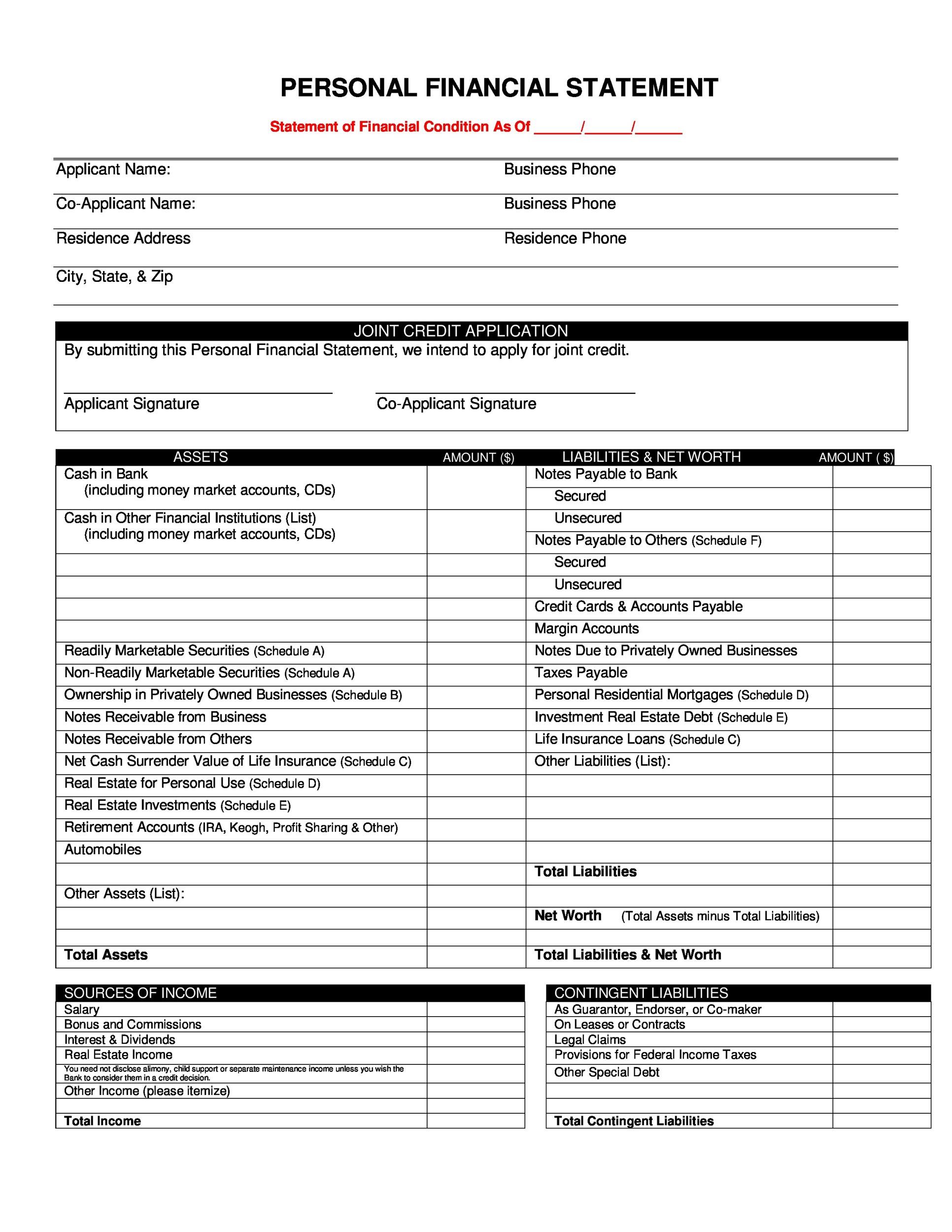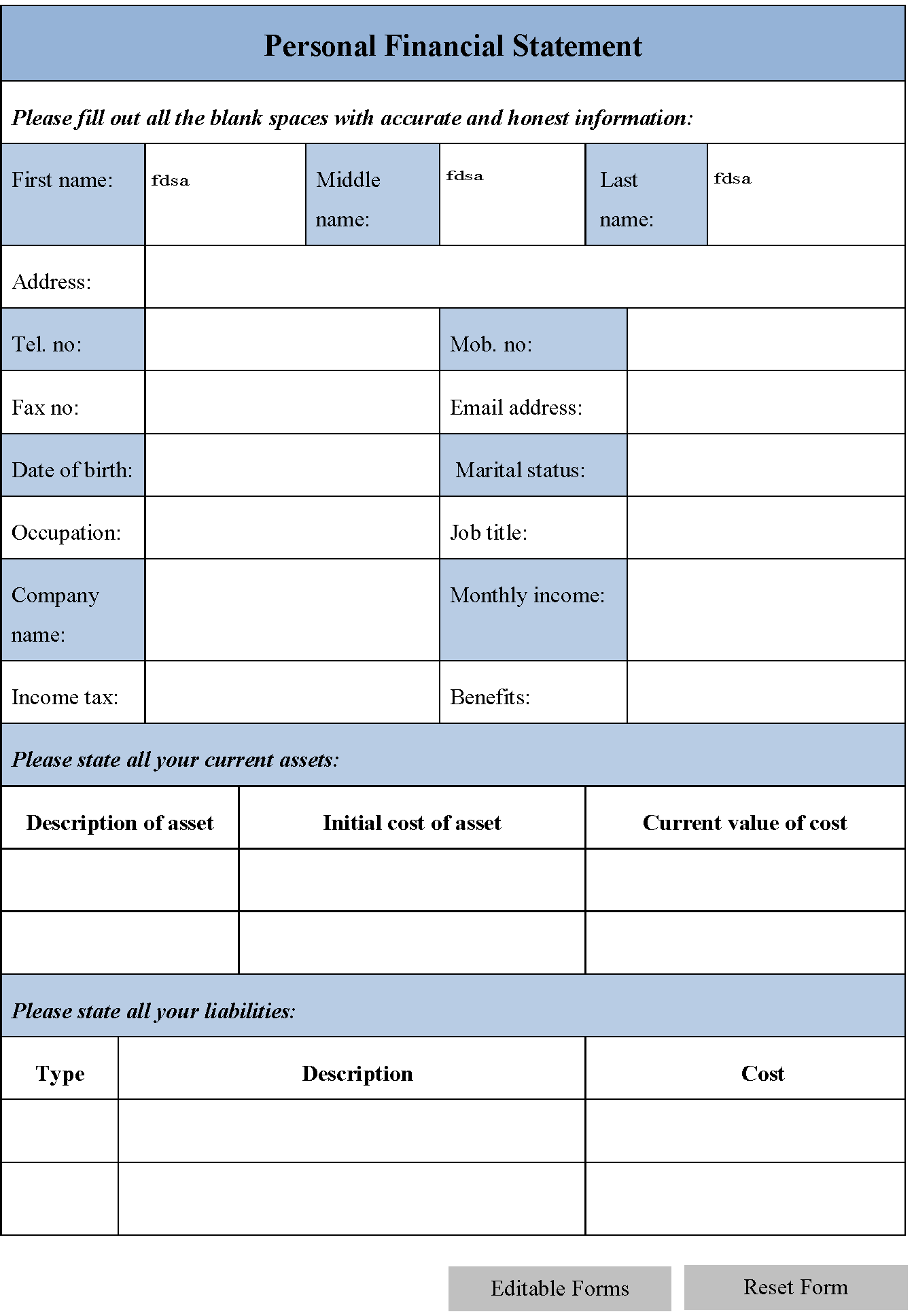
Blank Personal Financial Statement Template serves as the cornerstone of any disciplined financial plan, offering a clear snapshot of where you stand and where you aim to go. By laying out assets, liabilities, net worth, and cash flow in an organized format, this template empowers you to make data‑driven decisions, track progress over time, and communicate your financial health to advisors, partners, or potential lenders.
What Is a Blank Personal Financial Statement Template?
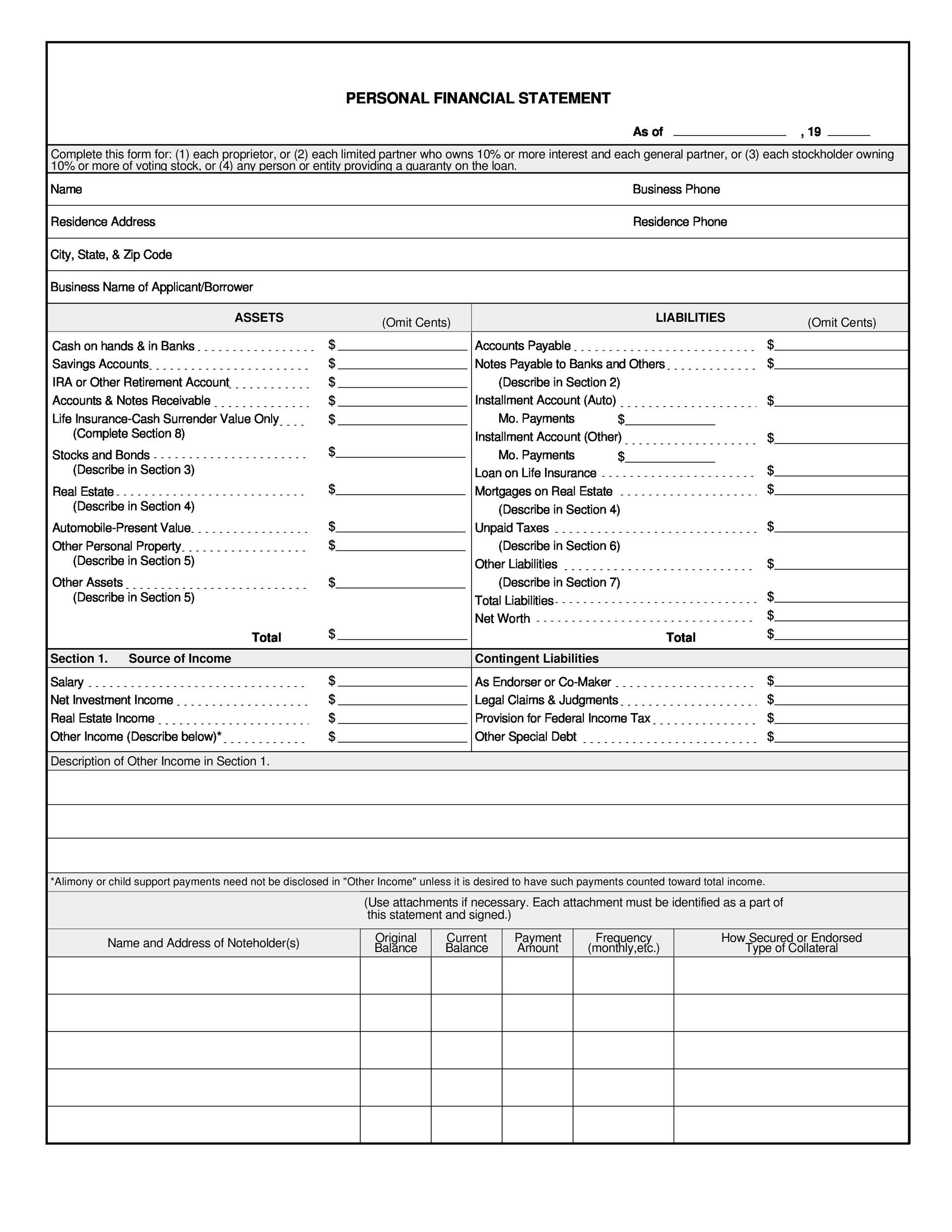
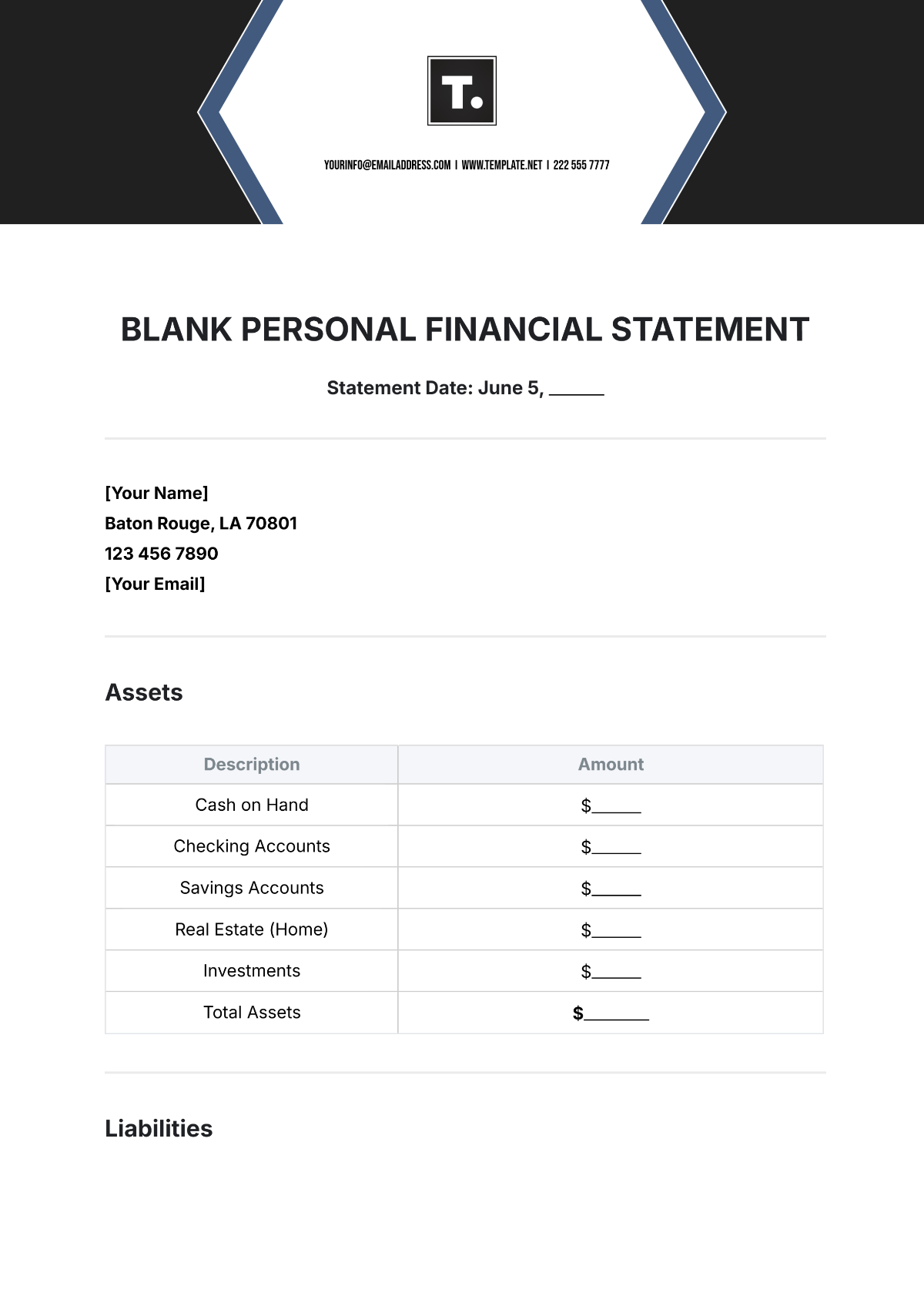
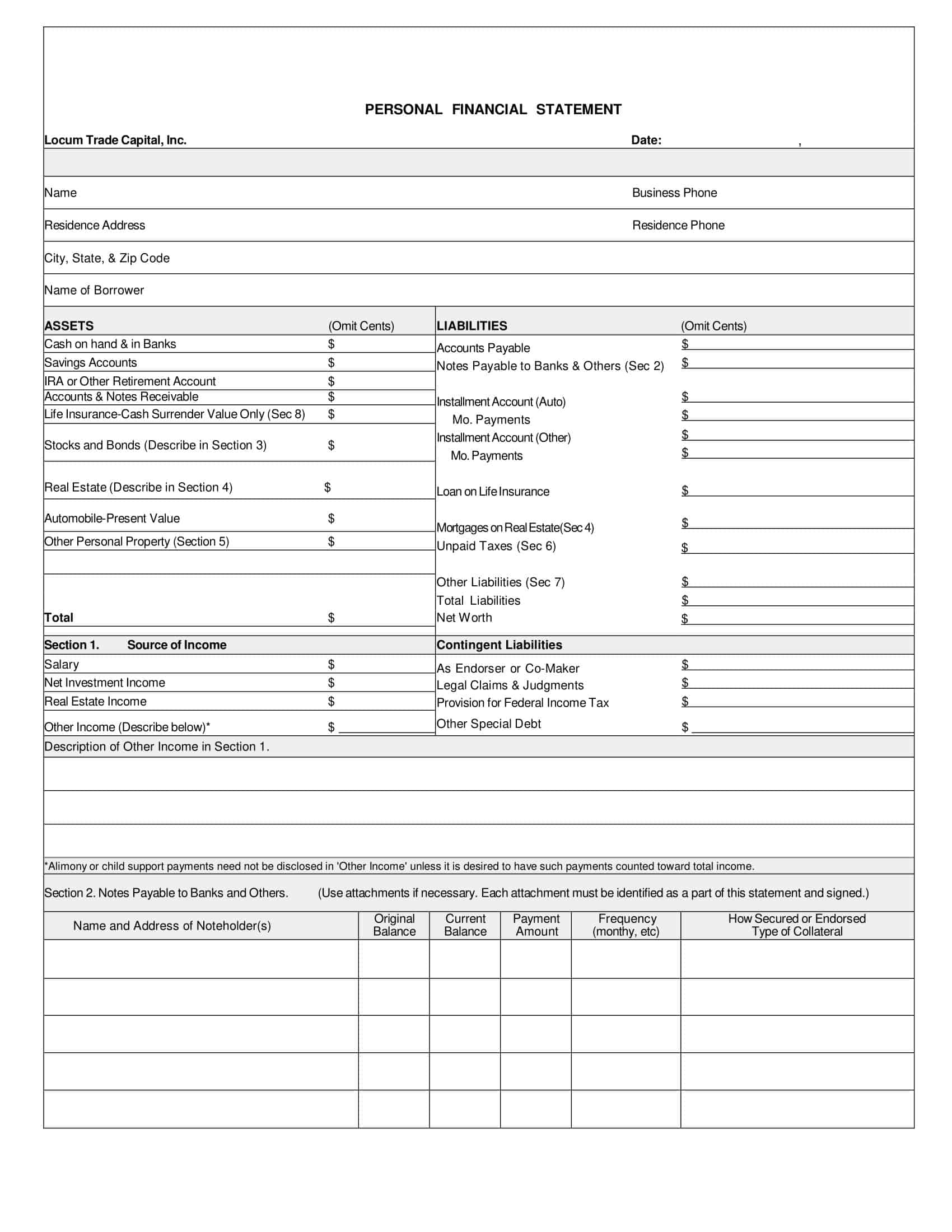
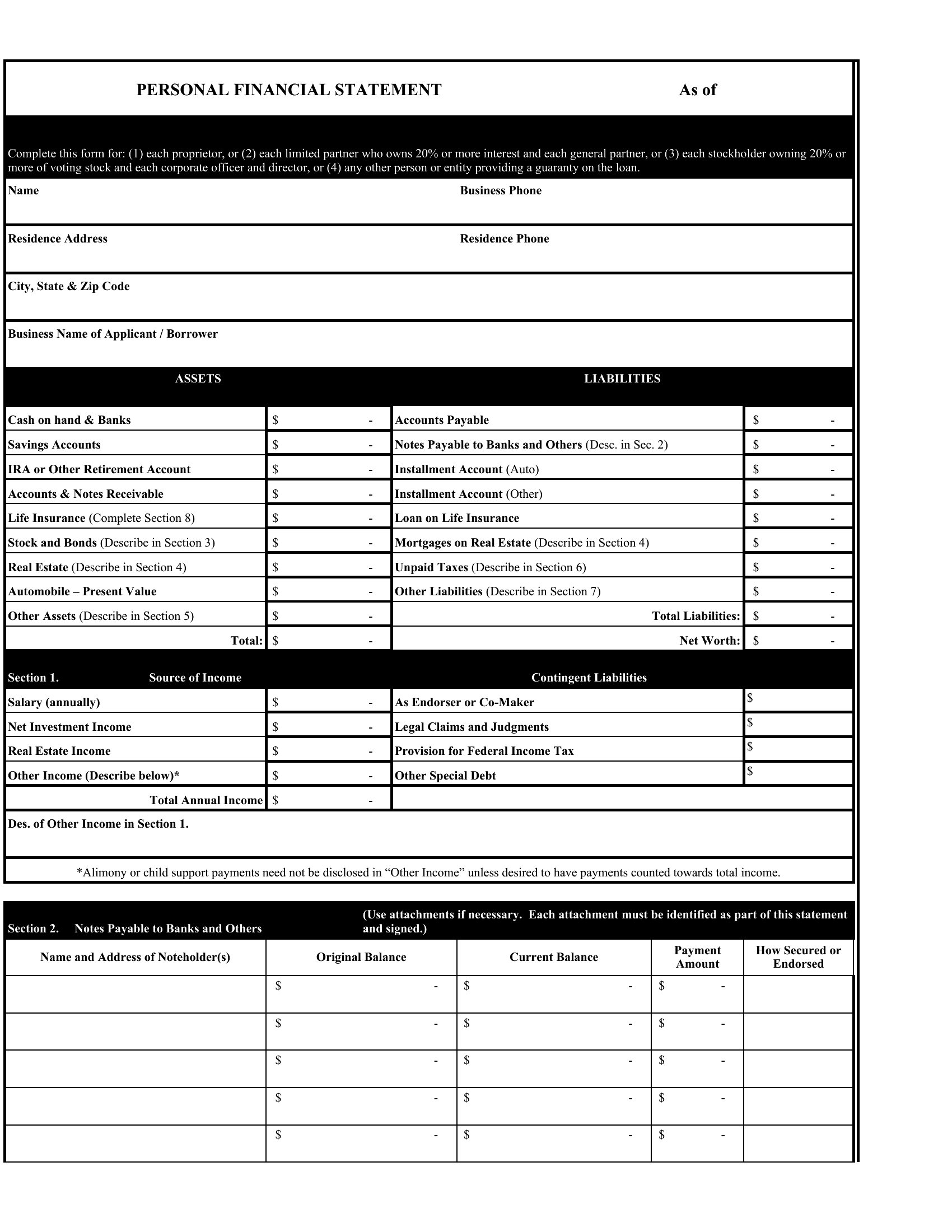
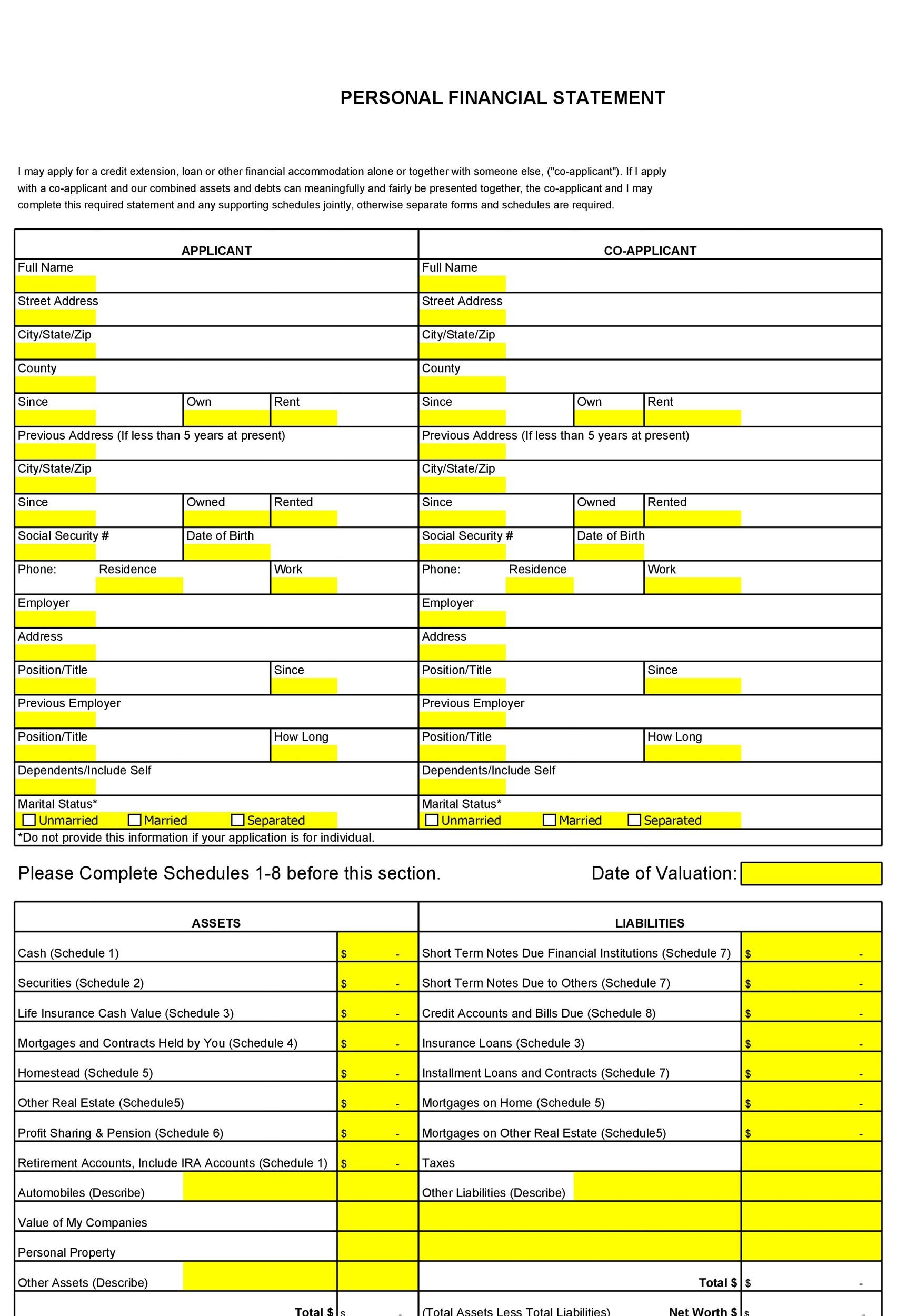
A blank personal financial statement template is a pre‑structured document that outlines the categories essential for assessing an individual’s financial position. Typically, it contains sections for assets, liabilities, net worth, income, expenses, and sometimes projections. By filling in each section with accurate numbers, you create a living document that reflects your current economic reality.
Core Sections Explained
- Assets – Cash, investments, real estate, personal property, and other resources that hold value.
- Liabilities – Mortgages, credit cards, student loans, and other debts.
- Net Worth – The difference between total assets and total liabilities.
- Income – Salary, bonuses, passive income, and any other regular receipts.
- Expenses – Fixed monthly bills, discretionary spending, and periodic costs.
Why You Need a Blank Personal Financial Statement Template

Without a systematic approach, finances can become chaotic. This template provides several strategic advantages:
Clarity and Focus
Seeing all monetary items in one place cuts through noise and highlights key priorities—whether it’s paying off debt or building an emergency fund.
Goal Tracking
By comparing yearly snapshots, you can gauge progress toward milestones such as buying a home, retiring early, or funding an education.
Communication Tool
Advisors, partners, and family members often require a concise summary of finances. A clean template facilitates this dialogue.
Legal and Estate Planning
Accurate records are invaluable when drafting wills, trusts, or dealing with tax authorities.
Key Components of the Template
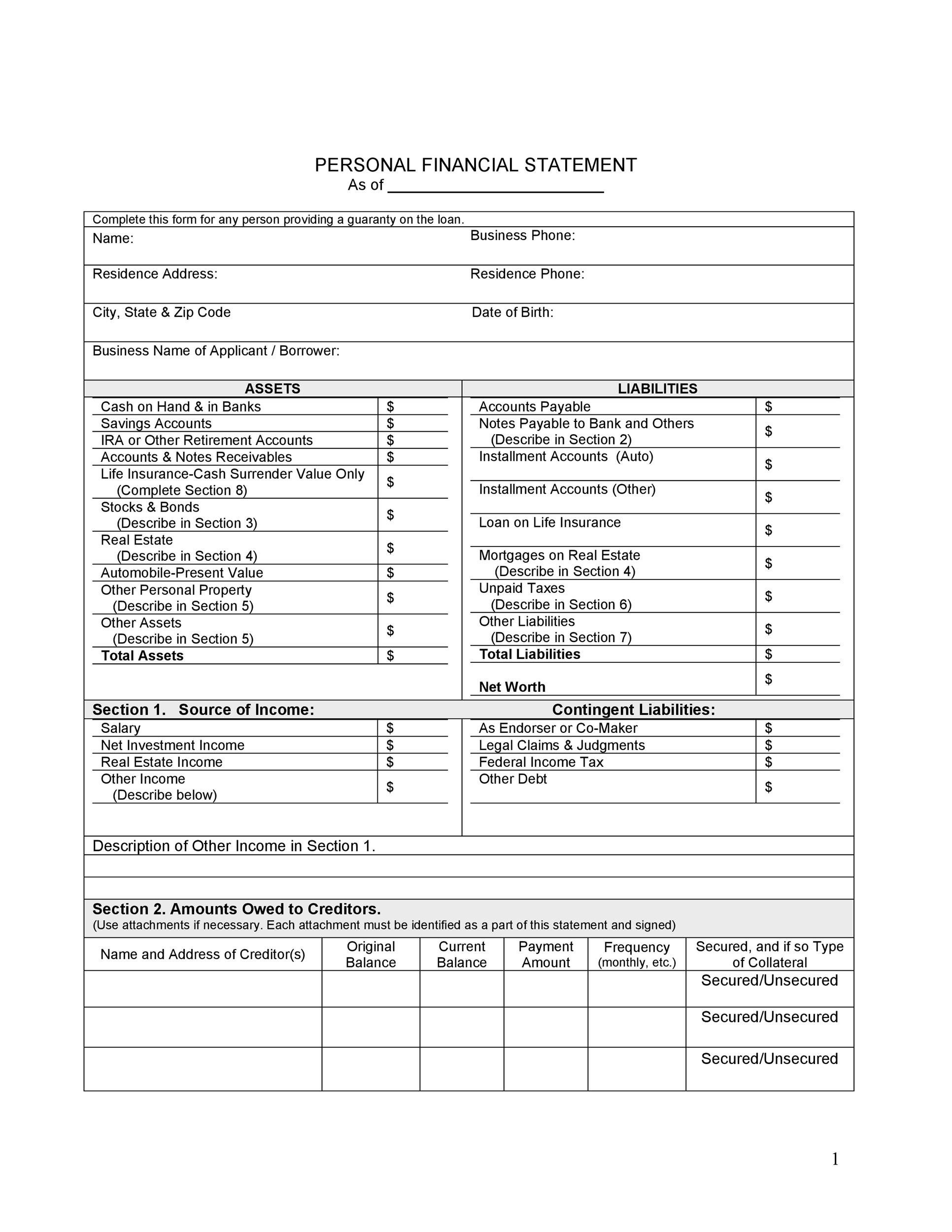
While many templates vary slightly, a robust one typically contains the following detailed fields:
Assets
- Cash and Checking Accounts – current balances.
- Savings Accounts – interest‑earning balances.
- Retirement Accounts – 401(k), IRA, pension plans.
- Investment Accounts – stocks, bonds, mutual funds, ETFs.
- Real Estate – market value of primary residence, rental properties, land.
- Other Property – cars, boats, jewelry, collectibles.
- Insurance – life, annuities, and any cash value components.
Liabilities
- Mortgages – remaining principal and interest rates.
- Auto Loans – current balance and payment schedule.
- Student Loans – federal or private, interest rates, and repayment status.
- Credit Card Debt – balances and minimum payments.
- Other Debts – personal loans, medical bills, or tax obligations.
Net Worth Calculation
Subtract total liabilities from total assets. This figure should be updated quarterly to reflect market changes and payments.
Income and Expenses
These sections are optional but highly recommended for comprehensive financial health. Include:
- Income: Base salary, overtime, dividends, rental income, side‑business earnings.
- Expenses: Housing, utilities, groceries, transportation, insurance, entertainment, education, and charitable donations.
Step‑by‑Step Guide to Filling the Template
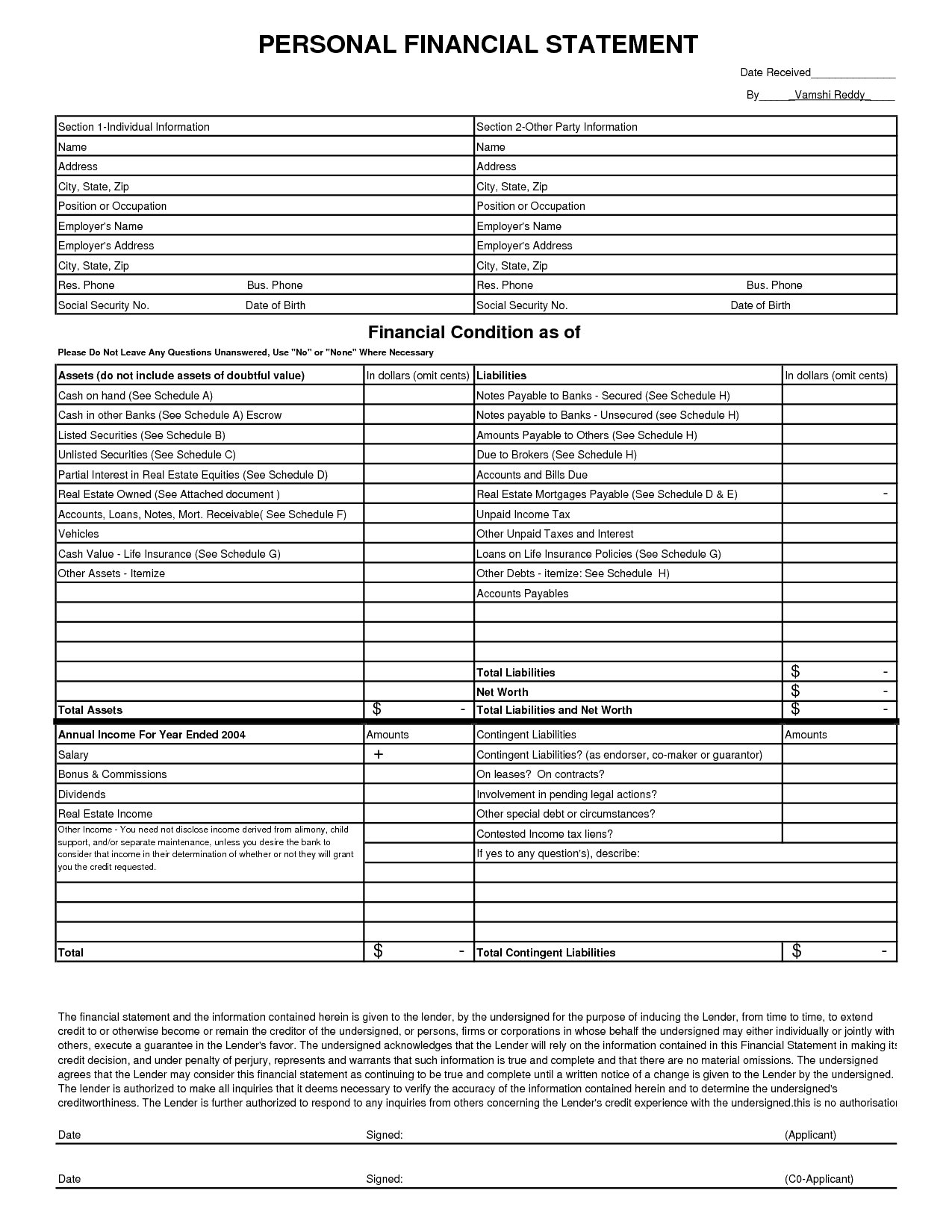
Step 1: Gather Documentation
Collect bank statements, investment reports, loan agreements, and receipts for large purchases. Organize them into digital folders or physical binders to simplify data entry.
Step 2: Input Asset Values
Start with the most liquid assets: cash and checking. Then move to savings, followed by investment accounts and real estate. For property, use recent appraisal reports or market‑based estimates to maintain accuracy.
Step 3: Record Liabilities
Enter the exact balances from recent statements. For mortgages and loans, also note the remaining term and annual interest rates to forecast future cash outflows.
Step 4: Calculate Net Worth
Use a simple formula or spreadsheet function: Total Assets – Total Liabilities = Net Worth. Double‑check the numbers to avoid miscalculations.
Step 5: Add Income and Expense Sections
Track a full year’s worth of receipts to capture seasonal variations. This will help you identify areas for budget adjustments.
Step 6: Review and Adjust
After populating all fields, review for inconsistencies or missing data. Adjust entries as necessary and set a reminder to update the statement annually.
Customizing the Template for Your Situation
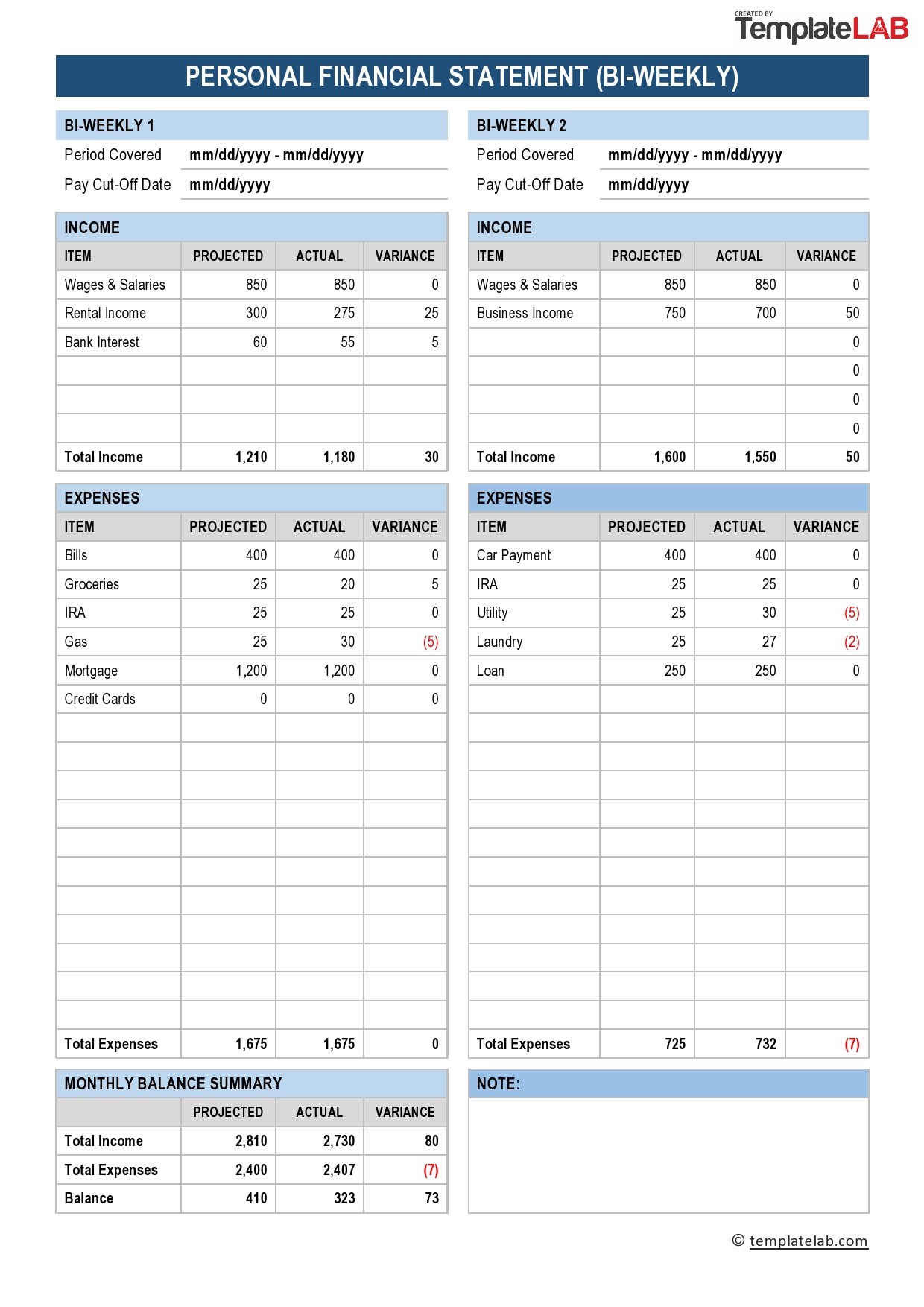
Everyone’s financial landscape is unique. Adapt the template by adding or removing categories that align with your goals.
Special Considerations for Business Owners
- Separate personal and business assets and liabilities to avoid confusion.
- Add a section for “Equity Contributions” and “Business Debts.”
High‑Net‑Worth Individuals
- Include detailed sub‑categories for investment holdings, like sector allocation and dividend income.
- Add a “Tax‑Deferred Assets” section to track retirement plan nuances.
Young Professionals
- Focus on student loan balances and early savings goals.
- Include a “Credit Score” metric to monitor debt health.
Common Mistakes to Avoid
Overlooking Small Debts
Credit card balances or minor personal loans can accumulate unnoticed, skewing net worth. Make a habit of listing every liability.
Using Outdated Asset Values
Real estate and investment markets fluctuate. Regularly update these figures to reflect market changes.
Failing to Separate Income and Expense Categories
Blending discretionary spending with essential costs can mask cash flow issues. Keep these distinct for clarity.
Ignoring Future Projections
A static snapshot misses the dynamic nature of finances. Add a simple “Projected Net Worth” column to anticipate future growth.
Practical Examples from Different Life Stages
Early Career
Typical assets may include a modest checking account, a student loan, and a small emergency fund. Focus on building a diversified investment portfolio while paying down debt at a manageable rate.
Mid‑Career with Family
Assets grow with a home purchase, college savings, and retirement accounts. Liabilities often rise with mortgage balances and possible childcare costs. A detailed template helps balance growth and risk.
Pre‑Retirement
Key focus shifts to maximizing retirement contributions, managing healthcare costs, and ensuring adequate insurance coverage. Net worth should reflect a healthy cushion for retirement withdrawal strategies.
Retirement
Income sources diversify into pensions, annuities, and passive investments. Expenses may shift toward healthcare and leisure. The template aids in monitoring withdrawal rates against portfolio value.
Integrating the Statement into Your Financial Planning
Budgeting and Cash Flow Management
Use the income and expense breakdown to create or refine budgets. Identify discretionary spending that can be trimmed to boost savings.
Debt Repayment Strategies
Apply the “snowball” or “avalanche” methods by listing debts in order of balance or interest rate. The template provides a clear view of which loans to tackle first.
Investment Allocation
Net worth analysis reveals how much you can allocate to growth versus safety. Adjust your asset mix accordingly.
Goal Setting and Tracking
Set measurable targets—e.g., a $50,000 emergency fund, a $200,000 home equity goal. Update the template quarterly to monitor progress.
Tools and Resources for Automation
Spreadsheet Templates
Excel or Google Sheets versions can auto‑calculate totals, chart trends, and offer conditional formatting to flag issues.
Personal Finance Apps
Many apps link to bank accounts and investment portfolios, pulling real‑time data into a customizable statement format.
Professional Services
Financial planners, accountants, and tax advisors can provide customized templates and interpretation of results.
Conclusion

Adopting a Blank Personal Financial Statement Template transforms how you understand, manage, and plan your money. By systematically cataloging assets, liabilities, and cash flow, you gain a clear, actionable picture of your financial health. Whether you’re just starting out, navigating mid‑life changes, or approaching retirement, this tool remains indispensable for staying on track, making informed decisions, and ultimately achieving peace of mind. Begin today, and watch your financial confidence—and your net worth—grow in tandem.